'Vital to attract more tradeswomen amid skills crisis'

 BBC
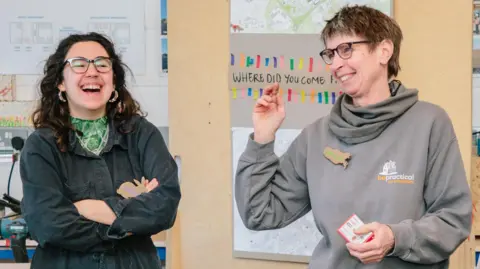
BBCA woman has made it her mission to help train potential tradeswomen as the industry is still dominated by men.
Caroline Henn, from Brislington, Bristol, runs BePractical DIY, providing women with hands-on training in construction, plumbing and electrical work in an industry where 96% of jobs are held by men in the UK.
"You don't see many women in the trades generally. So something is not attracting them into it," Henn said. "[Women] are not visible enough doing it, so lots of people don't know that it can happen."
The Federation of Master Builders also said it is vital the industry attracts more women to address the UK's skills crisis and aging workforce.
Henn has teamed with Clevedon's BuildHers UK to offer training and tester courses. She developed her building skills while converting a barn into a holiday home in west Wales.
"I learnt lots of building techniques whilst I was there because it was very run down and I didn't have a lot of money," she said.
"I love a challenge. I suppose I had a lot of self-belief and confidence. The best way to learn is to make mistakes and have a go - and we did plenty of that."
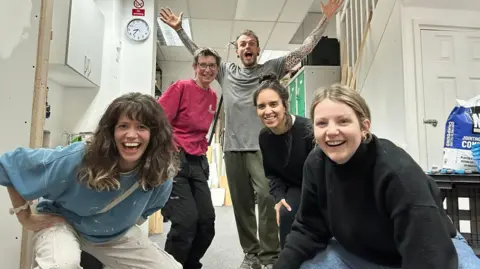
After moving to Bristol, Henn said she realised she could make a living out of her new skills.
Alongside other women she now teaches DIY and practical skills on courses predominantly attended by women, but open to everyone.
Some of her students say they just want to learn skills they can use at home, but Henn also wants them to consider taking up careers like plumbing.
"I want to run these taster courses to say 'look it's fun, it's problem solving, it's going to make you a good income. You're going to be good at this'," she said.
 Contributed
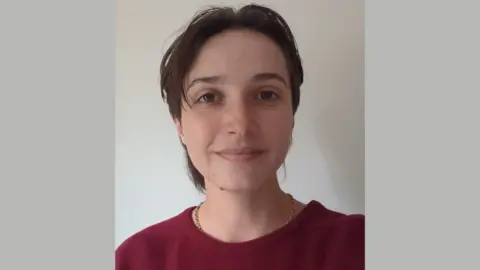
Freya Cunningham, 28, from Wells, completed a half-day course with Henn, and said it has given her the confidence to consider going into plumbing.
"I used her half-day course just to see how things felt because it's a big commitment," Cunningham said. "But yeah, I would like to change.
"I'm going to be very nervous about coming in and starting using my skills so knowing that there's Caroline and women who are happy to provide support and ideas and help me - that's a really nice safety net to have."
'Traditionally male sector'
The Federation of Master Builders said it also believes it is vital the industry attracts more women because of a skills crisis and aging workforce.
CEO Brian Berry said "The challenge is not only about encouraging more women into what has always been a traditionally male sector - but also about making sure we keep them.
"We need to ensure there are clear, accessible pathways into the trades, whether through training, apprenticeships, or career-switching opportunities."
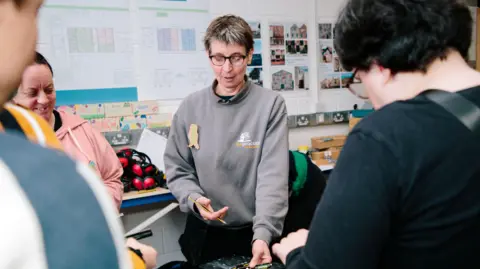
Henn said job flexibility is key to retaining women in professions like construction, plumbing and electrics.
"Unfortunately women do tend to need to be more flexible with their work because they're often looking after kids or caring for elderly relatives. I know men do too - but it's predominantly women.
"You need to be more flexible in the way you work, and the way you expect women to work."
Follow BBC Bristol on Facebook, X and Instagram. Send your story ideas to us on email or via WhatsApp on 0800 313 4630.
