Birdwatcher hopeful as wildlife seen at Dunwich

 Ron Smith
Deer, rabbits, butterflies, birds and some reptiles are among the animals which have been spotted on heathland ravaged by fire.
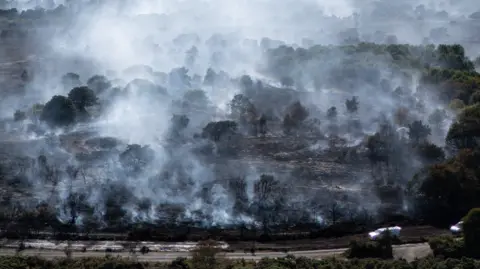
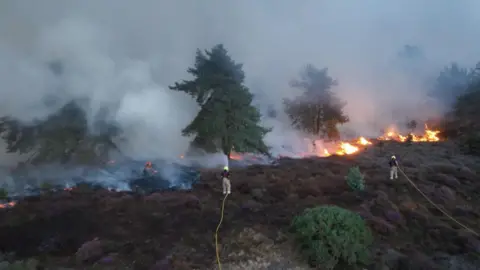
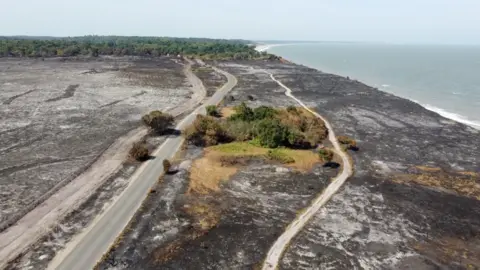
The recent blaze at Dunwich Heath in Suffolk destroyed 150 hectares (370 acres) of land and habitats in its wake.
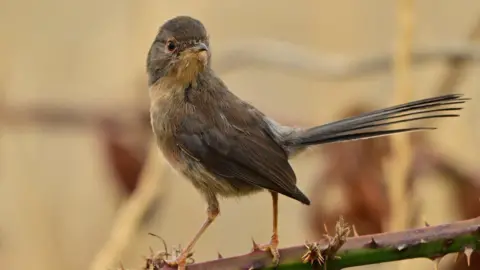
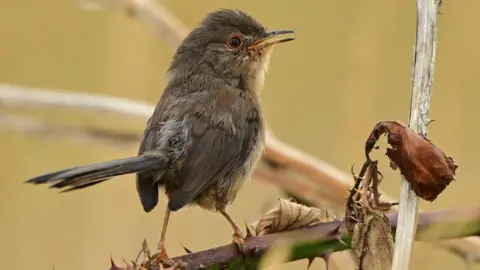
Avid birdwatcher Ron Smith, from Sudbury, spotted a juvenile Dartford warbler he believed came from the site, while on the dunes at nearby RSPB Minsmere which was also hit by the blaze.
He said: "It's nice to see something like that has escaped. Nature has a good way of coming up trumps in times of hardship when you think it's all gone."
Firefighters spent almost two weeks tackling the fire and experts have warned the coastal landscape could take as long as 25 years to recover.
 Ron Smith
Many birds, including Dartford warblers, woodlarks and nightjars were able to escape the flames.
But the RSPB previously told the BBC the "full picture" of the impact on wildlife at Minsmere would not be seen for some time.
A spokesperson for the National Trust agreed, saying: "We're in the very early stages of the recovery of Dunwich Heath and it's not been possible to assess the full impact on wildlife and habitats."
However, it added: "We're hearing from staff on the ground that they've seen muntjacs, rabbits, butterflies, birds and some reptiles. However, the habitat they call home, as well as nesting and breeding sites, will have been destroyed."
 PA Media
Smith said while the fire-affected area was previously home to a range of species, Dartford warblers were the real showstoppers that birdwatchers flocked to see.
He said to the untrained eye the species could be hard to spot, however, he was able to recognise it simply from its birdsong.
 Ryan Lovejoy
He said it was sad to see such devastation from the fire.
"I've just turned 70, we probably won't see it like it was in our lifetime now. It's pretty sad to think we won't see stuff like we did before."
Spotting the Dartford warbler was a "minor miracle", he said.
In 2022, extreme heat and prolonged drought affected areas of the heathland including a 60% loss of heather.
Last year, the National Trust saw recovery at the site, which Smith said was an example of time being a good healer.
"People aren't quite so jovial as they were, walking round [now]," he said.
 Jamie Niblock/BBC
Do you have a story suggestion for Suffolk? Contact us below.
Follow Suffolk news on BBC Sounds, Facebook, Instagram and X.
