The Albert Dock - from world trade to dereliction and back

 BBC
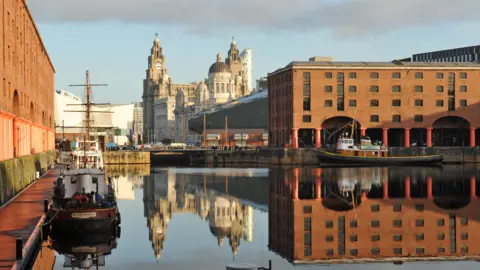
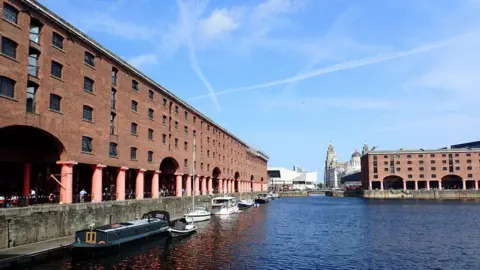
BBCA landmark with a bustling strip of restaurants, museums, hotels and a gallery, Liverpool's Royal Albert Dock attracts millions of visitors a year and is the most visited heritage site outside of London
But 180 years ago, a day at this now grade listed site would have been very different. The hum of cranes and the scent of timber and tobacco would have filled the air as cargo ships arrived from across the globe, and thousands of people earned their livings along the waterfront.
Opened officially in 1846 by Prince Albert himself, the dock was built during the peak of the trade network between East and West, and became the place from which Liverpool did business with the rest of the world.
While the origins of Liverpool's trading history are deeply rooted in the slave trade, by the mid-19th century the city was a hub for trade from the East, including tobacco, spices and tea.
University of Liverpool Professor Michael Parkinson said that, by then, Liverpool had become the second city of the British Empire.
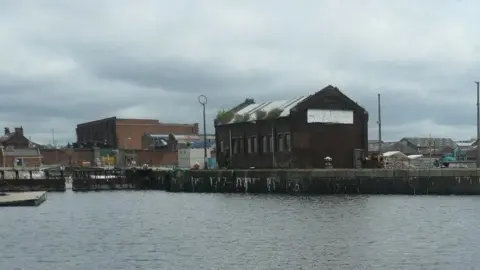
Parkinson said to match this growth in the city, there was a large extension of the docks during the 1830s and beyond that would eventually see it cover over seven miles along the River Mersey.
 Christine Johnstone
Fellow University of Liverpool Professor, John Belchem, said Albert Dock was originally built to improve security for traders.
Belchem said before Albert Dock was built, dock workers would have to carry cargo off the ships and transport it to warehouses away from the docks.
"But surprise, surprise, there was a slight security risk in that," Belchem said.
"There was a tendency, perhaps, for the odd thing to fall off a cart, to put it mildly.
"And some of the traders and merchants were looking for a more secure system."
In 1837, Civil Engineer Jesse Hartley came up with a secure solution and applied for permission to build Albert Dock, along with five warehouses on the waterfront.
"This was very controversial with the existing free traders in Liverpool, but the authorities won through and the Albert dock was constructed," Belchem added.
Construction began in 1841 and the basin itself was built by 1845, with the site officially opened by Prince Albert, consort of Queen Victoria, in 1846.
 Marathon
"Liverpool has gone through a major transformation at this point," Belchem said.
"It's trying to put the horrors of the slave trade behind it and to develop new markets and new routes, and that brings in with it sailors from all different places.
"That's the beginning I think of Liverpool as a party town.
"The sailors would come off the boats for the night and have a good time.
"Quite a lot of them liked it, and they decided to stay, which is why Liverpool has a very interesting, far more cosmopolitan population than anywhere else in the UK."
Sign of decline
But after a few decades, Albert Dock became redundant as a cargo drop-off spot. And the boats stopped coming.
"It was a fantastic construction, but it was built too late, because at that time larger steamships were coming in replacing sail ships," Belchem said.
"So getting in and out of the Albert dock proved far too difficult."
By the 1920s, most commercial shipping at the dock had stopped. But its uniqueness gave it a saving grace.
"The great irony of the Albert Dock is that it survived essentially because it was a white elephant," Belchem said.
Albert Dock was the world's first non-combustible dock, meaning while its foundations were wooden, the dock itself was built with brick, stone and cast iron.
This made the warehouses very attractive to traders.
"Ironically this meant the dock remained intact by fluke," Belchem said.
"Nobody could find much to do with it and so it was just left.
"And it is now seen as the great bit of Liverpool's heritage."
 BBC Archives
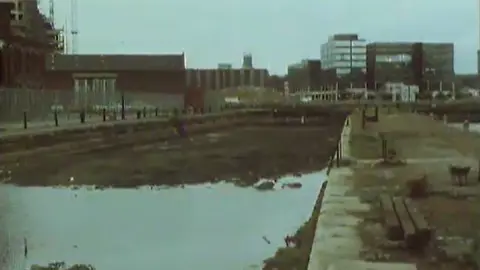
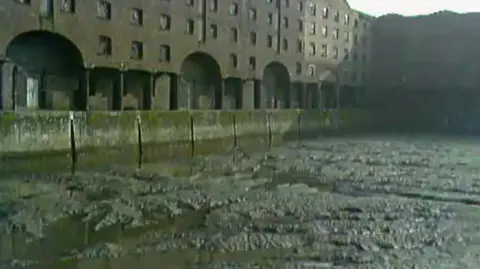
By the 1970s, Hartley's warehouses, once state of-the-art were no longer fit for purpose, and were sold off, leaving the site to fall into a state of disrepair.
By 1972 the dock had officially closed and the warehouses had been sold off.
There were many plans for what might come next. It was proposed that the basin could become a landfill site, or be filled with sand and sold to developers.
The government even proposed allocating funding so the site could become a base for Liverpool Polytechnic, now Liverpool John Moores University.
But in 1974, the creation of Merseyside County Council brought new hope that the Albert Dock could be redeveloped.
 BBC Archives
Conservative MP Michael Heseltine put the wheels in motion for the regeneration of Albert Dock.
"In 1981 Heseltine created the Merseyside Development Corporation (MDC)," Parkinson said.
"Although it was politically controversial because it took control away from the city council, the MDC was the crucial first piece in the jigsaw of Liverpool's physical renaissance."
The MDC attracted London-based investors to provide private sector funds, and then began to refurbish the dock.
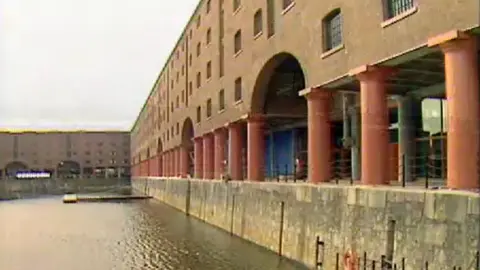
The warehouses were repaired, World War Two bomd damage was fixed, and the dock's gates, walls and bridges were restored.
By 1984 the site was attracting millions of visitors. Shops and apartments opened, and Granada Television opened a studio.
 BBC Archives
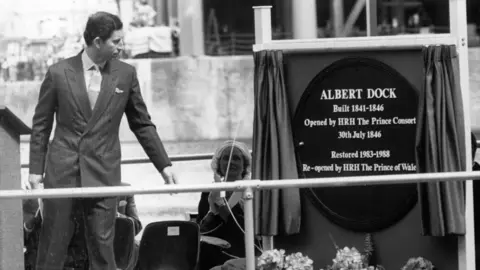
Albert Dock was officially re-opened by the then-Prince of Wales, King Charles III, who unveiled a plaque at the site before visiting the newly opened Tate Gallery.
In a speech delivered before the unveiling, he said the re-opening brought "new purpose" to the Albert Dock and "hope" for the people of Liverpool.
 Getty
GettyDevelopments, including the opening of The Beatles Story museum, continued until 2003, when the final part of disused land was developed into a new hotel at Britannia Pavillion.
But despite the end of large-scale development, plenty of news restaurants have sprung up along the dock.
And in 2018, at an event at Tate Liverpool on 6 June, the dock was granted a royal charter, marking the site's importance as a heritage site.
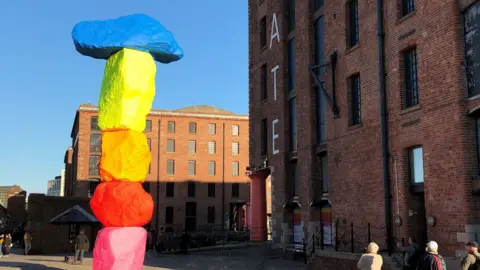
Now a popular spot for events, meals out and cultural visits, the Royal Albert Dock remains a true landmark of the North and symbol of British heritage, 180 years after it was first opened.
Listen to the best of BBC Radio Merseyside on Sounds and follow BBC Merseyside on Facebook, X, and Instagram. You can also send story ideas via Whatsapp to 0808 100 2230.
