Refugees sent to Rwanda from remote UK island speak to BBC

 BBC
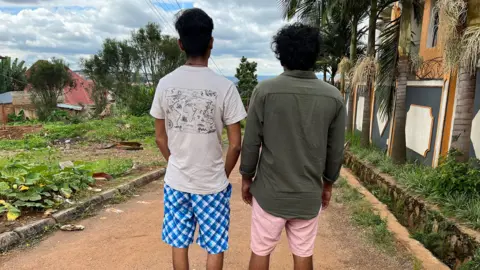
BBCA group of migrants was transferred to Rwanda from a remote UK territory by the British government over a year ago. They say they feel isolated and unsafe - with one describing the African country as an “open prison”.
With political parties divided over the government’s controversial plan to send asylum seekers from the UK to Rwanda, the BBC has travelled to the African state to speak to four of the migrants already there - albeit under a separate agreement - about their experience in the country.
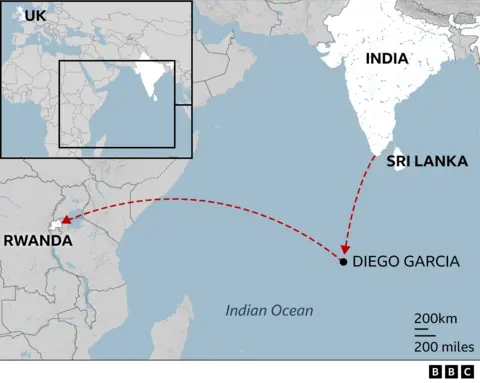
The small group arrived from Diego Garcia, an island in the Indian Ocean. They say their complex medical needs, in some cases as the result of past rape and torture, are not being met in Rwanda.
Each of them receives the equivalent of $50 (£39) a week for food and other essentials, but under the terms of their stay - agreed by the UK and Rwandan governments - they are not permitted to work.
All four say they have faced harassment and unwanted sexual advances on the street. They say they are, in effect, “self-imprisoned” - too scared to go out - while they wait for the UK to find somewhere permanent for them to live.
The group - all Sri Lankan Tamils - were transferred to Rwanda for urgent medical care after suicide attempts. They are now out of military hospital and living in two flats on the outskirts of the capital, Kigali, paid for by British authorities.
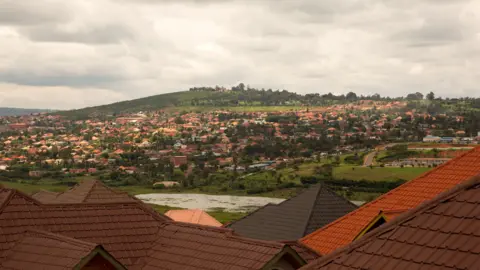
Their legal status in Rwanda is not the same as it would be for asylum seekers flown there from the UK - but a lawyer representing two of the four says their “negative experiences do raise serious concerns” about Rwanda’s ability to offer a safe haven for “very vulnerable refugees”.
A senior Rwandan official told the BBC she had “complete faith” in her country’s medical system and the migrants’ concerns about personal safety were not shared by others. “We have a thriving foreign population here,” she added.
To protect their identities, migrants’ names have been changed
None of the four tried to enter the UK - instead they filed asylum claims on Diego Garcia, which is used as a secretive UK-US military base.
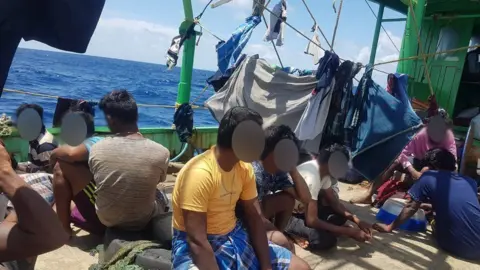
They were among dozens of people to arrive on the island in October 2021 - previously reported by the BBC. They said they had been fleeing persecution and trying to sail to Canada to claim asylum.
The four we met in Rwanda said they had been victims of torture and sexual violence in their home countries - some because of past links with the Tamil Tiger rebels, who were defeated in Sri Lanka’s civil war 15 years ago.
 Handout
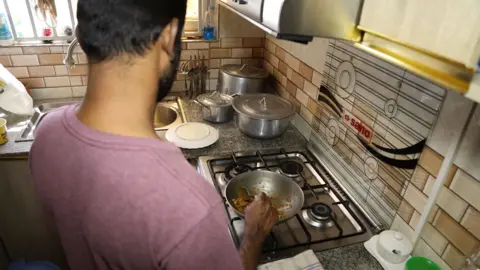
Down a quiet road, in a two-bedroom apartment, Azhagu says he has been diagnosed with severe post-traumatic stress disorder, and uncertainty about his future and the isolation are making things worse.
“We are not getting proper medical treatment. We have mental health issues,” says the 23-year-old. “Whenever we go and tell the doctors about our problems they can't help us.”
Rwandan medical staff have shouted at him, he alleges, and on one occasion after self-harming, he says he was threatened with arrest and told to return to Diego Garcia.
Mayur, 26, who shares the apartment, says he has given up on counselling. He says he doesn't get proper medicine and doesn’t get to have “a good conversation”. “That’s why I don’t want to go to the hospital,” he adds.
Lawyer Tom Short, from UK firm Leigh Day, says an independent expert assessment found “each of our clients has complex medical needs which are not being met in Rwanda”.
We approached the military hospital where all the Tamils have been receiving treatment, but we were referred to the Rwandan government.
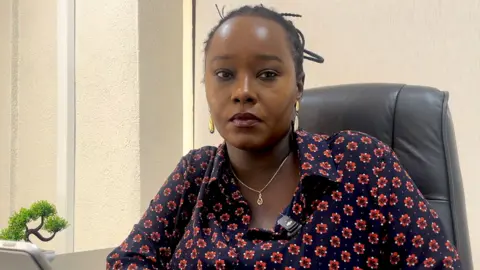
The top Rwandan official in charge of the deal to transfer asylum seekers from the UK, Doris Uwicyeza Picard, defended her country’s medical system - adding the migrants were being treated “to the best of our ability”.
Three of the migrants - the two young men and a woman, Lakshani - have had their claims for international protection approved by British Indian Ocean Territory (Biot) administration, which runs Diego Garcia. The United Nations and lawyers representing the group say this, in effect, gives them refugee status. The fourth in the group - Lakshani’s father, Khartik - has been permitted to accompany his daughter.
It means the group cannot be returned to Sri Lanka, but the UK has said it will not take them in. The Conservative government told the BBC last year that Biot “cannot be a backdoor to the UK”.
While Biot falls under British sovereignty, it is described as “constitutionally distinct”.
The group in Rwanda showed us legal documents, WhatsApp messages, emails and letters they had written over the past year to British officials, including Prime Minister Rishi Sunak, asking to be moved.
“I don’t know how many more years we will have to live as stateless prisoners of the British government without freedom,” one message said.
The four also told us that harassment had left them frightened to leave their homes.
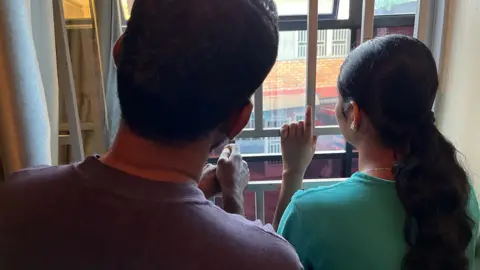
In Lakshani’s apartment, a grey curtain is pulled across the barred windows - shutting the room off from the outside world.
“We don’t go outside. We’re always scared,” the 23-year-old told us when we visited her and Khartik, 47. “I don’t have any women here. No friends.”
Both say there have been a number of attempted break-ins at their apartment. They show us videos that appear to show intruders being caught by neighbours.
They also recalled one incident on a nearby street, when, they say, a group of men had separated them and tried to touch Lakshani while using “very inappropriate words”.
The experience, and others like it, had been triggering for the pair, they said. Lakshani says she was previously sexually assaulted both in Sri Lanka and on Diego Garcia.
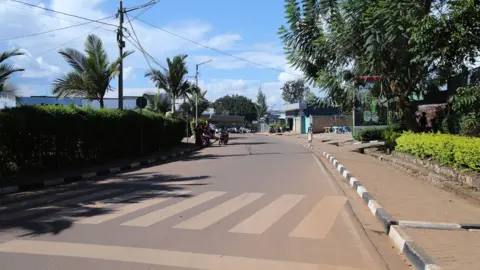
Azhagu told us he and Mayur had also been propositioned in the street. “Strangers came and asked ‘can I have sex with you?’ People were laughing. We ran to the hospital.”
They both reported their concerns to Crown Agents, a non-profit international development company that works with the UK government and serves as the migrants’ main point of contact in Rwanda.
All four told us Crown Agents had not taken their complaints seriously.
“They asked me: ‘Why are you going out when you know you will get into trouble?’” says Azhagu, recalling one of the conversations with the company. “I asked them: ‘Why are you keeping us here when you know there is trouble?’ They didn’t respond.”
Crown Agents did not respond to specific allegations when approached for comment by the BBC.
Lawyers representing the group said they had raised multiple incidents of street harassment and break-ins with Biot officials, who had not “substantively responded”.
The Biot administration did not respond to requests for comment.
The four told us they had not approached Rwandan police for help. They all said they distrusted uniformed law enforcement based on past experiences of abuse.
The senior Rwandan official, Ms Picard, said she was “not sure how we can help if the national authorities have not been approached”.
“[The migrants’] concerns about their safety are not shared by anybody. Not by Rwandans, not residents,” she told the BBC. “It breaks my heart to hear that somebody may not feel safe in this country, especially when we've worked very hard to make this country safe for everyone.”
The UK government’s foreign travel advice says crime levels are relatively low in Rwanda, but there are cases of burglary, theft, bag-snatching and mugging in Kigali.
The Tamils acknowledged they have had positive interactions in Rwanda but say the negative experiences have compounded past trauma and left them frightened.
Lakshani and Khartik said their living situation in Rwanda was an improvement from the Diego Garcia camp, where they had slept in tents in a rat-infested camp, had limited phone access, and could not cook their own meals.
There is a fifth Tamil who remains in Rwanda after also being flown from Diego Garcia following a suicide attempt. He is still pursuing a claim for international protection. The BBC has spoken to him on the phone, as he is currently in the military hospital and not allowed to leave.
The BBC has seen a letter formally discharging him - saying he should be treated as an outpatient. He says he is being held against his will after refusing to return to Diego Garcia. His lawyer has called on Biot to secure a solution for him.
The four migrants we met have been told that, if they do not wish to remain in Rwanda, they can return to the Diego Garcia camp until being resettled in a “safe third country”.
The Foreign Office did not respond to BBC questions about whether Rwanda was being considered as a “safe third country” to permanently resettle the group.
When we asked the migrants about the British government’s plan to use Rwanda to process and house some asylum seekers from the UK, all said they had concerns. “Those refugees will endure the same difficulties and hardship we face,” one said.
Leigh Day lawyer Tom Short said his two clients in Rwanda had been left by the UK government with no certainty and in a “situation of perennial purgatory”. Court documents, lodged in London, argue the migrants’ treatment in Rwanda, and on Diego Garcia, “amounts to cruel, inhuman or degrading treatment contrary to international law”.
Rwandan official Ms Picard said there was “no similarity” between the group of Tamils and those who may move from the UK - who would, she said, be “processed and integrated into our society”.
Ms Picard said her country was “always open” to having conversations about settling the Diego Garcia group permanently, and that if that happened, they would be “provided with all the protections and guarantees and the integration needs they would have”.
But “right now they are being treated as medical evacuees who need medical treatment”, she said.
No money was given to Rwanda to take in and house the migrants from Diego Garcia, said Ms Picard, and the “only link” with the UK-Rwanda asylum deal was that the two countries were “very strong partners”.
The Foreign Office has declined BBC requests to provide details of the Diego Garcia arrangement. The deal was agreed using unsigned diplomatic notes written in the third person - known as “notes verbales” - sent between the British Embassy in Kigali and the Rwandan government. The Foreign Office told us that releasing the information under a Freedom of Information request would “prejudice the relations” between the two countries.
Neither the Conservatives nor Labour would comment on the fate of the Diego Garcia migrants in Rwanda or what they would seek to do with them if they win the election.
Both parties have pledged to bring net migration down, but Labour has said it would scrap the Conservatives’ plan to fly some asylum seekers from the UK to Rwanda.
Mr Sunak has made delivering the Rwanda plan a key priority of his premiership, arguing it will deter people from crossing the English Channel in small boats.
Labour has described the scheme - which has already cost taxpayers £310m - as a “con from start to finish”.
In a statement, the Liberal Democrats described the cases of Tamils in Rwanda as “deeply concerning” and said they needed to be “properly investigated”.
The Conservatives’ policy to send asylum seekers from the UK to Rwanda, they added, was ”immoral, unworkable and incredibly expensive [for] taxpayers”.
The Green Party co-leader Carla Denyer has described the Rwanda plan as “punitive” and “inhumane” - adding that the way to stop people risking their lives in small boats was to provide “safe and legal routes” for them to apply for asylum from overseas.
In an interview with Today on BBC Radio 4 earlier this week, Reform UK leader Nigel Farage appeared to ditch the party's official draft policy - that it would use British Overseas Territories to rapidly process claims of asylum seekers arriving through safe countries. “I don't think it's terribly practical,” he said - adding that people who come to the UK illegally should be deported.
The UN refugee agency has called on the UK to “secure solutions” for the group in Rwanda, and about 60 asylum seekers still on Diego Garcia, in line with its “international obligations”.
While they wait, the migrants continue to dream of a future elsewhere.
“We wonder if we should be thankful to Britain for saving our lives when we arrived at Diego Garcia, or whether we should get angry with them for putting our lives in limbo,” Mayur says.
