Creative college students react to social media ban

 BBC
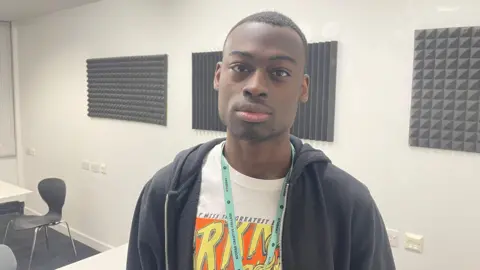
BBCSeventeen-year-old Tobi, from Stirchley, grew up during the coronavirus pandemic, and saw how social media kept people going when workplaces closed, attractions shut down and people were forced to stay two-metres apart.
"Even after the pandemic ended, creating a sense of community online has never been easier thanks to social media," he said.
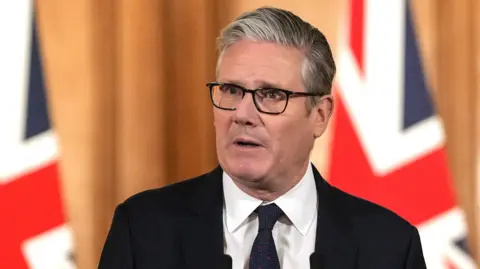
On Monday, Prime Minister Sir Keir Starmer announced a ban on social media for under-16s, which if passed will come into force by spring 2027, as well as a promise for some restrictions for under 18s.
"I think banning it for people under 16 would really leave a dent in their ability to network, especially digitally," Tobi said.
Starmer said that social media is making children unhappy, has made it easier for bullies to abuse children, and is "designed to be addictive".
He believes a ban would "give children more time, security, and more freedom to grow up - as well as more opportunities."
 PA Media
Snapchat, TikTok, YouTube, Instagram, Facebook and X are among the platforms affected - but not WhatsApp or Signal.
Tobi said social media "has a lot of very severe downsides, but also quite positive upsides."
"Even artists have built their careers from places like Tiktok and Instagram, so such a ban would probably negate their ability to grow creatively, or at the very least, they would be starting late," he said.
He believes that what children look at online is down to parents.
"In my opinion, the regulation of children's screen time should be overseen by parents and not the government, because it's their responsibility as to what their children see online."
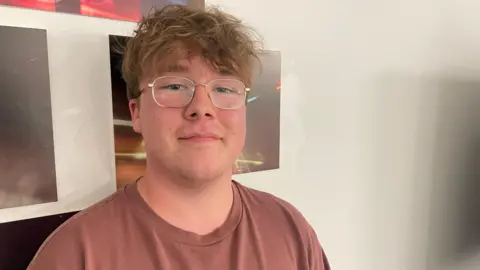
Jack, who is 19 and also a student at the college, has reaped the benefits of social media, but is all for the ban.
He has been using it since he was about 12 or 13, and says he has built a name and career for himself on social media, but believes it should be banned until children turn 18.
"For a general audience, it can be very dangerous and I think it does more harm than good in most cases", he told the BBC.
"You an be a target, anyone can find out anything about you, and it's just not a natural way of being, especially when you're so young as well.
"If I was now 14 and I'd just heard of this ban, and I knew music was my thing, or a career that requires social media, you would be disappointed - but I think it would just force people to be a bit more creative about how they go about becoming more successful."
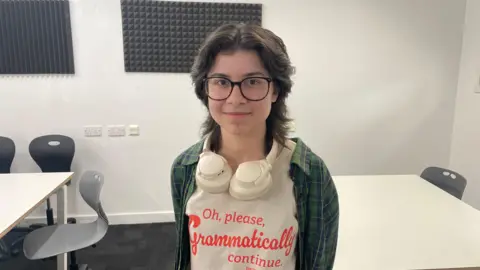
Another student, Rhiann, said they do not think the ban will protect children, but "delay the problem".
"I've had access to social media for a couple of yeas now, and I choose not to use it in the way that some other people do," they said.
"The point is, that I'm given that choice instead of it being restricted by the law.
"For me, it's definitely had a positive impact for the little parts of it that I use - it's being able to engage in communities and share my artwork with people in ways that I just wouldn't be able to do without it."
They added: "We need to be allowing children to make their own rational decisions about how they can use social media."
Follow BBC Birmingham on BBC Sounds, Facebook, X and Instagram.
