'Extremely difficult' funding decisions lie ahead, says new finance minister

 Senedd Cymru/Welsh Parliament
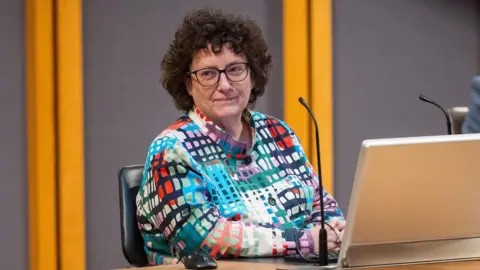
There are "extremely difficult" decisions ahead for the Welsh government to fund manifesto pledges, according to Plaid Cymru's finance minister.
Elin Jones said people "did not vote for" a continuation of Labour policies, and they "are not going to do as the previous government did".
The new government has come under mounting pressure this week to explain how they will pay for their flagship policy of offering free childcare to all children from nine months to four years.
Although acknowledging that "there will need to be changes in the Welsh budget", the minister didn't go further in explaining how it would pay for the policy which is expected to cost up to £400m over four years.
Jones told BBC Politics Wales that more information would be forthcoming over the next few weeks before a supplementary budget is published on 23 June.
A supplementary budget is usually published by the Welsh government in the summer to reflect any changes to its financial position mid-way through a financial year.
Speaking generally about government financial pressures, Jones said the outlook was "challenging" this year, adding "probably more challenging than I expected it to be".
The Labour party has hit back at that claim, with its spokesman for finance Huw Thomas saying: "It is fanciful to say that Plaid Cymru didn't know the scale of the financial challenge facing Welsh government.
"Welsh Labour was always honest about the challenge, the IFS [Institute for Fiscal Studies] told us all of the challenge, Plaid Cymru even had access to the government books to see for themselves."
Plaid Cymru representatives said during last month's election campaign that in order to pay for its childcare offer it would re-prioritise some of the £7bn the last Labour government spent on tackling child poverty.
Jones denied the party was "dismantling the legacy" of Labour but said "changing gear on where we are in delivering public services is what I want to see".
After winning 43 seats in the Senedd election in May, Plaid Cymru is six seats short of a majority so will have to work with another party to pass its budget.
Cardiff council's Labour leader Chris Weaver suggested he wouldn't be comfortable with Labour Senedd colleagues supporting the budget if "the really fantastic work that has happened in Wales" to tackle child poverty "could be dismantled to pay for an uncosted manifesto pledge".
Reform UK's Llyr Powell questioned the £400m estimate for the childcare policy, saying "internal accounts" suggest "if the uptake is as the government say they want it to be, it could be around £580m".
"This is an important policy that Plaid Cymru put front and centre and the people of Wales deserve to know how it's going to be paid for," he said.
"We can't just give them a blank cheque or put the responsibility on council leaders when they're already restrained right now."
Conservative MS Sam Rowlands defended his party's decision to back a Plaid Cymru amendment in a Senedd vote on childcare this week.
"Plaid Cymru's motion was rightfully criticising Reform that they never mentioned childcare in their manifesto leading up to the election and they then committed to publishing figures before the summer recess," he said.
"We felt that was appropriate."
He said: "What is really important here, of course, is that parents have some certainty for the future of childcare, for people who want to start a family, and for anybody who's thinking of expanding their family, that's the issue that needs tackling at the moment."
