Bluetongue fears 'on par with foot and mouth'

 BBC
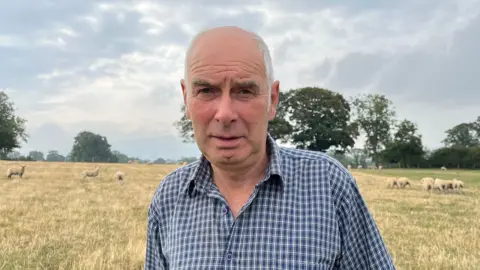
BBCA farmer who is vaccinating his sheep against bluetongue has said fears of the outbreak are "on a par with foot and mouth."
Seven cases of bluetongue have been confirmed so far in Shropshire, meaning it has been identified on seven farms.
Graham Price, who runs a beef and sheep farm near Ludlow, said he was "very relieved" to have been vaccinating his flock.
A spokesperson for the Department for Environment, Food and Rural Affairs (Defra) said they were "monitoring the situation closely."
Bluetongue, which is spread by midges, can be fatal - and has been particularly devastating for farmers trying to recover from drought conditions.
The outbreak of foot-and-mouth in 2001 saw 2,000 cases on farms across Britain, with over six million cows and sheep slaughtered in efforts to stop it.
So far, 650 cases of bluetongue have been confirmed across the UK since July, mainly in England with a particular spike in the south-west.
While it is potentially fatal for livestock, the virus does not affect humans.
 Ellen Knight/BBC
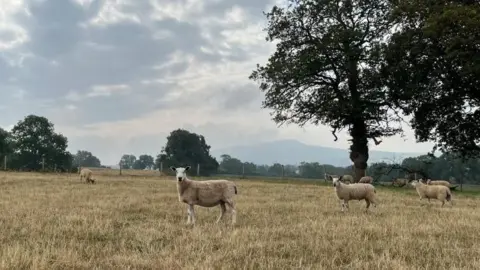
The risk of losing livestock "most definitely" keeps Price awake at night.
"You have to do whatever you can to try and mitigate," he said, adding that his farm has "decided to vaccinate all our breeding stock."
A few weeks ago, just the young female sheep were vaccinated, Price explained, which "initially we thought would perhaps be enough."
"But I think the challenge has increased across the county," he said.
As well as the 650 confirmed cases, a further 2,460 are under investigation.
Initially, Price said, farmers were not as worried about bluetongue, but the worry is now "building up."
The disease had previously hit the east of England harder, he added, noting that its arrival in western counties means "the fear is very much on par" with the foot-and-mouth outbreak 25 years ago.
Farmers have previously spoken of their efforts to get hold of the vaccine - but Price believes "most of the vets in Shropshire [now] have availability."
"I think more and more farmers realise the importance of vaccinating now," he added.
The way bluetongue is spread is particularly worrying, Price added, as "these midges can be blown on the wind, carried even on humans in their clothing, and even transported in vehicles."
The insects are unlikely to die back until the weather cools significantly, he explained, meaning there are many more months of worry.
Price, who has received delivery of vaccines, is urging other farmers to do the same and vaccinate their flocks and herds.
"I think the challenges are going to continue," he said, adding that "over the last two years, the midge activity has not stopped until January of the new year."
His message to other farmers and livestock owners is to "have that conversation with your vets about vaccination.
"Please don't put it off."
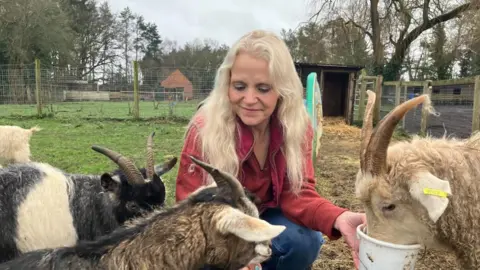
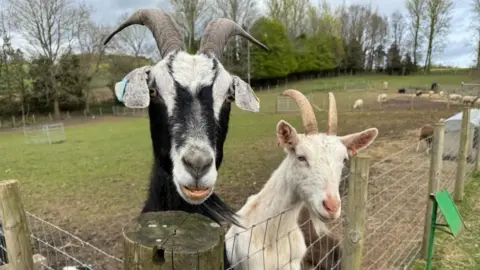
It is not just farmers feeling the fear - bluetongue infects ruminants like sheep, cattle, deer and goats, as well as camelids such as llamas and alpacas.
Amanda Ball runs Severn Valley Rescue near Bridgnorth, which looks after "about 45 sheep, goats and alpacas."
The disease is something the centre is "obviously worried about," she said.
"It doesn't affect us in the same was financially as it would farmers," Ball explained, but "we don't want it to spread to neighbouring farms."
The relevant animals at the rescue have been vaccinated, she added, but said "we've got to wait and see and cross our fingers that we got it in time."
 AHDB
AHDBZoe Lloyd is an animal health and welfare scientist at the Agricultural and Horticultural Development Board (AHDB), an independent public body paid for by farmers.
"Bluetongue can have a devastating impact on mental health," Lloyd said, noting that "farmers are facing some really difficult decisions."
Farmers have also been dealing with "a range of other challenges," including drought, she continued, adding that "the bluetongue outbreak definitely adds another layer of pressure."
As well as the toll on farmers themselves, it also "can have really devastating impacts on livestock health and welfare," Lloyd said.
"We cannot stress enough the seriousness of the situation," she stated, adding that farmers should speak to their vets "as soon as possible" about vaccination.
A spokesperson for Defra said "animal keepers and vets who are on the frontline of this disease" were facing "an incredibly difficult time."
"We are monitoring the situation closely," they continued, adding that "vaccination is the best tool available to prevent bluetongue".
"We are working with vaccine manufacturers to increase vaccine supplies so that farmers who have not already done so can vaccinate their livestock."
Follow BBC Shropshire on BBC Sounds, Facebook, X and Instagram.
