'My urge to hoard felt like a gremlin in my brain'

 Isabella Verona/BBC
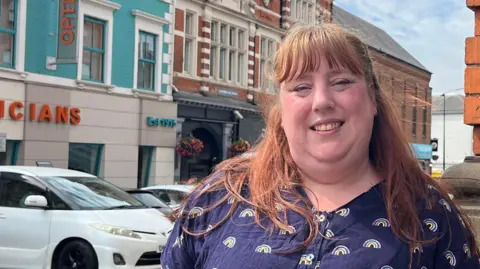
"I have a gremlin in my brain telling me to do these things," is how Emma Walton describes her impulse to hoard items.
The 36-year-old from Brackley, Northamptonshire, says she struggled for a decade with a hoarding disorder before realising it was a mental health condition.
Hoarding Disorders UK suggests between 2% and 6% of the UK population may live with the illness, which the World Health Organisation classified as a mental health condition in 2018.
Walton says her hoarding is linked to obsessive compulsive disorder, adding: "[I would think] if I let this item go, something bad is going to happen, someone is going to need it and then they will be mad at me."
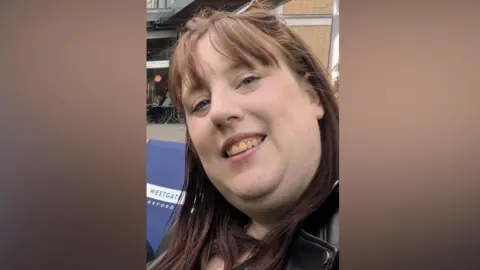
Since being in recovery for the past two years, she has shared her experience with the condition on social media in an effort to reduce stigma and recently set up an in-person support group in Brackley to help others.
 Emma Walton
Walton described the urge to keep a large number of items in her home as a "security blanket".
She previously blamed herself for the condition of her living situation, until a family member suggested it could be the result of a mental health illness.
"It was like somebody flipped the light on," she explains.
More from Northamptonshire:
After researching the condition, Walton went to her GP, who referred her for counselling where she underwent cognitive behavioural therapy.
She says although the referral process was a "minefield", the treatment helped her manage her compulsive spending and understand why she was hoarding.
Fighting stigma
Walton said she created an online community on TikTok, where she has more than 2,500 followers, after feeling pressure from the stigma attached to the disorder.
"I wanted to find people like me," she says.
She is now running a free in-person group for others living with the condition, which will be hosted at Brackley Fire Station on Oxford Road on the first Friday of every month, starting on 7 August.
Walton says she wants to create a safe space for people to share their experiences and learn about the health, wellbeing and fire safety risks associated with hoarding.
Jo Cooke, the director of Hoarding Disorders UK, said: "The more that we raise awareness about hoarding as a mental health disorder, the better people will understand it.
"It is not about people that are lazy or dirty or someone that can't clean their house properly, it is not a lifestyle choice."
Cooke is part of a group pushing for national guidelines about the condition as it has reached "crisis point".
"A lot of professionals are not equipped to deal with the complexities of hoarding," she added.
A Department of Health and Social Care spokesperson said: "Hoarding disorder can have a very distressing impact on the lives of individuals and their loved ones.
"This government is improving access to mental health support, with a record £16.1bn of funding in 2026-27, recruiting thousands of additional mental health workers and expanding NHS talking therapies.
"Later this year, our Mental Health Strategy will outline how we go further to build a mental health system that responds earlier, reduces waiting times for support, and helps people to participate in education, work, family and community life."
Do you have a story suggestion for Northamptonshire? Contact us below.
Follow Northamptonshire news on BBC Sounds, Facebook, Instagram and X.
