Why major new wind farm could be built onshore

 BBC
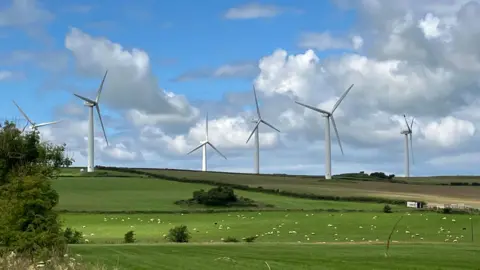
BBCA major new wind farm with dozens of turbines could be built in Norfolk.
With the potential to generate power for almost 150,000 homes, the search is now on for developers to build them.
But wind turbines can be controversial, few have been built in recent years and concerns have already been raised about the project.
So what is the idea, why onshore and why have more wind farms not been built in the last decade?
 BBC/Google
What is the plan?
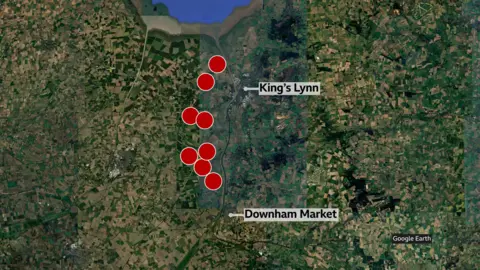
Up to 40 turbines could be constructed on the Norfolk/Cambridgeshire border under the idea from German firm Caeli, which has signed up farmers and other landowners who have agreed for their land to be used.
It is now marketing those sites to developers who would build the turbines.
It is expected the structures would be more than 80m (262ft) tall.
They cannot be too close to each other so they would be placed on a stretch of land running from north of King's Lynn to near Downham Market.
Caeli says it would have the capacity to generate up to 192 MW which should provide power to about 144,000 homes.
Called 'Eaubrink', it would cover 8,400 acres (3,400 hectares) – the equivalent of about 4,760 football pitches.
Caeli also says the project would create jobs and help farmers to diversify to generate more income.
 Caeli
CaeliCan the land still be used for farming?
According to Hans-Georg von Lewinski from Caeli, the turbines will have a relatively small footprint, allowing for farming to take place around them.
"Even with some of the very large turbines being built in Germany, the footprint is probably a few tens of square meters," he said.
But land would also need to be used for access roads.
Does Norfolk have many wind turbines already?
It has relatively few onshore, with the six turbine Jacks Lane Wind Farm near Fakenham the largest single development.
It is said to generate enough power for around 10,000 homes.
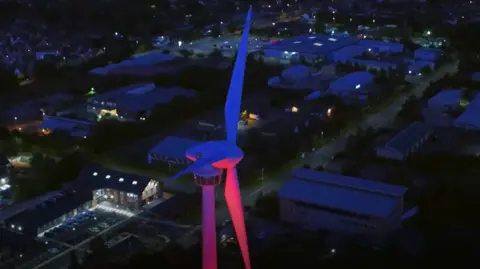
Two of the best-known turbines – one of which was a visitor attraction with a viewing deck – sit on the outskirts of Swaffham.
Offshore though, there are a number of wind farms, such as Scroby Sands off Great Yarmouth, which opened in 2004.
Meanwhile the huge 231 turbine Hornsea 3 wind farm, located 74 miles (120km) off the Norfolk coast, is currently under construction.
Once completed, it is expected to generate power for three million homes.

Why build more onshore then?
"It's cheaper to maintain," said Asher Minns, director of the Tyndall Centre for Climate Change at the University of East Anglia in Norwich.
"You don't need to get out there with ships," added Minns, who said more renewable projects were vital for energy security, helping the UK to rely less on foreign imports.
"Of course, the wind doesn't blow every day. But overall, the wind is very reliable."
More stories from Norfolk
Why have more onshore wind farms not been built in recent years?
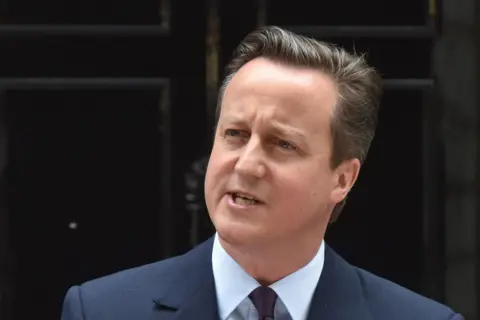
Back in 2015, David Cameron changed planning rules to effectively "ban" onshore wind farms being developed in England.
Those were later relaxed under Rishi Sunak and when Labour came to power in 2024 it said it was "committed to doubling onshore wind energy by 2030".
Minns said stopping onshore wind development "set us back hugely".
 UK Parliament
Who has concerns about the plans?
About half of the Eaubrink site will be in the constituency of the North West Norfolk MP James Wild, who only found out about the plans when the BBC contacted him.
"It's yet more energy infrastructure coming to the area," the Conservative said, referring to other controversial plans for large solar farms, pylons and battery storage in Norfolk.
"We need energy generation but I think people locally feel they're taking more than their fair share," he added.
He also expressed concerns about the visual impact on the mostly flat fenland, potential danger for rare birds and also for the nearby RAF Marham, whose pilots often conduct low-level flight training.
Lewinski conceded that such projects are "very controversial".
He said that when developing you need to "take people along and have them participate" and suggested creating "community benefit funds" to support areas where turbines would be built.
What does the government say?
Because of the scale of Eaubrink, it could be classed as a Nationally Significant Infrastructure Project – which means the government would have the final say on planning – rather than local councils.
The Department of Energy Security and Net Zero said it did not comment on individual schemes but "all projects are subject to a rigorous planning process and the views of the local community must be considered".
"Onshore wind is a key part of our plan to lower bills and bring growth to every postcode," said a spokeswoman.
What happens next?
Caeli has begun the process of searching for developers who want to work with landowners to build turbines.
Assuming permission was given for the development, von Lewinski said he thought it would be at least five years until turbine blades were spinning.
Do you have a story suggestion for Norfolk? Contact us below.
Follow Norfolk news on BBC Sounds, Facebook, Instagram and X.
