The milkman who became a hero during audacious WW2 raid

 MOD
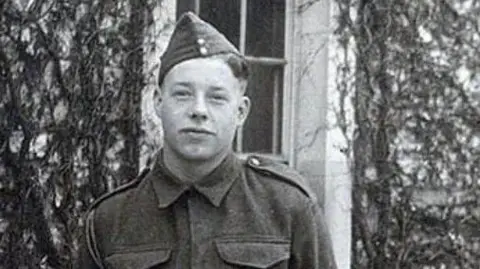
MODSixteen-year-old James Conway was working as a milkman when World War Two broke out in the September of 1939.
Conway, from Edgeley in Stockport, signed up to join the Royal Marines where he trained for a secret mission, later named Operation Frankton.
He was among 12 men chosen to be part of what was widely considered to be one of the most audacious raids during the war.
Conway's story has featured in BBC Radio Manchester's Hidden Manchester series, which shares the forgotten, untold and heroic stories of the region.
By March 1942, Britain was struggling to fight back against Nazi Germany.
The mission was to attack enemy German ships, known as blockade runners, moored at the port of Bordeaux in occupied France.
The ships carried cargo needed for the Nazi war effort.
"It was too risky to do aerial bombing," said Stephen Martindale, from Bolton, who is a former Marine and runs the CS22 veteran expeditions group.
"There was no accurate way to guide munitions from the air on to a certain target, so they came up with an ingenious plan of how can we attack it from the water?"
 National Museum of the Royal Navy
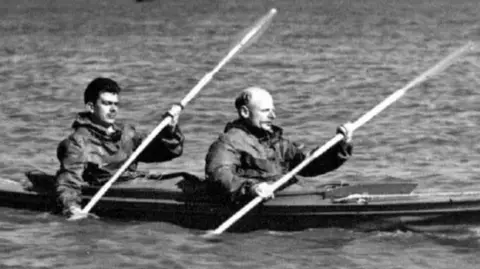
Royal Marine, Maj Herbert "Blondie" Hasler, came up with the idea of using canoes to paddle up the river and plant limpet mines on the enemy ships.
He was put in charge of a new elite unit and 12 men who were chosen to paddle more than 80 miles in canoes to plant mines on vessels.
Hasler asked for men who were intelligent, nimble, of good physique, able to swim, free of strong family ties and eager to engage the enemy.
"He had this idea and this plan to attack German shipping with kayaks, and essentially they became proficient in kayaking, and then they loaded them up with about 200 to 300 pounds of munitions, bombs, limpet mines," said Martindale.
The plan was unknown to Conway and his fellow Marines.
They had been training off the coast of Scotland but it was only once onboard submarine HMS Tuna the men were told of their mission.
 MOD
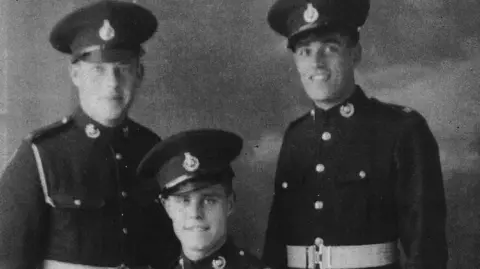
MODConway was now part of Operation Frankton, a special force of canoeists which later became known as the "Cockleshell Heroes" after the Cockle Mark II canoes they used.
The plan was for the men to paddle into one of the most heavily defended estuaries in Europe into the heart of enemy territory.
Ten marines were launched near the mouth of the Gironde River in five two-person canoes and made good progress until they came across two sets of tidal overfalls, where two tides collide over shallow water. Four men were lost.
Soon after Conway and his partner John McKinnon were separated from the group after their canoe was damaged.
The pair survived the freezing waters and made it to land before fleeing through occupied France, were they were betrayed to the local authorities and arrested by the Gestapo, the German secret police.
They were kept in captivity for three months and refused to reveal key information.
They were subsequently executed under Hitler's infamous 'Commando Order'.
Conway, who was aged 20 at the time, was killed in 1943 though the exact date and location are not known.
The remaining four men went on to accomplish the mission.
The significance of Operation Frankton reportedly led then Prime Minister Winston Churchill to say he believed the mission could have shortened the war by six months.
"It stunted Hitler in his tracks," Martindale said.
"It put a shock to the system of the axis forces.
"They thought that the Gironde was impregnable.
"In no way did they imagine that men in makeshift kayaks could slip through, and that's exactly what they did."
The story of the raid was made into a film called The Cockleshell Heroes in 1955.
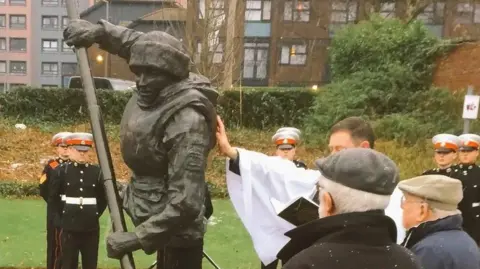
In Stockport in 2017, Conway was also immortalised in bronze.
The statue - paying tribute to the war hero - shows him in a canoe and is opposite the War Memorial Art Gallery in Stockport town centre.
Listen to the best of BBC Radio Manchester on Sounds and follow BBC Manchester on Facebook, X, and Instagram. You can also send story ideas via Whatsapp to 0808 100 2230.
