Will councils' war on net zero change anything?

 PA Media
Reform UK is now running three of the biggest councils in the East of England.
And there has been a consistent theme since they took power, with each one promising to save hundreds of thousands of pounds by cutting spending on climate change initiatives.
During its first week in power, the leadership at Essex County Council declared all net zero strategies would be scrapped.
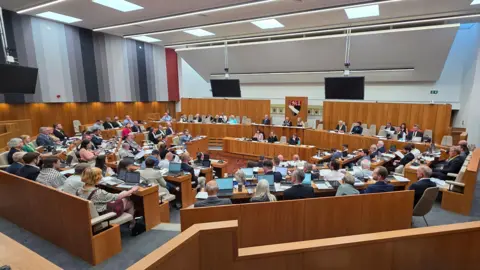
One of the first motions passed at Norfolk County Council's annual general meeting was to order a review of all spending on green initiatives, and Suffolk County Council said it would "cancel" the climate emergency declared by the previous Conservative administration.
Reform says projects aimed at reducing greenhouse emissions can be a waste of money and can't be justified when budgets are under so much pressure.
Opposition parties say that could be a false economy and environmental campaigners believe the proposals are deeply concerning.
So what could be cut by our councils and will it make any difference?
What is net zero?
 PA Media
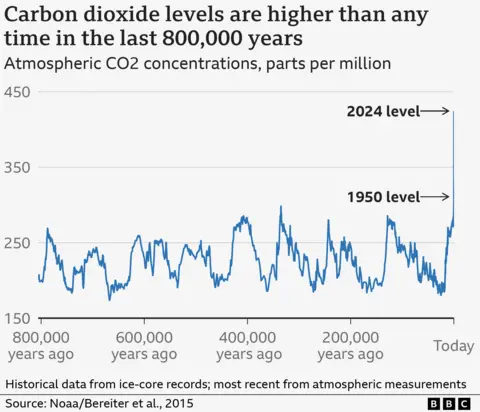
Scientists have provided overwhelming evidence that the planet is not only warming up, but that carbon dioxide levels have shot up since the industrial revolution as a result of man-made emissions.
Net zero refers to an equal balance between the amount of gases or carbon being produced and the amount we are able to remove from the atmosphere by changing the way we do things, like driving electric rather than fossil-fuel powered vehicles.
Reform accepts that climate change is happening but many of its politicians question if it is really caused by humans.
More than 200 countries have agreed to reach net zero within the next 50 years.
The government under Theresa May set a target of 2050 which was written into law and many councils including Norfolk, Suffolk and Essex aimed to be net zero within its estates and business operations by 2030.
How were they going to achieve net zero?
 Paul Moseley/BBC
Councils own a lot of properties and employ a lot of staff and all of them currently have various initiatives to become greener. These include:
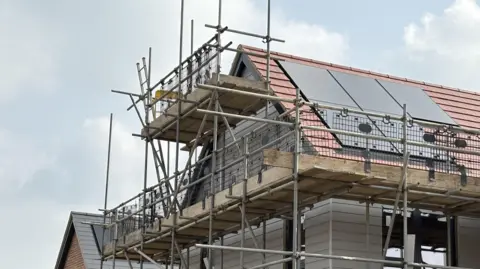
- Fitting solar panels on their buildings
- Replacing ageing gas and oil heating systems with heat pumps
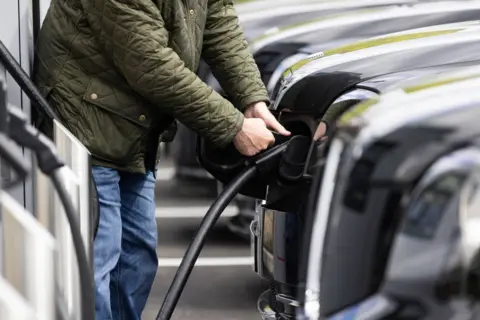
- Making more use of electric and hybrid vehicles and installing EV chargers in their car parks
- Building more cycle and bus lanes to encourage people out of their cars
We don't yet know what the councils will cut but the expectation is that these will be the sort of things in their sights.
The deputy leader at Essex, Russell Quirk, said: "Pursuing net zero targets as currently defined may present significant financial and practical challenges, and we believe it is important to reassess whether this approach is sustainable and delivers value for residents."
Essex set up an independent climate action commission in 2020 and the previous Conservative administration had committed to spending £47.5m on climate-focused activities in 2026-27.
At Norfolk meanwhile, Reform's Nick Taylor will be overseeing the review, and he told fellow councillors that "net zero compliance" was a "secondary consideration".
What could be the impact?
Stopping spending on many of these projects would save some money immediately.
Reform claims that its councils have already saved £100m by scrapping net zero projects, but those figures are disputed. We asked Reform for updated figures but it is yet to respond.
Opposition parties warn that cutting funding, which is connected to net zero, could be a false economy because it also supports regeneration and jobs.
Green Party councillor Ben Price told the county council's annual general meeting that "our net zero strategy is injecting wealth into the most deprived areas of Norfolk".
"Our climate policies are actively delivering levelling up capital to working class communities," he said.
Reform argues that not prioritising net zero will make it quicker and cheaper to build more homes.
Harris has pointed the finger at a project to redevelop 10 homes in Chelmsford which had been designed to incorporate sustainable materials and advanced technologies - but has yet to be delivered.
Some of the projects being reviewed will be part-funded by government grants.
If they were stopped, the money would have to be handed back.
Rebranding
A recent study by the London School of Economics and the Grantham Research Institute on Climate Change found that some Reform-run councils had replaced mentions of climate change in their documents with words like "sustainability" or "energy efficiency".
But they were still spending on projects which could be termed "green" - just without citing climate change as a motivation.
They are also still receiving government grants: Reform-led West Northamptonshire Council has received £2.6m from the Warm Homes Scheme which funds energy saving home improvements.
It may be that after they have done their audits, the councils will continue with a lot of their "green" spending because it produces benefits for the community, creates jobs or saves money.
So will things really change?
It is possible that despite Reform's suspicion of net zero, very little will change, as projects are simply rebranded.
But by not acknowledging net zero, these councils will change the conversation and it could mean that people won't go to the effort of making changes.
The Climate Change Committee, which advises the UK and devolved governments, has said achieving net zero is more cost-effective for the economy than continued reliance on fossil fuels.
The Suffolk polar scientist Martin Siegert, who is now vice-chancellor at the University of Exeter, told the BBC: "If we're not talking about insulating our homes properly even more will be spent on heating them.
"If we're not talking about installing heat pumps or solar panels, that will mean we don't get lower energy bills."
We don't know the councils' plans yet, but expect a lot of passionate argument when their proposals are published.
Do you have a story suggestion for Essex, Suffolk or Norfolk? Contact us below.
Follow Essex news on BBC Sounds, Facebook, Instagram and X.
