Royal finances face a cut. But will much really change?


 BBC
BBCRoyal finances can feel mysterious, like trying to see what's in a crowded room with very little light. The funding mechanisms are complicated, the language antiquated and much about the income remains under a padlock of privacy.
But there are challenging months ahead. A funding cut is on the way, the first for many years.
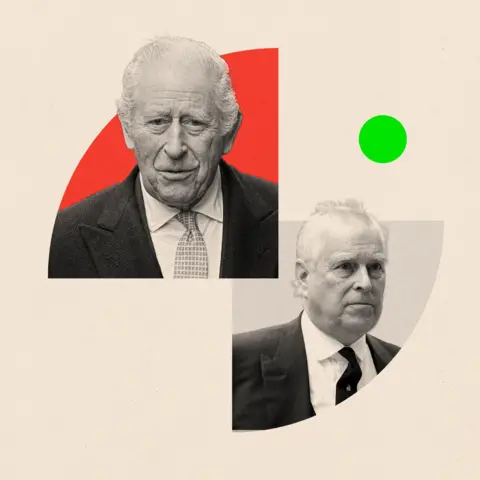
And in the wake of the scandal surrounding Andrew Mountbatten-Windsor, there will be more scrutiny and demands for greater transparency.
If Elizabeth II had in 1992 what she described as her "annus horribilis", the reign of King Charles has had its Andrew horribilis.
Now, for the first time since the Sovereign Grant was introduced in 2012, public funding for the running costs of the monarchy will almost certainly be reduced.
Its current record level was a temporary boost to pay for Buckingham Palace repairs. There are meetings taking place, headed by the Treasury, to see how much it should be lowered.
That review takes place every five years, and Treasury ministers have already signalled that the grant is expected to be at a lower level. That seems to have been confirmed with the announcement of the Sovereign Grant Bill in this week's King's Speech.
 PA
PAMeanwhile, later this summer, MPs on the Public Accounts Committee (PAC) will hold an inquiry into the Crown Estate - an independent property company with a requirement to provide good value to the public - and examine the leasing arrangements for properties occupied by members of the Royal Family.
This was announced after public outrage and questions about value for money raised by Mountbatten-Windsor's previous residency at Royal Lodge in Windsor.
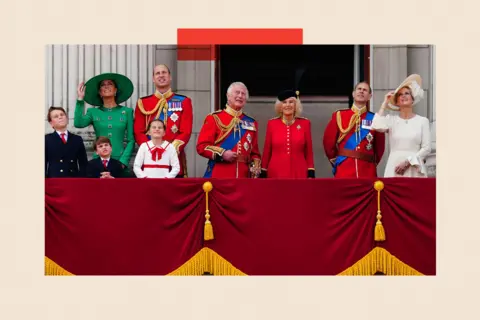
As a wealthy institution in receipt of public funding, money has always felt like an Achilles heel for the royals - and deeper scrutiny of their finances will be uncomfortable for them.
Andrew Lownie, author of a coruscating biography of Mountbatten-Windsor, says Andrew's downfall has raised wider questions for the public about the royals and money.
"It's opened a can of worms for the rest of the Royal Family about their own finances and… I hope there's more scrutiny, as they need to be more open," says Lownie.
Looming belt-tightening
That seems to be reflected in the public mood.
A YouGov opinion poll last month found 64% supported the monarchy, but only 53% thought the Royal Family represented good value for money.
Mountbatten-Windsor has been toxic for the reputation of royals and their finances. Stories have emerged in which he seemed entitled and demanding, including when he was a trade envoy, with former civil servants stepping forward to say the former Prince Andrew had charged taxpayers for excessive travel costs.
"I couldn't believe it… it was like it wasn't real money, they weren't spending any of their own money," a former senior civil servant told the BBC.
 PA
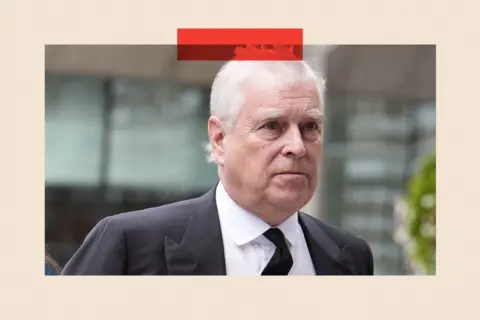
PAThe Epstein Files have raised further questions about his financial dealings with the sex offender, Jeffrey Epstein. Mountbatten-Windsor has always rejected any wrongdoing in his associations with Epstein and denied any personal gain from his role as trade envoy.
The committee of MPs will try to untangle more about his dealings with the Crown Estate, and find out about other royals who are living in their properties, which are meant to deliver public value for money.
The PAC will be asking some awkward questions as it digs around royal leases and finds out what is being paid.
It can sometimes feel as though we're only seeing part of the picture. Even after Mountbatten-Windsor was so publicly removed from Royal Lodge, the BBC later found he was handing back another Crown Estate property nearby, East Lodge, on which he had a lease.
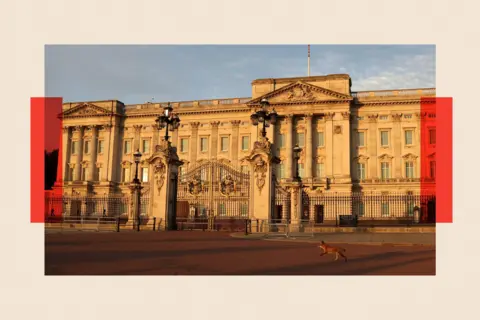
Buckingham Palace is already braced for the reduction of the Sovereign Grant.
 Reuters
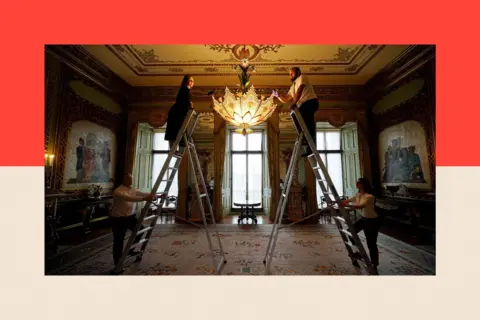
At present, for 2026-27, the Sovereign Grant currently stands at a record £137.9m, in the second of a two-year hike to pay for building work at Buckingham Palace.
Plans for a reduction were indicated by Financial Secretary to the Treasury Lord Livermore. "The government is committed to bringing forward legislation to reset the grant to a lower level from 2027-28 once Buckingham Palace reservicing works are completed," he told the House of Lords in March.
There are now plans for that legislation to carry this out.
Cutting funding will see the end of a long upward trend, with the Sovereign Grant having almost trebled in real terms, taking into account inflation, in the 14 years since the grant was introduced.
The Sovereign Grant was £31m when it was launched in 2012 as a more efficient way of covering royal costs, such as staff, buildings and official travel.
It brought together public funding for the royals into a single payment, replacing a mix of grants from a range of government departments.
It's not known yet how much the reduction might be, or when it will be announced, but the approaching funding cut won't be a surprise to the Royal Household, as it knew that the current high level of funding was only temporary, while palace repairs were completed.
It will nonetheless mean some belt-tightening at an institution that previously kept on receiving increases through some tough years for public spending. Palace officials have always emphasised that funding levels are already transparent and open to scrutiny.
 PA
PAThe grant needs the approval of Parliament and royal funding is subject to inquiry from the National Audit Office (NAO). The level of funding is decided by the Prime Minister, the Chancellor and the Keeper of the Privy Purse, currently James Chalmers, who is appointed by the sovereign to be responsible for the monarch's finances.
On the Buckingham Palace building work, Chalmers has pointed to the National Audit Office saying the project has been "managed well" and the "approach to the programme should set it up to deliver good value for money".
Deciding on a price tag
But Craig Prescott, a constitutional expert at Royal Holloway, University of London, says that the royals have had an uneasy relationship with financial transparency.
"It's always a weak spot for the monarchy," says Prescott. "The Royal Family look like they have fantastic wealth and so the perception is of taxpayers' money going to people who are very, very wealthy in the first place - and that's never a good look," says Prescott.
"However, if you want to have a monarchy that carries out public functions, then the state should pay for that, fundamentally," he says.
The challenge, he says, is "striking that balance", and the forthcoming review of the Sovereign Grant will have to try to achieve it.
 Reuters
In terms of deciding funding levels, part of the problem is finding a benchmark with which to compare. With the current grant you could build six or more new primary schools. But it's a drop in the ocean compared with the potential £40bn to rebuild the Houses of Parliament.
It's less than the annual wages bill for a top English Premier League football club and it wouldn't cover one day of NHS costs.
Should it be seen as an investment rather than as a cost?
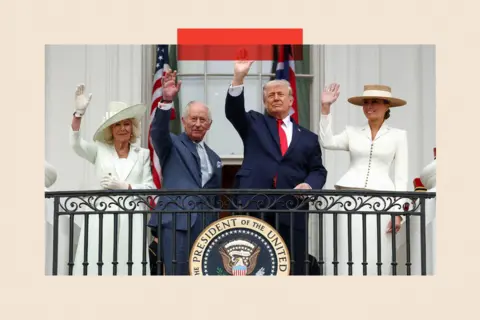
The recent state visit to the United States concluded with the announcement by President Trump of the scrapping of whisky tariffs, which he said was in honour of the royal visit.
 Reuters
The Scotch Whisky Association had told the BBC that the tariffs had cost the whisky industry in Scotland £150m last year.
"Soft power is hard to measure, but its value is, I believe, now firmly understood," said the Keeper of the Privy Purse, introducing the most recent set of financial accounts.
And not all things have a price tag. For instance, how do you measure what 1,900 royal public engagements in 2024-25 meant to local communities?
A proxy for the nation?
The current review of the Sovereign Grant - and the accompanying legislation - will mean temporary changes to a particularly controversial provision.
That's the so-called "golden ratchet" that has allowed for increases in the grant, but prevented it going down.
The Treasury says the forthcoming legislation would allow for a cut to the grant for 2027-28, but only as a one-off measure.
"The 'golden ratchet' would still stay long term," says a Treasury spokesman. So in subsequent years, the 2027-28 level will be the baseline below which the grant can't fall.
That might offer reassurance to the Palace, but will annoy critics of royal finances.
But so far, it doesn't seem likely that there will be a change in the basic mechanism used to decide the amount of the Sovereign Grant paid to the royals.
It is complicated, bordering on confusing, and that must be one of the reasons it can feel so opaque to people.
The grant is calculated as a percentage of the Crown Estate's profits. But the Crown Estate is an independent property company, which pays all its profits to the Treasury, to be used for any government spending.
So even though the Crown Estate is used as a way of deciding the level of the funding, the Sovereign Grant itself comes entirely from the Treasury, and has no other link to the Crown Estate.
When the system was devised, the then Chancellor, George Osborne, said using the Crown Estate as a measure was "not a bad proxy for how the country and the economy are doing".
But there have been questions about linking the fortunes of royal finances to a buoyant property firm, rather than another index such as inflation.
Norman Baker, former Home Office minister and critic of royal funding, observed: "It is instructive that whenever changes to royal finances have been announced by governments over the last 50 years, we are always told they are prudent and represent good value for money.
"Yet they nearly always end up increasing significantly the income for the royals," he wrote in his book, And What Do You Do?
Taxation is also far from straightforward. There is no legal obligation for the King or Prince of Wales to pay tax on their incomes, but they pay voluntarily, at the same statutory rates as other higher-rate taxpayers.
From 'public reverence' to questions about transparency
There certainly seems to be some sensitivity about the annual publication of the royal finances, which can come accompanied with media camouflage, in the form of stories about frugality.
Last year, the accounts came alongside the news that the royal train was to be scrapped. A couple of years before, there was the news that the Palace heating was being turned down to 19C.
But that has not been enough to satisfy everyone. The Andrew Mountbatten-Windsor scandal prompted calls for more openness about royal money.
"We must build a culture of transparency and accountability," said Lib Dem leader Sir Ed Davey, in a debate in Parliament in February.
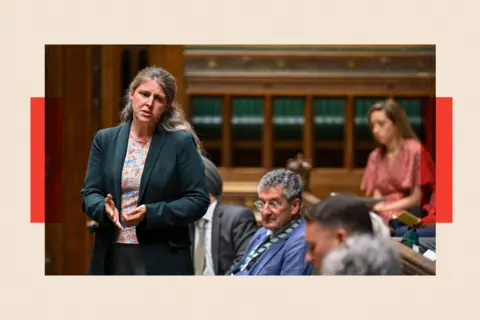
"Unaccountable power must not hide, privilege must not be protected, money must be accounted for," said Rachael Maskell, Labour MP for York.
 PA
PAThat seems to reflect the public mood. The gap between support for the monarchy and those who feel it represents good value in YouGov's poll last month suggested that some might support the broader principle of keeping the institution, but were less convinced about royal finances.
Anna Whitelock, professor of the history of the monarchy, at City St George's, University of London, says there was once a "public reverence" for the Royal Family.
But now, there are questions about "accountability, transparency, power, influence and money, which might well be thought to shed much-needed light, and heat, on the monarchy".
Perhaps it's also about perception as much as the pounds and pence. For a start, does the "Keeper of the Privy Purse" need a less medieval job title?
There are arguments too over what's meant by "public" funding. The Sovereign Grant is described as public, but incomes from the Duchies of Lancaster and Cornwall are called "private", providing more than £20m per year each for the King and Prince of Wales respectively.
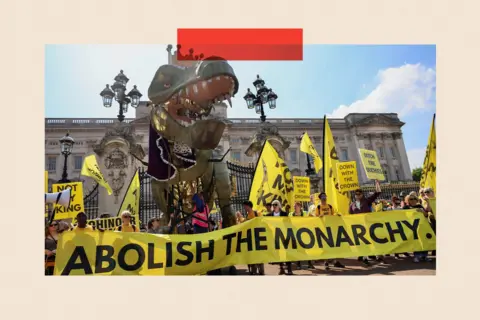
Anti-monarchist campaigners, Republic, have argued that this should also be counted as public funding, as the duchies and their incomes come with the public roles of monarch and heir.
 Reuters
And as well as the Sovereign Grant and duchy incomes, which are disclosed, there are personal incomes that remain entirely unknown, such as investments, income from private estates and inheritances held by members of the Royal Family.
There is no inheritance tax on money passed down from one monarch to the next. And the fact royal wills are not made public adds another layer of secrecy.
The royals receive public funding, says Prof Whitelock, "yet the financing of the monarchy is rarely a matter for public discussion and we are left quite deliberately in the dark".
Changing times ahead
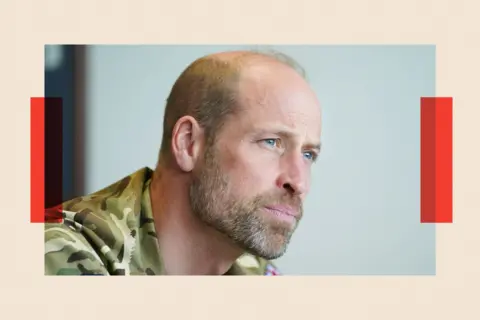
The Prince of Wales has talked about wanting "change" in his approach to the monarchy.
And there's already been a distinct shift in tone when talking about his rather feudal-sounding property business, the Duchy of Cornwall. That's now describing itself as a "social impact" organisation, which sounds more like a not-for-profit trust.
"The Duchy of Cornwall is changing. Our new strategy puts social and environmental impact at the heart of everything we do, ensuring the Duchy becomes a force for good in all the communities we serve. That means investing our time, resources and energy into initiatives that deliver meaningful, lasting benefit," said a Duchy spokesperson.
 Reuters
"This is the direction of travel for the Duchy: long-term investment, real partnership with communities, and a clear focus on positive impact."
That means creating 12,000 homes, including a project to tackle homelessness. And 3,000 acres of peatlands are being restored.
There are reputational risks for the royals around their finances. If they want to project an image of being a force for good, supporting worthwhile causes, then they need their financial affairs to reflect that and seem above reproach.
Their finances need to be seen to be about public service rather than private gain.
Prof Pauline Maclaran, of Royal Holloway, University of London, says this becomes an issue of trust if royal finances "jar with their public image".
The royals can be surprisingly adept at seeing where change is necessary and with more sustained scrutiny of their funding likely, they may need to be.
Top image credit: Getty Images

BBC InDepth is the home on the website and app for the best analysis, with fresh perspectives that challenge assumptions and deep reporting on the biggest issues of the day. Emma Barnett and John Simpson bring their pick of the most thought-provoking deep reads and analysis, every Saturday.Sign up for the newsletter here
