Cornwall coast becomes haven for rare bumblebee

 Pip Cook
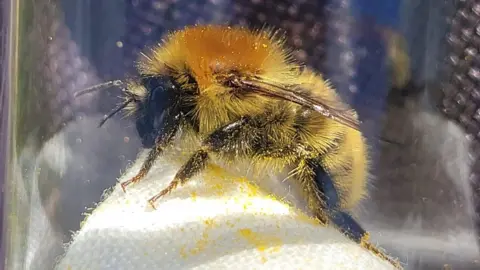
Parts of Cornwall's coastline have become an important refuge for one of England's rarest bumblebees, conservationists have said.
The Bumblebee Conservation Trust said the Moss Carder bumblebee is now found in only a handful of locations after disappearing from many parts of the UK where it was once common.
The species survives in a few hotspots, including Penhale near Perranporth, the Lizard and Gwithian Towans.
"The South West is one of those places where the Moss Carder is still found, and it's really important to try and keep the populations that are here so they don't disappear," said Pip Cook, the trust's South West project officer.
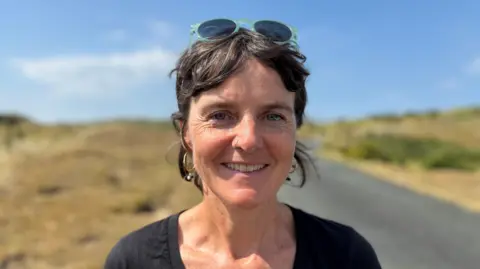
She added: "We've already lost several bumblebee species from Cornwall. They're now extinct and we don't want this to be the next one."
Cook, based in Perranporth, said the landscape and the climate had helped support the Moss Carder species exist in the region.
She said the region offered "prime coastal spots with heathland or open grass sand dunes, lots of flower availability and no pesticides".
"The Moss Carder bee likes cooler, wetter climates and, traditionally, Cornwall has been that, which is probably partly why it's still here," she said.
"At the moment, it's getting hotter and drier in the summers, and that definitely has a negative impact on bumblebees."
 Pip Cook
The Bumblebee Conservation Trust is leading a three-year project to help reverse the species' decline across key landscapes in England, including Cornwall, the Kent coast and the North Pennines.
The charity said funding of more than £500,000 from Natural England will enable it to build on previous projects, in which staff and volunteers had monitored populations, and move forward with plans to enhance the habitat.
It said the work was being carried out with the University of Cambridge, alongside landowners, communities and researchers who were working to better understand the bee's needs and improve conditions for its remaining populations.
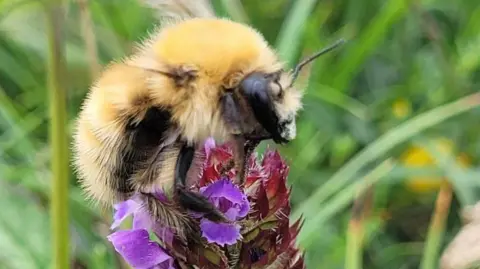
Cook said the Moss Carder relied on areas with "plentiful wildflowers and little intensive farming".
She said: "They are really important pollinators of our wild landscapes.
"They have longer tongues than a lot of other bees, so they can reach parts that other bees can't and they go to flowers that other bees don't bother with."
Laura Larkin, assistant England manager for Buglife, based in Plymouth, said bumblebees were facing a range of pressures.
She said: "Since the 1940s, we've lost more than 97% of our flower-rich habitat.
"The places that do remain are isolated from each other and you've not got that connectivity."
Larkin said people could also help struggling pollinators.
"Anybody can make a difference. By doing lots of small actions, putting more flowers in your garden and not using chemicals, every little thing will help."
Follow BBC Cornwall on X, Facebook and Instagram. Send your story ideas to spotlight@bbc.co.uk.
