Traders report rise in red tape and costs post-Brexit

 Getty Images
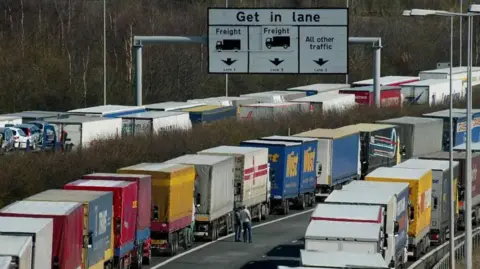
Ten years on from the Brexit referendum, businesses across the South East have spoken of the increased costs and red tape they have experienced since the UK left the European Union.
BBC South East has spoken with a range of companies in the region and all agreed that life for businesses trading in the EU is now harder.
While there are some who still believe in Brexit, others said they were left "scouring the world" for staff in the aftermath and reported a 10-times cost increase in sending a single pallet of stock.
With exports lower than pre-Brexit levels, the UK government says it is working on a closer relationship with the EU, but has ruled out rejoining a customs union or single market.
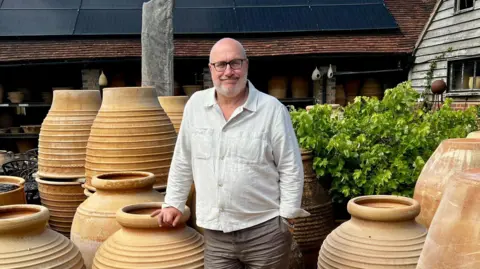
David Dodd is the owner of Pots and Pithoi in Crawley, West Sussex. His business makes hand-thrown terracotta pots, and can even claim King Charles as a client.
Two years after the referendum, Dodd feared an increase in paperwork and administration would add costs. Now, he says his customers further afield have largely disappeared.
"Cutting those ties with our neighbours just hasn't worked out for us at all," Dodd said.
"Our whole European export market has basically dried up completely. Before Brexit, the cost of sending a one-ton pallet was between £100-150. We're now looking at about £1,200.
"Over the last five years, we've got tens of thousands of pounds in lost sales."
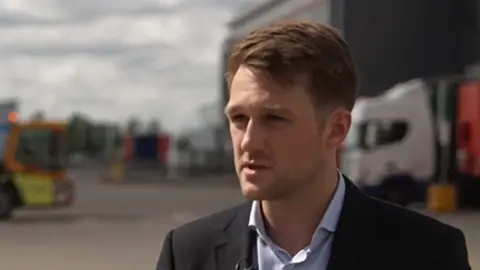
At the Europa logistics firm in Dartford, Kent, they agree transporting goods has become costlier and more complex - not what they hoped for when they welcomed Boris Johnson 10 years ago to campaign to leave the EU.
But the additional costs have not changed their minds.
Jack Baxter, road operations manager, said: "I would vote leave again and I believe that the UK has got a very positive future ahead of it, because we've got the opportunities that Brexit has presented."
Europa has done well since Brexit, the company says, beating the competition by being able to adapt quickly in uncertain times.
Baxter says that if regulations are cut in the future, then Britain could make more, meaning more products to move around.
"Our long-term vision is that the UK being a sovereign nation and taking back control of our borders, our own legislation, is good for UK productivity, good for the UK economy," he said.
"What's good for the UK economy is good for our business."
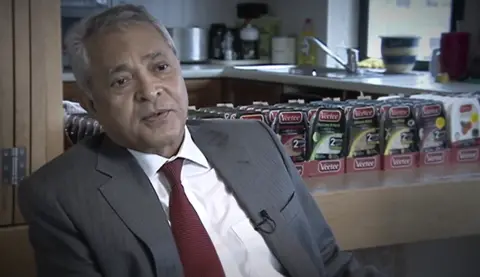
In Rochester, Veetee imports and processes rice, which it then sells around the world. Ten years ago, owner Moni Varma was worried about what Brexit would mean for incoming investment.
"Staff was a big difficulty, still is, and paperwork, the red tape is just horrendous," he said.
Skilled staff from the EU, he says, just went home.
"We had to spend about £15,000 to £20,000 per visa. We had to hurriedly bring in about 40 people. We scoured the world, brought in people from South Africa, some from the Middle East and some from India, just to keep the factories running."
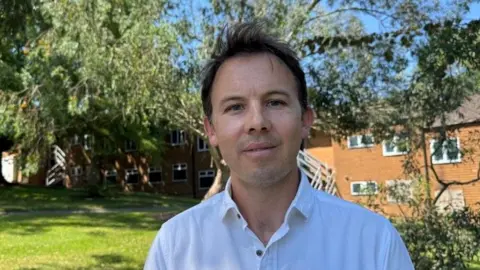
Nic Mogford-Revess is director of strategic growth at LGM Products - which builds specialist fire solutions for harsh environments - based in Farnham, Surrey.
One of their biggest clients is the maritime market, and they export to the EU between 10 and 15 times each day.
Mogford-Revess voted to remain and said the driver for that was to retain access to the common market.
'More work, same result'
"Although we do have the free trade agreement, we have to do paperwork to prove we're part of that," he said.
"We have to do more work to do the same thing we were doing 10 years ago. Then there's the cost."
Roughly 95% of LGM's products are made in the UK, but aligned with EU specifications. Mogford-Revess said the UK previously had a voice in setting those specifications but, as it "no longer has a seat at the highest table", the UK now has no say.
"We're not turning our back on the UK... but our need to be in the UK is reduced," he said.
"I feel we've actually lost control."
A government spokesperson said: "We live in a post-Brexit world, and it is time we focus on building a closer, forward-looking relationship with Europe that works for the British people and businesses.
"At the next UK-EU Summit, we will deliver an ambitious package of deals to boost trade, cut red tape and create opportunities for young people."
All the businesses BBC South East spoke to have survived but say it has been tough.
As the years go by, it becomes harder to quantify which changes are caused by Brexit or by huge world events, like the pandemic or wars in Ukraine and the Middle East.
But here in the South East, businesses have no doubt about the impact of leaving the EU. The end of free-flowing trade with our neighbours has meant challenging times for all of them.
Follow BBC Kent on Facebook, on X, and on Instagram and listen to BBC Radio Kent on Sounds. Send your story ideas to southeasttoday@bbc.co.uk or WhatsApp us on 08081 002250.
