Concern over air ambulance access to hospitals

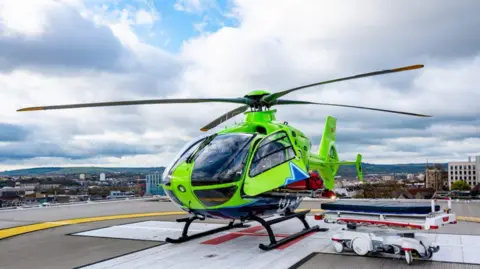 Great Western Air Ambulance
Serious concerns have been raised about a number of hospitals failing to provide round-the-clock access to air ambulances.
New research conducted by the All-Party Parliamentary Group (AAPG) for air ambulances found "serious issues" at the Bristol Royal Infirmary, where crews were only offered severely limited access to the helipad.
The report warned "early access has meant the difference between a family preparing for bereavement and a patient walking out of hospital weeks later".
Dr Rebecca Maxwell, medical director at the BRI, said robust measures are in place for transfers with critical care support during the overnight hours when the BRI helideck is closed.
A BRI hospital spokesperson added that the helipad is open from 09:00 to 19:00 each day and extending those hours is not within the hospital's authority. They added that the BRI works with Southmead Hospital's helipad, which is 3 miles (4.8km) away during out of hours emergencies.
"The closure of the helipad does not delay critical care, as the air ambulance team includes a critical care doctor and paramedic. This means critical care is provided at the scene and during transport," the spokesperson said.
The Royal United Hospital in Bath, Bristol's Southmead Hospital, and Salisbury District Hospital were all placed in the amber category, which means they have limited access.
However, a spokesperson for Southmead Hospital said their helipad is operational 24/7.
Of all the hospitals in the West of England investigated by the APPG, only Great Western Hospital in Swindon was deemed to have entirely operational helipads available at any time of day.
The APPG, supported by air ambulance trusts around the country, is now calling for it to become a national NHS policy requirement for major trauma centres.
Currently no such requirement exists, meaning provision is determined locally and is impacted by budget constraints of different trusts and also planning laws governing noise and the "down-draft" - the air forced down by the propeller - of helicopters.
The report warned that air ambulances are frequently required to land off-site, requiring a further transfer to a land ambulance, costing both extra time and an additional expense of between £200 - £600 per incident.
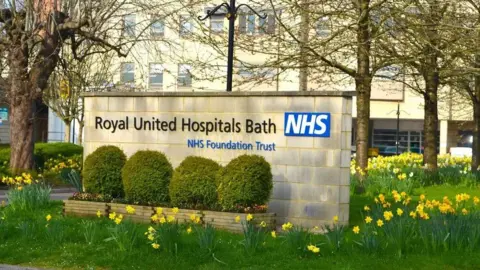 RUH Bath
Richard Miller, from the Wiltshire and Bath Air Ambulance, said: "With the Royal United Hospital, we are unable to land there at night time. It would literally take a set of lights and the staff putting them out when they know the aircraft is coming out at night."
Mike McGrath, chief executive of Air Ambulances UK, added: "It's amazing to think just how possible this change is.
"It's all about bringing specialist care to patients as quickly as possible, as we know every single moment matters."
Follow BBC Bristol on Facebook, X and Instagram. Send your story ideas to us on email or via WhatsApp on 0800 313 4630.
