'They shouldn't all be in London' - the call to bring back our lost lidos

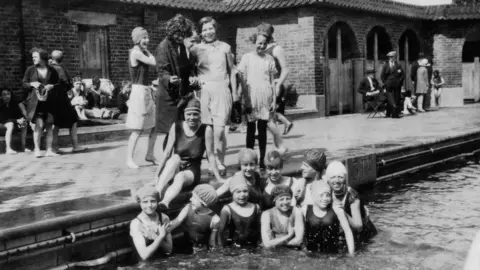 Girl Guide Association, Nottinghamshire/Nottingham Local Studies Library/Picture Nottingham
During a long, hot 1960s summer, a teenage Chris Noble became obsessed with his local lido.
He spent every single day of the summer of 1967 at Highfields Lido in Nottingham, often from open to close.
He, like many in the city, remember it as more than just a pool. He learned to swim in its expansive and notoriously chilly waters, and later took his future wife on dates there.
But the tide turned against lidos, and people living in Nottingham - and a number of cities and counties across the country - have gone from having several public outdoor pools to none.
With five heatwaves so far this summer, and concerns about young people swimming in dangerous waters to cool off, some in the city are now looking back on the closure of these sites with regret and sadness.
So where did they go? And is there a chance they could return? Let's dive in.
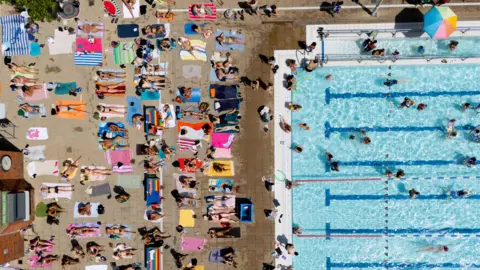 EPA/Shutterstock
At one point, there were at least seven public outdoor pools in Nottingham and Nottinghamshire.
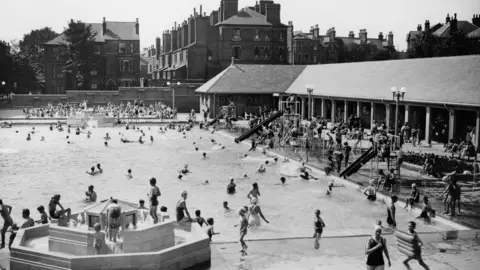
Highfields Lido was the biggest of its kind in England when it was built in 1924, measuring 330ft by 75ft, and holding 3,400,000 litres of water, originally sourced from the nearby boating lake, according to the University of Nottingham.
Noble and his friends were attracted by the "grooviness" of the sunbathers and used to show off their skills on the wooden slides while listening to pirate radio.
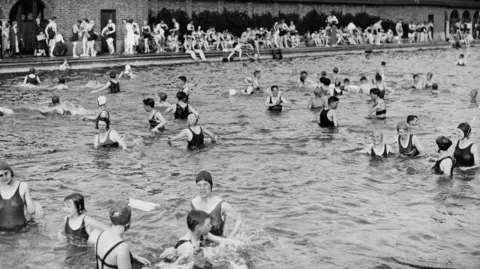 Nottingham Local Studies Library
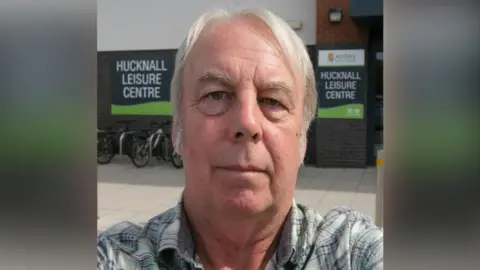
"I was absolutely obsessed," the 70-year-old said. "Night and day I would be thinking about it. Over the winter period I'd look through the gates longingly, willing it to be open.
"We went every day because we enjoyed it so much.
"[It was] a real valuable asset where people of all ages, particularly youngsters who were very fond of it, could go spend the whole day there."
It was soon joined by others. Carrington and Bulwell lidos in Nottingham opened on the same day in 1937, according to Lidos and Pools UK.
Calverton Lido was fed by a local spring and also opened in the 1930s, despite local fears it would be used as a nudist colony, local historians said.
It initially boasted two apes as an attraction plus a social club with a bar and a stage.
They said it was extended in the 60s and 70s - although a coal seam mined directly underneath it at about the same time caused it to tilt, ultimately contributing to its decline.
Papplewick, in Nottinghamshire, got one in the 1950s, and female volunteers built a lido in Clipstone in the 1960s, with entrance fees subsidised by the local miners' welfare, according to the Mansfield Chad newspaper. There was also one in Newark.
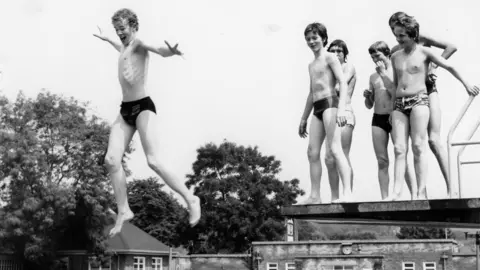 Nottingham Local Studies Library
According to Tom Fort, author of Lido Land, lido building boomed in the 1920s and 1930s, as people had more leisure time, local authorities sought to improve public health and traditional morals around clothing loosened.
He said they were places not just for swimming but also sunbathing, having picnics and enjoying cafes.
"A lot of old-fashioned ideas about the sort of dress and behaviour sort of fell apart after the end of the First World War," he said.
"People realised that they were not having enough fun, there weren't enough amusements around.
"They wanted more from life, and leisure and being outdoors and having fun was really part of that.
"These open-air pools used to be great places for youngsters to go and mess around."
 Nottingham Local Studies Library
Michael Wood, assistant professor in sport management at the University of Northumbria, has been researching lidos, and is working to bring them back across the country, including his local Tynemouth outdoor pool.
He said an estimated 650 were built in total across the country, largely by local authorities, and they reached their peak in the 1950s and 60s, when there were more than 300 open.
But in the 1960s, government policy switched to supporting indoor pools, because lidos tended to be seasonal, particularly because of the heating technology available at the time.
This led to a decline in investment in modernisation of the existing lidos, and according to Wood, very few were built after the 1960s.
 Michael Wood
"I would put [their demise] down to them being in a state of managed decline and disrepair," said Wood.
"If you look through where all those different outdoor pools were in Nottingham, you will find within a very close proximity to them will be a new indoor pool or will have been a new indoor pool."
He said there were now about 160 public outdoor pools left - although there were still many more privately-owned ones, for example in gyms and hotels.
 Chris Noble
He said the ones that hung on were largely in the south, where the population density could sustain multiple leisure options.
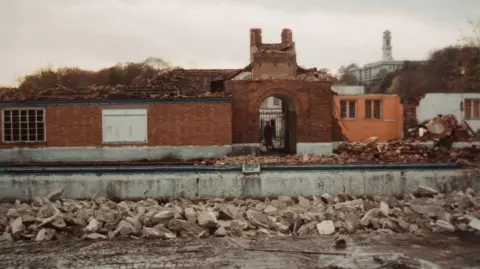
Most of Nottingham's lidos began to close in the 1980s, and the last one, in Bulwell, closed in 2003, despite protests, according to the Nottingham Post newspaper.
It said its demise was blamed on fewer people using it and the high cost of essential repairs.
It has now been replaced by housing.
 Chris Noble
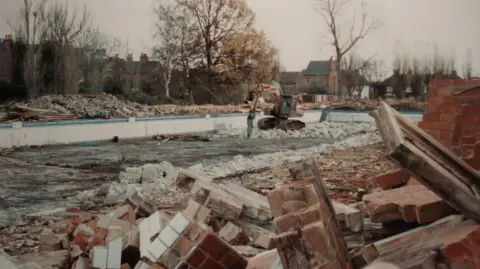
Noble admitted the Highfields Lido had become noticeably less popular and run-down before it closed in 1981.
He said the concrete slabs on the sun deck sank, exposing sharp edges to catch toes, the cafe became too expensive to operate with fewer customers and the pool lining and fencing was left to deteriorate.
"It was just left to die-hards like myself," he said.
"There were several plans put forward... but I think what happened was the university intervened because they wanted the land.
"That really swung things in their favour and prompted the council to sell it off.
"I feel very sad and quite upset. It's a big loss to the city.
"When you hear of kids in particular, teenagers going into the River Trent, going into canals, reservoirs, etc, some of them falling foul and some of them even dying.
"It's really sad that there's nowhere such as Highfields Lido that they can go to."
It has since been replaced by an art gallery.
 Chris Noble
Such stories are common across the country.
However, in recent years there has been some successes in bringing them back.
Some historic pools like Saltdean in Brighton and Hilsea Lido in Portsmouth have been refurbished and reopened, and there are plans for a new one in Ilford, London.
In Nottingham, Wendy Patrick, 70, is campaigning to establish one for the area, pointing to a derelict shopping centre in the heart of the city as a handy location.
She said unlike in other places where the structures still exist, making it easier to restore, all but one of Nottinghamshire's lidos had been built over.
Nottingham City Council confirmed there were no plans for a new lido in the city, and such a project would cost millions of pounds. The building of the lido in Ilford is reported to cost "no more than £4m".
 PA Media
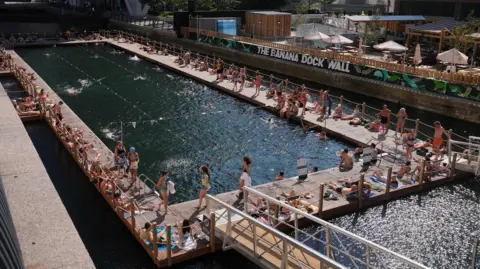
But Patrick is undeterred and has suggested a "pop-up lido" - essentially a large paddling pool - or cordoning off bits of the River Trent, as has been done at docks in London.
"It's a shame we lost them," she said. "Things have fashions, perhaps they went out of fashion.
"Obviously global warming is a terrible thing but it's a fact and it does mean that our climate has changed and open-air swimming, which is 10 times better than swimming indoors, is going to come back into fashion again.
"I would really like to see one back. They shouldn't all be in London."
She has been collecting a list of former lidos around the county, and including lesser-known ones such as a lido in the hamlet of Moorgreen, dug out by miners, as well as others in Beeston and at Stanford Hall.
 Deborah Aydon
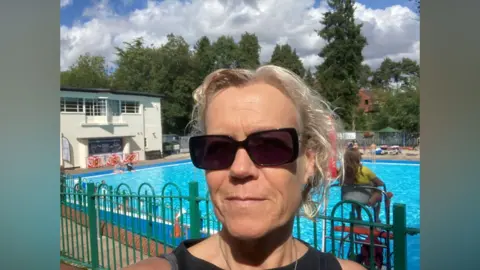
Deborah Aydon, who co-founded the campaign group Future Lidos along with Wood, said it was not just nostalgia that was driving their popularity, but a real demand from "people from all backgrounds".
She said they were more accessible and welcoming than other sporting facilities, including indoor pools, and in the summer offered a safe place for people to cool off while still enjoying the sun.
"We've seen what happens when people jump into bodies of water that aren't necessarily safe or who don't necessarily have the swimming and self-rescue skills to keep themselves safe," she said.
"There's been some awful tragedies around the country this year.
"And the wonderful thing about lidos is that they're lifeguarded, they're supervised, and they're great places not only to enjoy water, but to learn how to enjoy water safely.
"We have such high levels of inactivity and people are clamouring to have their own lidos.
"Then I say, give them the lidos and let them be active."
Listen to BBC Radio Nottingham on Sounds and follow BBC Nottingham on Facebook, on X, or on Instagram. Send your story ideas to eastmidsnews@bbc.co.uk or via WhatsApp on 0808 100 2210.
