Lavender farm welcomes visitors from across the globe

 BBC
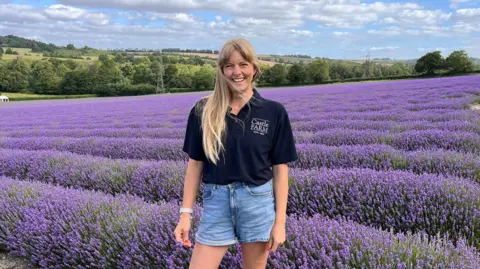
BBCA lavender farm in Kent has started welcoming visitors from around the world as it begins its annual tourist season.
Castle Farm in Shoreham, near Sevenoaks, opens its lavender fields to the public every June and July and the owners said they were continually surprised by the lengths some visitors go to get there.
"It's like a World Cup of lavender," said Lorna Roberts, whose family have been farming the land for five generations.
"We place a chalk board up at the entrance, encouraging guests to write which country they have travelled from, and on Sunday we counted 56 different nationalities!"
Visitors from countries including Bangladesh, Sweden, Peru, Egypt, and New Zealand signed the board in brightly coloured chalk.

The farm has been offering a range of activities such as walks and picnics in the lavender fields for several years, attracting a huge following on social media.
To facilitate the high number of online influencers sharing photographs to their accounts the farm installed wifi broadband signal boosters around the fields.
Roberts said: "When my parents first planted the lavender 25 years ago, there was no Instagram or anything like that, but now we have people coming here from all over to take the perfect photo for their socials."
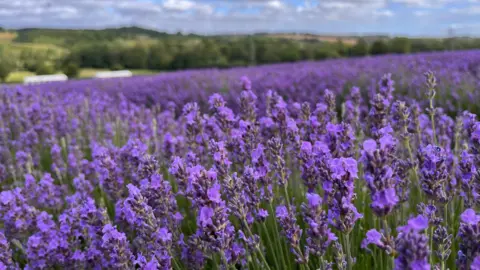
As the morning sun rises, a gentle breeze wafts the fragrant lavender and bees are buzzing around the flowers, but Roberts said it had been far from relaxing getting the 2026 crop into its present state.
Due to the year beginning with persistent rainfall and then a nine week spring drought, the crop will not produce the high yields of oil in seen in previous years.
However, Roberts said it was two nights of frost in May which caused the most damage as the cold air "rolled down the hillside, settled at the lower level and killed off the early buds which were about to bloom".
As a result, the crop has bloomed later than expected, with stalks not growing to their usual height making harvesting more difficult.
Yet the unusual weather patterns this year could benefit the burgeoning tourist trade as "lavender loves the dry weather" and is now thriving to extend "the colour and the season" for a further two weeks, Roberts said.
She added: "We have people sometimes come straight to us off the plane at Heathrow with their suitcases and ask if we have a concierge?
"We say, unfortunately not, but we can store them in our packhouse whilst they enjoy the fields!"
Follow BBC Kent on Facebook, X, and on Instagram and listen to BBC Radio Kent on Sounds. Send your story ideas to southeasttoday@bbc.co.uk or WhatsApp us on 08081 002250.
