Did Burnham fail to tackle homelessness as mayor?

 Greater Manchester Combined Authority
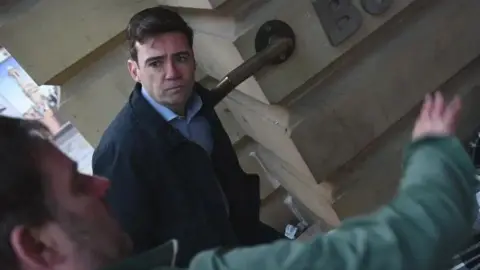
Andy Burnham has twice pledged to end rough sleeping - when he was elected mayor of Greater Manchester and again in front of 10 Downing Street on Monday, in his first speech as prime minister.
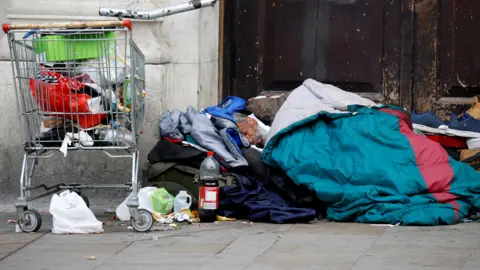
His promise as mayor to end rough sleeping by 2020 appeared successful at first, with figures falling from 268 people sleeping on the street in 2017, to 90 in 2021.
But the dip also coincided with a national effort from councils to bring rough sleepers inside during the Covid-19 pandemic, and the figure has begun to rise again alongside hikes in the cost of living.
Some have criticised Burnham's failure to keep his promise as mayor, while others say 'the story in Manchester is positive'.
 Getty Images
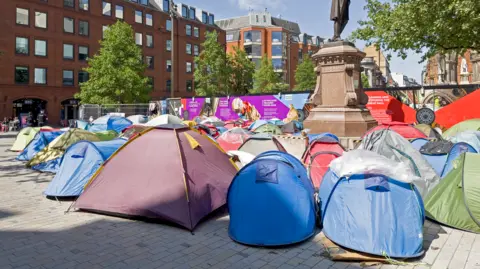
There were high-profile flashpoints in the city during his time as mayor, including the clearance of tents around St Peter's Square.
Last year, Manchester City Council said refugees were particularly drawn to Manchester as a "friendly global city", but many were falling into rough sleeping as support services grew overloaded with rising demand.
Those critical of Burnham's approach to the issue include Conservative shadow housing secretary Sir James Cleverly, who said he "failed" to meet his 2020 pledge as mayor "because he didn't do the hard work".
While Reform's Robert Jenrick told the BBC: "He's not the first person I'd pick up the phone to for advice on how to tackle rough sleeping."
But charities that worked closely with the new prime minister told the BBC he had invited people "outside of the political class" to help tackle the issue.
 Getty Images
Meanwhile, homelessness organisations pointed to a lack of social housing placing a strain on efforts to cut rough sleeping.
The Greater Manchester Combined Authority (GMCA) reported that more than 89,000 households were on social housing waiting lists across the region in 2024-25.
It has outlined plans to build 10,000 social homes by 2030 to meet demand.
What did Burnham do?
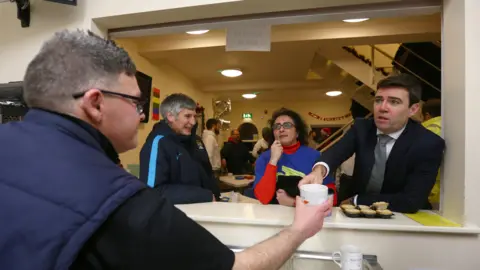
During his time as mayor, Burnham backed Housing First, a government-funded initiative to give former rough sleepers a permanent home before wider issues are addressed, and it was introduced in the region in 2019.
It has seen a reported 458 people cumulatively rehoused, with 269 people currently on the programme.
A year earlier, Burnham set up 'a bed every night' scheme, which offered emergency accommodation to those on the streets, and now provides more than 600 bed spaces.
He assigned teams to help rough sleepers find permanent housing, addiction support and other types of care.
It led to a drop in the number of rough sleepers in Greater Manchester from 268 in 2017, to 90 in 2021. But the figure has risen each year since then.
The estimates are a snapshot gathered on a single night each year.
Speaking in 2025, Burnham said factors like the cost-of-living crisis and evictions from the asylum system had placed "a significant strain on services and leaves more people at risk of homelessness".
Meanwhile, Paul Dennett, the Greater Manchester Combined Authority's lead for Housing First blamed "austerity, welfare cuts, and the chronic undersupply of social housing" as major factors.
How the city compares
Professor Suzanne Fitzpatrick from Heriot Watt University in Edinburgh led a study on efforts to tackle rough sleeping in 13 city regions across the world.
She said Greater Manchester had the most "ambitious target and the most impressive result in reducing homelessness by 52%" up to 2020.
Fitzpatrick said much of the success could be attributed to Burnham's "high profile political leadership".
Her university colleague professor Beth Watts-Cobbe, also a homelessness specialist, said while rough sleeping numbers had gone up, in Greater Manchester they still "compare really favourably to the national picture".
She said: "The story in Manchester is positive and it's frustrating to keep hearing the take that 'Burnham failed'.
"He absolutely didn't, and the subsequent rises are in substantial part driven by national government policy choices."
 Reuters
Hendrix Lancaster, 47, from Manchester-based homeless charity Coffee4Craig, told the Local Democracy Reporting Service Burnham's commitment as PM was "ballsy" and speculated about how he'll tackle the issue nationally.
"I think the way he'll do it is by giving more powers to local authorities, that's worked in Greater Manchester, so why not."
He said the charity used to see more people with addiction issues on the street, but recently had witnessed more working people who had lost homes and were "sleeping in cars and vans".
Yvonne Hope, chief executive at Barnabus, said the drivers of rough sleeping and homelessness have changed since Burnham was first elected mayor in 2017.
She said: "The cost-of-living crisis, Ukraine, the cuts to local services, especially around adult social care, mental health, children's services, all of those cuts just make things worse and worse for people who are really vulnerable.
"We're even seeing families with young children on the streets now, and older people."
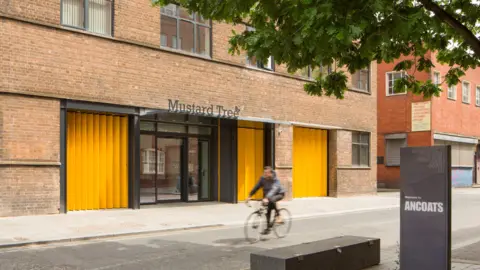 MustardTree
Mustard Tree CEO Jo Walby said there are still fewer people on the streets now than when Burnham first became mayor.
She said he had given opportunities to people "outside the political class" to help develop strategies, scrutnise and contribute ideas as part of the efforts to tackle the problem.
"We don't know how bad it would have been without Andy Burnham as mayor.
"Andy realised he could only go so far without changing national policy – devolution has only gone so far.
"Government set areas like house building, local housing allowance rates, benefits and immigration, national skills and education. These are all things that can either worsen or improve homelessness."
His ability to mobilise people and resources across sectors had been successful, and he had provided clear direction, she said.
Listen to the best of BBC Radio Manchester on Sounds and follow BBC Manchester on Facebook, X, and Instagram. You can also send story ideas via Whatsapp to 0808 100 2230.
