Work begins on Sir Bobby Robson cancer centre

 BBC
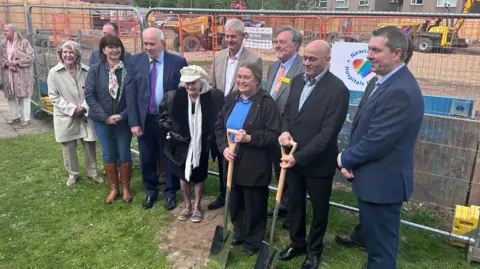
BBCWork has started on the construction of a £30m centre for cancer research and treatment named in honour of the former England football manager Sir Bobby Robson.
The institute, which is being funded by the Sir Bobby Robson Foundation, will be built next to Freeman Hospital in Newcastle.
A ceremony was held on Tuesday to commemorate the first spades in the ground on the project.
Mark Robson, Sir Bobby's son and chair of the foundation, said: "It's an enormous pride for the family and we give enormous thanks to all the medical staff and fundraisers involved."
He said: "Dad had incredible drive and strength to have a 55-year career in football and his battle with cancer after that.
"He knew he was going to pass away, but he set up this foundation with the hope of improving treatments and that's exactly what's happening.
"It would be a great moment for him if he was here."
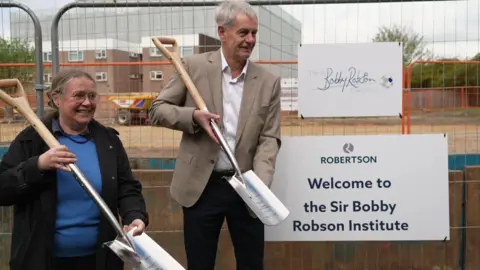
An initial grant of £20m was handed to the project from the foundation, with the remaining £10m coming from a fundraising campaign by the charity.
The three-storey building will be run as part of Newcastle Hospitals and join with the Freeman Hospital's cancer and blood disorders research team, as well as the existing Sir Bobby Robson Cancer Trials Research Centre based at the Northern Centre for Cancer Care.
Its catchment area will cover 3.5m people living in the north-east of England, Cumbria, and North Yorkshire, but the Trust hopes its research could help cancer patients around the world.
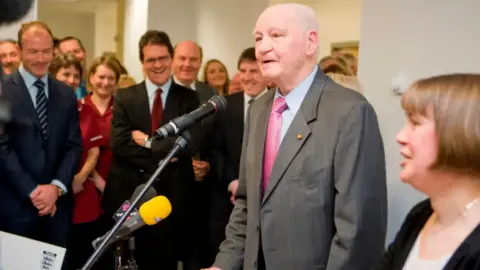
The existing research centre was opened by the former Newcastle United manager in 2009.
Sir Bobby was diagnosed with cancer on a number of occasions throughout his life and died, aged 76, in the same year the centre opened.
 The Sir Bobby Robson Foundation
The Newcastle Hospitals NHS Trust said the new institute would increase research activity by 50% over five years and lead to more complex and larger trials.
Prof Ruth Plummer, director of the existing research centre, said that research was honouring Sir Bobby by doing "what he asked us to do".
"There are exciting new ways of treating cancer where patients are living longer and better - that's what he said would be his legacy.
"To be able to have this vision and capability to go bigger and say we could actually do more is fantastic."
