From sold homes to lost savings - the cost of paying for dementia care

 BBC
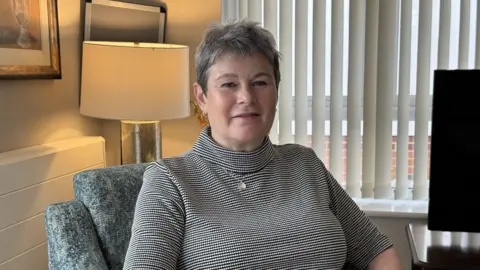
BBCThe boss of a Shropshire care company has called for a "complete overhaul" of the social care system, warning that families who have relatives with dementia are being left to absorb financial costs that can wipe out a lifetime of savings.
Coverage Care Services runs 10 specialist dementia homes across Shropshire and Telford and Wrekin, supporting more than 600 people and employing about 1,000 staff.
Debbie Price, Coverage Care's chief executive, said about 70% of her organisation's funding came from local authorities, but argued those sums no longer reflected the realities of modern dementia care. "People are coming into care much later in life — far frailer, with more complex needs," she said.
The Department of Health and Social Care said the government was providing more than £4.6bn in additional funding for adult social care.
Price said: "Social care has been underfunded for decades. Nobody is recognising the true cost - especially for families and what they ultimately lose."
Families in Shropshire say soaring care costs are forcing devastating choices about loved ones, homes and inheritance.
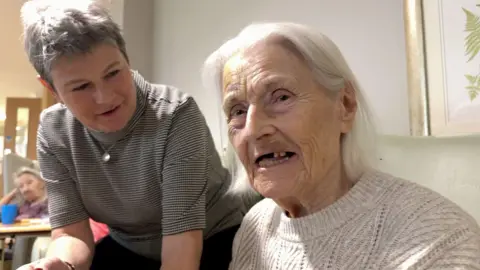
Among them is Judith Holt. Her mother Marjorie Herbert, who is 96, has severe dementia and has lived in a care home in Shrewsbury for two years.
Judith is also paying for support for her father, who is cared for at home.
"It's horrendously expensive," she said.
"I've applied for NHS continuing healthcare, but the process is complex and there are no guarantees."
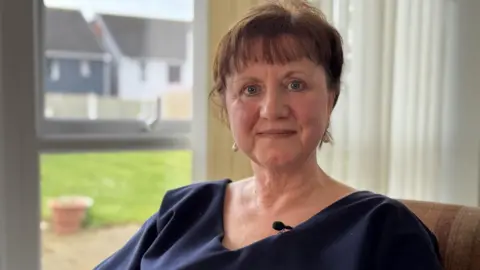
Holt described her parents as hardworking and careful with money.
"My father was a deputy head at a comprehensive school, my mother was a nurse.
"They weren't wealthy — they were frugal. They bought their home and always said what they saved would go to the grandchildren, to help them get on the property ladder."
Instead, she said, that legacy was being dismantled.
"The money is going at a rate of knots — nearly £200,000 a year," she stated.
"When it runs out, the house will have to be sold. Everything they worked for is disappearing."
Figures show dementia nursing home fees in England have risen by about 25% over the past five years, driven by rising staffing costs, National Insurance contributions, energy bills and recruitment pressures.
At the same time, pressure on councils has intensified sharply.
Official data suggests that in 2019, adult social care accounted for about 40% of total council spending in England.
By 2024, that figure had risen to 66%, underlining how care now dominates local authority budgets.
Weekly dementia nursing care typically costs about £1,500, rising significantly for complex needs.
Under current rules in England, anyone with more than £23,250 in savings or assets must fund the full cost themselves — often forcing families to sell property, usually the family home.
Councils under pressure
Shropshire Council said it remained committed to supporting the care market and meeting residents' needs, despite "significant and growing financial pressures".
The council has also applied repeated uplifts to the rates it pays care providers, with increases of about 30 per cent over the past six years.
The authority said demand was increasing, more people required support, and funding settlements had not kept pace with those received by more urban councils.
It also highlights the additional costs of delivering care across a largely rural county including longer travel distances and recruitment challenges in remote areas.
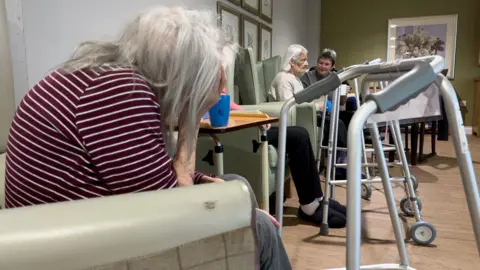
For those receiving care, financial anxiety often remains, even in places offering safety and dignity.
Kate Trangmar, a bowel cancer survivor living in a care home in Oswestry, described the support she receives as "first‑class".
But she knows the money from the sale of her home will not last indefinitely.
"By the end of the year, I'll be saying 'help' — and that's frightening," she said.
"Extra care like dementia care costs so much now. You don't stop worrying about what happens next."
"You don't plan for living longer than your money," she said.
Government response
The Department of Health and Social Care said the government was providing more than £4.6bn in additional funding for adult social care, introducing a new fair pay agreement for care workers, and increasing the carer's allowance earnings limit by more than £2,750 over two years.
"To address the long‑term structural issues we inherited, Baroness Louise Casey is leading an independent review into adult social care," a spokesperson said.
"The aim is to build cross‑party consensus for a National Care Service that is fair, sustainable and affordable."
However, charities and providers warn funding increases have not kept pace with rising demand, wages and inflation.
Across Shropshire and the wider midlands, care is increasingly at a financial crossroads, where decisions taken in later life can determine whether homes are sold, savings disappear and what is left to pass on.
Care providers say they are facing the same instability.
Coverage Care Services estimates a £200 to £400 weekly gap between local authority funding and the true cost of delivering care.
"National Insurance increases alone cost us £850,000 a year," Price said.
"Staffing, fuel, vehicles - it all adds up.
"Families and providers simply can't absorb these costs indefinitely."
Follow BBC Shropshire on BBC Sounds, Facebook, X and Instagram.
