Rewilding brings beaver boom to former dairy farm

 Heal Rewilding
A colony of beavers which has set up home on a former dairy farm is being hailed as a success story for a rewilding project.
Three years ago, charity Heal Rewilding bought a 460-acre site between Frome and Bruton in Somerset, with the aim of returning the land to its natural state.
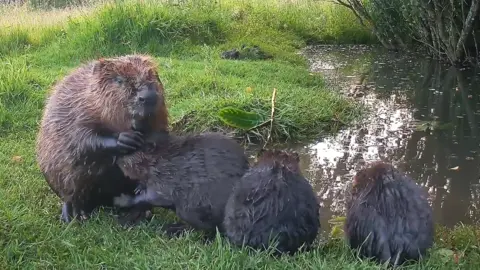
Since then, a beaver colony has dammed the tributaries of the River Frome, creating its own personalised pond and welcoming five kits this year.
Local dementia support group Wild Memories also regularly meets at the site to spend time outdoors among the sounds, sights and smells, which it said triggered a "beautiful nostalgia".
After acquiring the site, charity CEO Jan Stannard said the group "simply stood back and watched" for two years, to learn about the land and gauge its potential.
"We let the grasses grow up and we started to take surveys to find out everything from insect numbers, to birds and bats," she said.
The charity's first report reveals 94 species of birds have been informally recorded since 2023, including 21 red-listed and 28 amber-listed species.
The number of butterfly species also doubled from 11 to 24, along with a significant increase in mice and vole populations.
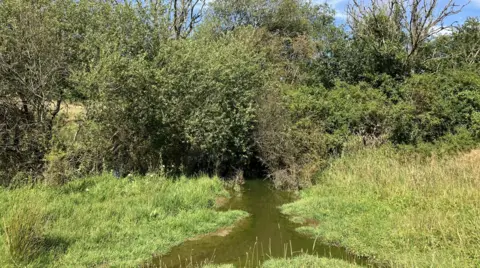
But it is the success of a colony of beavers - and the arrival of five kits - which the charity said was "very unusual".
Beavers were hunted to extinction in Britain 400 years ago, but have been making a comeback in the past two decades, with about 500 thought to be living in England.
The dams they build slow the flow of rivers and streams and create habitats where other creatures can thrive. They can also help reduce flooding further downstream.
Beyond biodiversity, the charity says rewilding plays an important role in tackling climate change.
Healthy ecosystems can help store carbon, improve soil and water health and strengthen resilience to climate-related pressures like flooding, heat and drought.
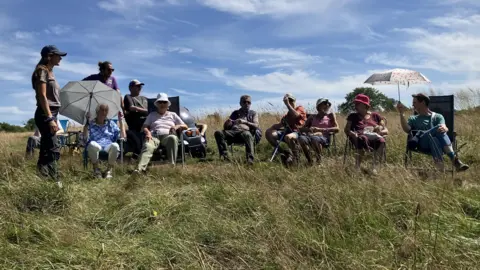
Julia Galbenu, from Wild Memories, said the space also offered people a peaceful respite.
"There's something very special about people living with dementia being able to be here," she said.
"Actually being outdoors – the sounds, the smells, the sights – everything actually does trigger those long-term memories and it brings back all that beautiful nostalgia.
"Stories are shared and it feels like a really beautiful place where a little bit of healing gets to happen."
The charity now plans to take on a similar project in Yorkshire – and ultimately wants to see a recovery site in every county in England.
Follow BBC Somerset on Facebook and X. Send your story ideas to us on email or via WhatsApp on 0800 313 4630.
