I beat ketamine addiction – others deserve rehab too

 BBC
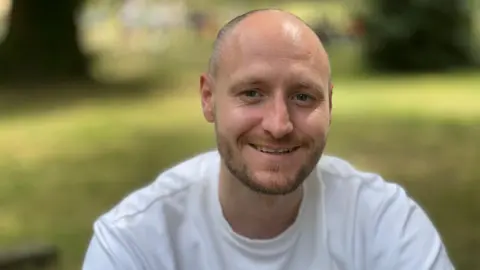
BBCA recovering ketamine addict is campaigning for better access to residential rehabilitation for others who "don't have that chance" he had.
Saul Wardale said his life "just propelled itself and every day is better and better" after quitting the drug at the Kenward Trust rehab in Yalding, Kent.
He spoke at an event in the House of Lords earlier in July to launch the Open Houses campaign by residential centres to improve access to treatment.
"My pathway was quite easy to get into rehab," Wardale said. "A lot of people don't have that chance."
The Department of Health and Social Care said it had a national ketamine awareness campaign and was "supporting young people through schools and social media".
"We are also taking action to improve access to treatment, including residential treatment for those with the most complex needs," a spokesperson said.
After requiring bladder surgery due to the impacts of drug use, Wardale experienced "a few months" of continued pain but said he was now "pretty good".
According to the British Association of Urological Surgeons, ketamine can damage a person's bladder and kidneys, causing pain and frequent urination.
Warning: This article contains graphic details
Joel Booker, like Wardale, received Kenward Trust support for ketamine addiction, and needed the toilet "maybe 25 to 35 times an hour" due to his bladder damage.
The drug would "ruin my life to the point where I can't do daily activities", he told the BBC.
He is now prescribed 31 tablets per day for the lasting effects on his bladder.
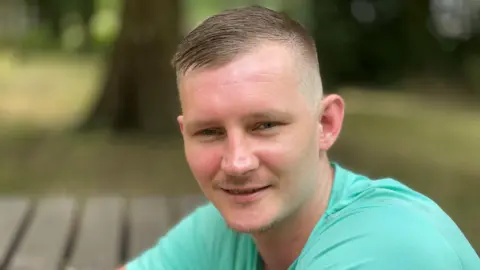
While a typical adult bladder can comfortably hold a pint (500ml) of urine, according to the NHS, Booker's holds just 40ml.
"I just thought the substance was making me go to the toilet, I didn't realise what effects it was doing to my bladder," he told the BBC.
While he still experiences cramps, Booker's pain was "was 10 times worse" when he was abusing the drug.
"I was getting stomach cramps, I was getting pains just moving side to side, I couldn't sleep because of the pains," he said.
"Every time you go to the toilet, you're urinating past open wounds and then that causes the bleeding, and then that causes inflammation.
"Everything gets inflamed - your prostate, your bowels, everything - so your digestive system is absolutely in a bad way."
The recovering addict warned young people considering taking the drug they would "find out very quickly what pain and what life they'll be living" and it was "not pretty".
If you have been affected by any of the issues raised in this story, information and support can be found at BBC Action Line.
Jack Bennett came to the Kenward Trust after "trying to get help for many years" and said he was now 10 months clean.
He told the BBC the Class B drug ruined his life and he was "worse off than crack and heroin addicts" when he arrived at the rehab centre.
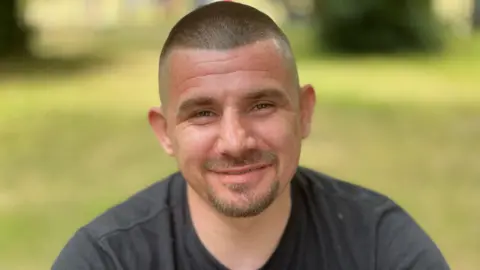
"I couldn't go to the toilet, I was in agony every day, but then I'd still pick up the next day, and it went on for years," he said.
"I was a broken person, do you know what I mean? I hated it every day of my life. I was just surviving."
After initially struggling to engage with treatment, Bennett said he was now volunteering to help other people attempting to escape addiction and had been trained in peer support mentoring.
"I told my mum every day I just don't want to be here, I hated it, but I enjoy waking up now, I like what I'm doing in recovery," he said.
The Open Houses campaign will see residential rehab providers across England, including the Kenward Trust, host open days in September to allow officials to see their work first hand.
The charity's chief executive, Penny Williams, said: "We're just trying to raise the awareness of how successful residential rehab is for so many people and how we'd like to try and enable more people to access it as a choice for their treatment."
The parliamentary reception to launch the campaign was organised by Lord Brooke of Alverthorpe, a patron of the Kent charity who has himself been in recovery for 44 years.
He said decision-makers were "not all aware of the effectiveness of recovery centres" and he hoped that parliamentarians would "show greater interest".
For Wardale, the campaign was about "opening the doors for people to come in and actually see what is on offer".
Follow BBC Kent on Facebook, on X, and on Instagram and listen to BBC Radio Kent on Sounds. Send your story ideas to southeasttoday@bbc.co.uk or WhatsApp us on 08081 002250.
