The tragic history of the Summerland site

 Google
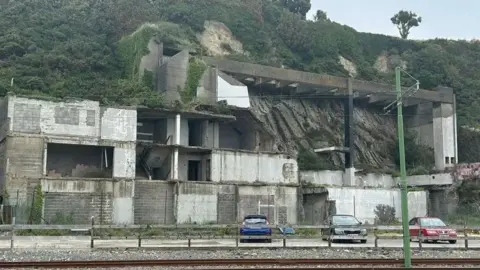
Proposals for a temporary car park on the site of the Summerland fire disaster were this week rejected by planners.
The site itself has a chequered history that has left a scar on the memory of the Manx nation, with a blaze at the entertainment complex considered at the time as the worst peacetime fire disaster in the British Isles since 1929.
At a planning committee, some argued that the proposals were "insensitive," while others said it did not comply with government policies which dictate that brownfield sites should not be used as temporary car parks.
Others, however, have argued that parking is needed in the area.
What was Summerland?
 MANX NATIONAL HERITAGE
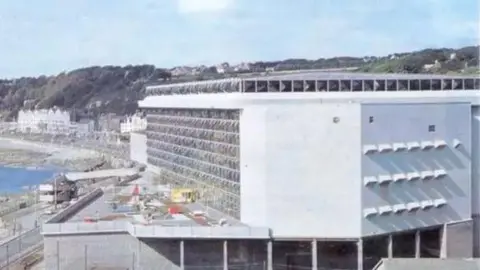
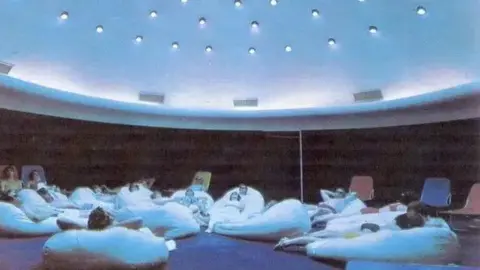
Built in 1971, the Summerland entertainment complex was designed as a future-proof holiday destination and marketed as being "where the sun always shines".
The £2m building could accommodate up to 10,000 tourists, and included a dance hall, a roller skating rink, holiday games, a large indoor swimming pool, restaurants and public bars.
The complex was considered to be groundbreaking and state of the art, cementing the island as a popular holiday destination.
 MANX NATIONAL HERITAGE
How did the tragedy unfold?
 NOEL HOWARTH
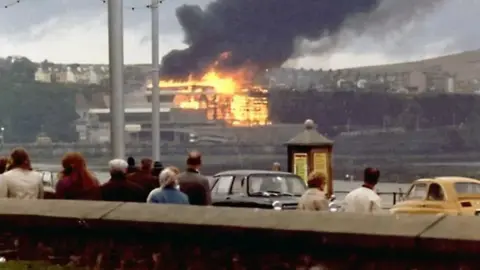
Two years after the complex opened, a huge fire broke out, ultimately resulting in the deaths of 50 people, with 80 more seriously injured.
At about 19:30 BST on 2 August 1973, the fire started, sparked by a match discarded by three boys smoking at a kiosk.
There were about 3,000 people inside the building when the complex was engulfed in flames.
A public inquiry into the fire found there were "no villains", just human beings that made mistakes.
A 1974 inquest recorded a verdict of misadventure.
A legal challenge to that verdict by a campaign group -made up of survivors and victims' family members - was rejected by the Attorney General in May 2025.
However, the group began an appeal process against that decision three months later.
What has happened to the site since?
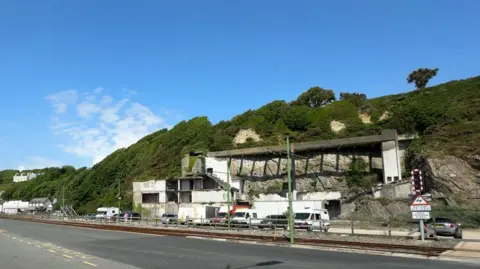
Only five years later, a smaller complex, also named Summerland, was built on the site - opening in 1978.
That complex was demolished in 2005, and despite suggestions for further redevelopment, including another entertainment complex in 2008, the site has remained empty.
It has been on the open market since 2010.
Over an 18-month period in 2019, it was used as a temporary car park, and the Department of Infrastructure had been looking to use the site for temporary parking once again, to address a shortage in the area.
This week, planners found that using the site as a temporary car park could have an impact on future development, and that it did not follow government policy that brownfield sites should not be used for temporary parking.
However, former Infrastructure Minister Michelle Haywood said she had instigated the proposals while in her ministerial post due to a "clear lack of parking".
"The site is actively being marketed for development. but it will need approximately £3m of remedial work to deal with the underground plants rooms and to stabilise the cliff."
"So why not just make the lives of people who live near this land just a little easier by providing temporary parking," she had argued.
For a number of years, campaigners have called for a memorial to be created on the site, instead of the nearby Kaye Memorial Gardens.
Read more stories from the Isle of Man on the BBC, watch BBC North West Tonight on BBC iPlayer and follow BBC Isle of Man on Facebook and X.
