Town church plaque for famed abolitionist unveiled

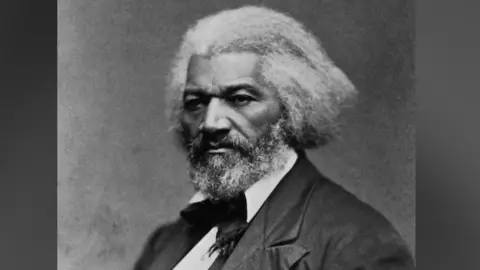 Getty
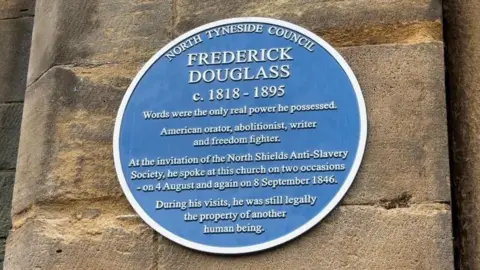
GettyA blue plaque marking a town's connection with a famed abolitionist has been unveiled.
Frederick Douglass, who was born into slavery, gave two lectures at North Shields' Baptist Church in 1846 and the sign was installed outside the building by North Tyneside Council and the North Shields Heritology Project (NHSP) on Tuesday.
NHSP secretary David Young said the turnout to the unveiling was "very encouraging" and showed a clear local interest in Douglass's story.
Labour councillor Wendy Lott said it was a "source of pride" that North Shields had played "a small but significant" part in the anti-slavery campaigner's life.
Douglass, who escaped slavery in 1838, was a leading member of the abolitionist movement and is considered one of the most influential people of the 19th Century.
He was still legally enslaved when he spoke at North Shields after being invited by the town's anti-slavery society.
He mentioned he was heading to the town in a letter dated 2 August 1846.
The lectures were part of Douglass's wider speaking tour across the country and Ireland.
"Shields always refused to turn its face away from slavery," said Young.
"It had its own anti-slavery society, which it formed here in 1836, and it also had two delegates to the worldwide slavery convention which took place a few years later."
Douglass was able to legally buy his freedom from slavery towards the end of 1846 after two Newcastle Quaker sisters-in-law, Anna and Ellen Richardson, fundraised the £150 required.
Douglas wrote to Anna in 1847, saying: "I landed on your shores a slave, and came back a free man."
