Woman says she was moments from death in IRA Manchester bombing
 BBC
BBCWarning: This article contains images that some may find distressing
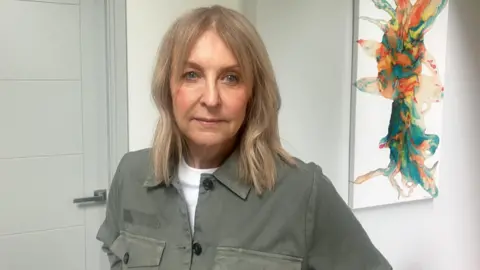
A woman who went into work at a bank on what should have been her day off has told how she was lucky to have survived the 1996 Manchester IRA bomb.
Samantha Shaw, from Cheshire, said she and a colleague were working at the Halifax bank in the city, located about 250 yards (229m) from the scene of the explosion, on Saturday 15 June 1996.
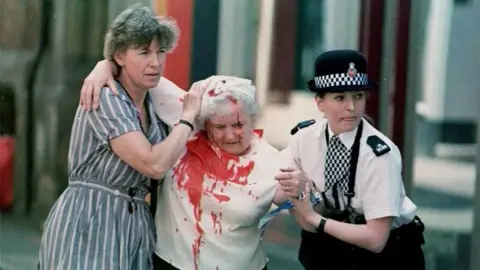
The bomb, which was the biggest device detonated in Great Britain since World War Two, exploded outside the Arndale Centre in the city centre.
While no-one died in the blast, more than 200 were hurt with many suffering life-changing injuries. An estimated 80,000 people were evacuated from the area.
Shaw, then 29, said she and her colleague had been standing by windows moments before they were blown out by the force of the blast.
"I wouldn't be here today if I'd have stayed there moments longer," she said, adding that about five inches of glass that was stuck into the wall "would have been stuck in my body".
 PA Media
The pair were working in an office on the first floor of the bank on Cross Street, Manchester, and had followed procedure in marking they were in that day, she said.
But when the evacuation took place they were missed, with Shaw saying she later found out someone had looked through the glass-panelled door but, as their office was L-shaped, had not seen them.
Shaw, who had only moved to Greater Manchester from Yorkshire weeks before the explosion, described the force of the blast as being like "an out-of-body experience".
"There's this immense suction afterwards. It sucks the life out of the room," she said.
"You just feel as though, for a moment, that you are not there - that you're floating."
She said she was thrown by the force of the explosion.
Lifelong injuries
The now 59-year-old said she was taken to meet emergency service officials at Manchester Town Hall.
They asked her how she was and, when she said she felt okay, they said she was okay to leave.
She walked home to Reddish and went to bed, only realising the extent of her injuries the following day when she took herself to Manchester Royal Infirmary.
Even then, Shaw said she was sent home and told to take some painkillers.
Shaw said she was still living with the impact 30 years on from the explosion, suffering neck pain, hearing loss in both ears which means she needs to wear hearing aids, memory loss and post traumatic stress disorder (PTSD).
She said she was concerned her PTSD was only picked up by the South East Fermanagh Foundation charity, - which she said had been "phenomenal" in its support for her - and should have been diagnosed during previous counselling sessions.
She was off work for six months following the explosion and said that since that day she was not "that effervescent young woman" who was "out to change the world".
"It just completely changed my life."
The Manchester IRA bomb timeline
At 09:20 BST on the day of the bombing, two men in hooded jackets drove a Ford cargo van into Manchester city centre.
They parked on double yellow lines on Corporation Street, next to Marks & Spencer, and then walked away.
Their van was packed with 3,300lb (about 1,500kg) of fertiliser-based explosives.
Exactly 23 minutes later, a man with an Irish accent phoned the switchboard at Granada TV studios in Manchester.
- You can listen to more episodes of Coded Warning on BBC Soundshere
Gary Hall, a security guard, answered the phone and was told that a bomb would explode in one hour's time. The caller gave a recognised codeword.
Once the Ford cargo van had been identified, a specialist bomb disposal unit deployed from Liverpool worked to defuse the device.
Meanwhile, a dozen police officers joined firefighters and security staff to evacuate an estimated 80,000 people who were in the city centre that day.
At 11:17 the bomb detonated, with more than 200 people injured.
Listen to the best of BBC Radio Manchester on Sounds and follow BBC Manchester on Facebook, X, and Instagram. You can also send story ideas via Whatsapp to 0808 100 2230.
