Antiquities dealer who exposed British Museum thefts dies aged 61

 BBC/Adam Walker
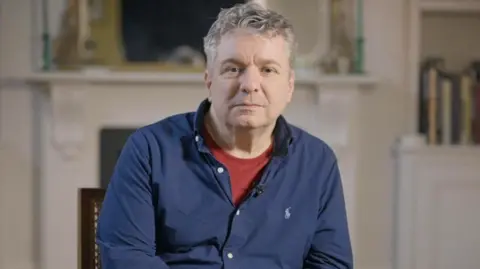
Dr Ittai Gradel, the academic turned antiquities dealer who exposed the theft of many hundreds of artefacts from the British Museum, has died of cancer, aged 61.
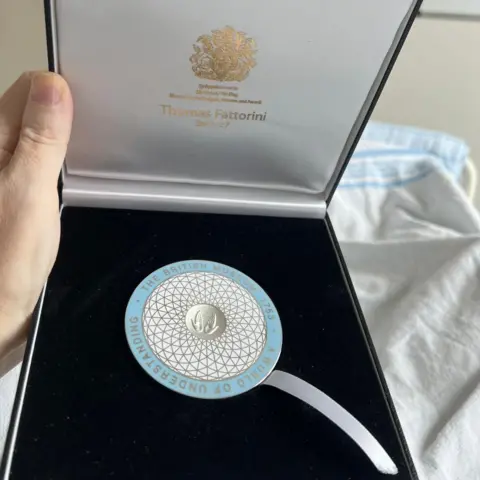
In his final days he received a rarely-presented medal from the museum in recognition of what its director called his "very significant contribution".
A police investigation is still ongoing more than three years after the British Museum finally reported the thefts to Scotland Yard, following pressure from Gradel.
Before his death in a Danish hospice, he told me, with his typical understatement, that it was "a bit annoying" he wouldn't live to see the resolution of the case.
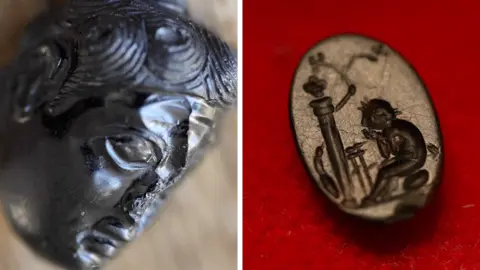
He had tried to persuade the museum to investigate back in 2021 when he first suspected that gems from the museum's collection were being sold off on eBay, sometimes for just a few pounds a piece, but was stonewalled by previous management.
 Ittai Gradel
In 2023, after it did its own investigation, the museum announced that 2,000 items from its collection were stolen, missing or damaged.
The story made headlines around the world.
After Gradel's earlier warnings became public, the museum's director, Hartwig Fischer, resigned, admitting it was "evident that the British Museum did not respond as comprehensively as it should have to the warnings in 2021".
Gradel gave statements to the Metropolitan Police investigation and would have been a key witness in any court case.
When he broke the news to me a few weeks ago that he was dying, he said he was concerned about what would happen to the investigation.
"I would be very happy to see charges actually brought before I die. Because otherwise I suspect it will just fizzle out, the charges will never be brought and nothing will come of it," he said.
I've since been told developments are expected in the coming months. Gradel though did not live to see them.
 PA
PAI first got to know Ittai in summer 2023, when he responded to an email from me, a few days after the British Museum had made the thefts public.
I will never forget our initial conversation. It was late and I was sitting in an edit suite at the BBC, having just finished a report about the thefts for the TV News at Ten.
As he relayed his story, I began to gesticulate with surprise and excitement to my producer. It was an incredible tale.
Ittai told me how he had pieced together that a senior curator at the museum was stealing, and how he had sent his evidence to the museum's leadership in 2021.
He said he had told them of his suspicions that he - and other antiquities dealers he knew - had unintentionally bought items online that actually came from their collection. He even included a PayPal receipt with the name of the curator he suspected of selling them - Peter Higgs - on it.
The museum dismissed Ittai's concerns, even though one of the dealers - after conversations with Gradel - returned an olive green gemstone he had bought on eBay.
The then deputy director, Jonathan Williams, wrote to Gradel five months later to say all the objects were accounted for and his claims were unfounded.
Ittai later told me he thought that was "bizarre," particularly as one of the items was accounted for only because it had been returned at his behest.
We now know from court documents that the thief is alleged to have faked a handwritten note saying that particular item had been stolen in 1963. Museum staff believed the records.
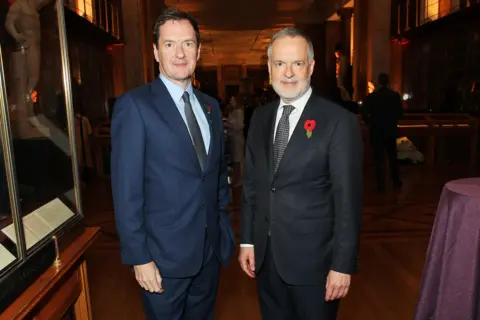
George Osborne, the museum's chair of trustees, told me it was a "pretty elaborate cover-up job".
Peter Higgs denies any wrongdoing.
In awarding Gradel the British Museum medal ahead of his death, the museum's current Director, Dr Nicholas Cullinan, wrote to him it was "a sign of our esteem... in recognition of your expertise and of your passionate determination that wrongs should be righted".
But back in 2021, Gradel felt brushed off by the museum authorities.
He told me: "I could barely think of anything else. The only way I could deal with it was by letting it take over my life, letting it become an obsession."
The renal cancer he had first been diagnosed with in 2010 returned in 2022, and "I had to get this finished before I was on my deathbed," he said.
"If I died before the job was finished, I found that quite horrible."
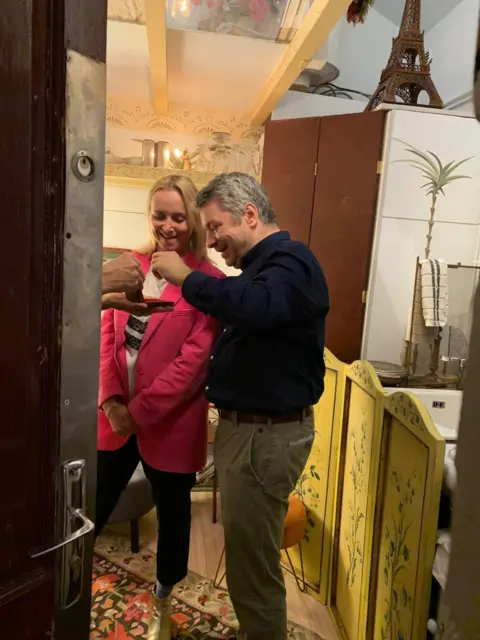
I got to know Ittai well because, after the initial story broke, we made a podcast for BBC Radio 4 called Thief at the British Museum alongside a film for BBC Two and iPlayer.
In it, with his help, we investigated how the British Museum thief had operated, and how Ittai had figured out what was happening - and we also tracked down stolen items that had been sold on to other dealers around the world.
It made us appreciate that Ittai Gradel was a complete one-off.
Born in 1965 in Haifa, Israel, to a British father and a Danish mother, the Jewish family moved to Denmark when he was two years old.
Ittai was quirky and obsessive. "Totally nerdy" is how he described his childhood self.
"I knew all the Popes and the years of the Popes and there are many, right from St Peter actually - so 2,000 years," he said.
He fell in love with the British Museum as an 18-year old, when he moved to the UK after finishing school.
While doing some part-time work, washing up in a fish and chip shop and working for London Underground, he began to spend all his spare time in the museum.
"I systematically went through the museum department by department, display case by display case, through the whole museum, over several months. And I believe that I saw every object that was exhibited back then."
He also had a photographic memory, which came in very useful for his later detective work around the thefts.
It's why for example, he could see a picture of an item for sale on eBay - and then remember that it looked exactly the same as a line drawing in an obscure 1920s book he owned about the British Museum's collection of gems.
 Katie Razzall/BBC
Spending time in his company was always a delight. His knowledge of the ancient world was boundless; his specialist interest was gemstones.
"Nothing so boring as modern diamond rings," he told us with a smile. His focus was gems from ancient Greece and Rome, carved with intricate figures, sometimes images of the gods or portraits, which were worn as pendants in jewellery and used as sealstones in rings.
He described it as "a burst of pure joy when I discover a story that's been lying there forgotten for 2,000 years".
His joy was infectious and all of us who worked on the series were captivated by his knowledge and enthusiasm.
When we met in his Danish home back in 2023, he had glass-topped display cabinets full of gems in his study, almost like his own mini museum.
And on that occasion, many had white dots next to them. These were the ones he had bought without realising they belonged to the museum and was now planning to return.
There were hundreds of them. In total he eventually signed more than 360 items back to the museum.
 Getty Images
Gradel had spent years in academia, which he loathed.
Before he died, I asked him what he was most proud of about his life. I expected him to reference his efforts to expose the thief.
In fact it was that "I had the courage to take the leap into the unknown and resign my academic post. I was temperamentally unsuited to it. It wasn't the universities' fault."
That change in career led to "the happiest years of my life" between 2013 and 2020 when he began to make his living buying and selling gems and other antiquities.
"I could get up when I wanted, I was travelling and I was making good money".
He was of course also proud of his role in the British Museum case.
"I didn't do the museum a favour by revealing these thefts because it did damage to the institution. But I had no choice. However I did the museum a huge favour in assisting it in getting a new and better management".
That new management has now awarded him the museum's highest honour.
He told me he "felt good about it".
"They said they had planned to do it after the court case was over, or a deal had been made. But of course they couldn't do it as long as I was due to appear as a witness for the prosecution," he told me.
"In light of my terminal illness, that's not relevant anymore".
 BBC/Katie Razzall
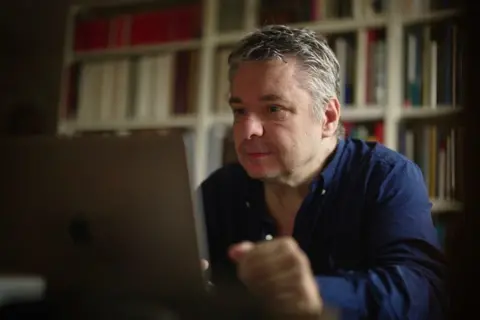
The last time we met, with producer Larissa Kennelly, was in a Danish hospital and Ittai was dying.
"I beat cancer twice but I'm not going to get a third time lucky."
He told us he regretted that he hadn't yet written a book about gems for a mass audience, to add to the academic works he has authored.
He wanted to share his stories of "remarkable gems and what they can tell the world about their history". He was convinced it would be a bestseller.
He also regretted how few people share his love of these tiny objects. "With my death, there is one less gem expert," he told us ruefully.
Classical gems were hugely popular in the 18th and 19th Centuries and then fell out of favour. The story of the British Museum thefts and Ittai's role in it thrust these ancient artefacts back into the spotlight.
He said he hoped that one of the people hired by the British Museum to track down the stolen items might decide to make a career out of studying gems, or that the high profile story might "persuade students to say 'I'm interested, I will take it up'".
It would be a fitting legacy for a remarkable man who kept his dry sense of humour to the end.
His brother, Kim Oren Gradel, told me about a moment, just a few weeks ago, when the funeral arrangements were being discussed. The priest told Ittai that the church was fairly booked up so it needed some planning to ensure there was a space.
Ittai wryly replied "if I can make it easier by telling you the day that I plan to die, I will do my best to make that happen".
Kim said "it was a relief to laugh".
In one of our last conversations, his voice by then very weak, Ittai told me he was at peace with what was happening to him.
"I'm totally resigned to dying," he said.
For the rest of us, a world without this unusual, determined and deeply knowledgeable man will take some getting used to.
 Getty Images