New midwives 'deflated' by lack of jobs

 BBC
BBCStudent midwives say they are struggling to get jobs, despite reports of pressure on maternity services.
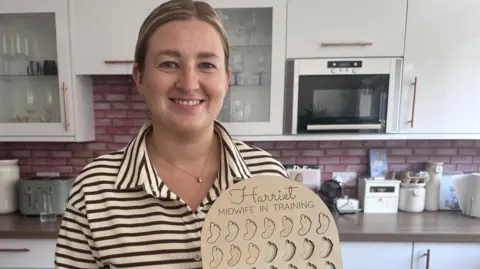
Harriet Shelton, from Grimsby, said she spent three years training, but felt "deflated" after failing to find a post, adding: "There's about 30 in our cohort and I want to say probably about 15 have got jobs."
A national survey by the Royal College of Midwives (RCM), published earlier this year, found about a third of newly qualified midwives were without NHS roles.
A spokesperson for the Department of Health and Social Care (DHSC) said: "A total of 1,000 temporary roles will be created to help newly qualified midwives join the NHS, backed by more than £10m in government funding."
On Tuesday, the government pledged to overhaul maternity and neonatal care after a review led by Baroness Amos said the system was "not set up to deliver consistently safe, high-quality and compassionate care".
Shelton said her motivation for becoming a midwife had been to support women.
"I think when women give birth it's probably one of the most vulnerable times of their life, so I think it's really important that they have somebody who really understands them and really is passionate about what they're doing."
She said the shortage of posts had been unexpected.
"It was a bit deflating," she added. "You thought, oh, have I even got a chance?"
 Supplied
In February, the RCM released figures showing about 31% of newly qualified midwives had not secured an NHS post within six months of qualifying.
It blamed a mismatch between the number of midwives being trained and the number of funded posts available.
Last week, representatives from the body met Health Secretary James Murray to press for urgent action on the issue.
Fiona Gibb, the RCM's director of midwifery, said newly qualified midwives felt "anxious, frustrated and let down".
She added: "They want to enter a profession that desperately needs staff, only to find there are limited opportunities when they qualify."
'Very lucky'
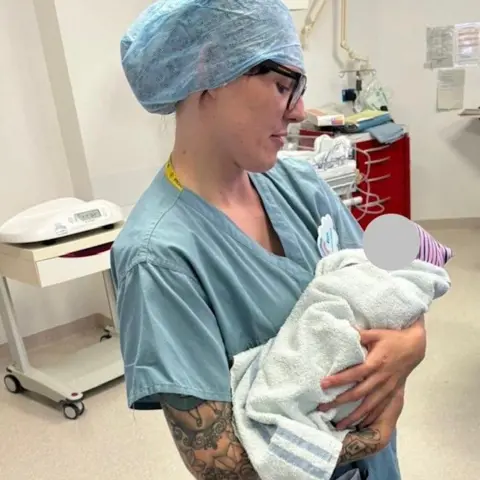
Shelton's friend Bethany Nicholson, who studied on the same course, said while she had secured a job, others had not been as fortunate.
"I'm happy I've got a job, I'm very lucky, but I'm sad because my friends, my colleagues, they are not going to be joining me.
"I want them by my side for a bit of moral support and they are not going to be there."
Nicholson, who previously worked as a nurse, said many students had made sacrifices to retrain.
"We've left good, well-paid jobs in nursing to come do this and it's a bit disheartening knowing that there's nothing at the end of it.
"From what we can gather, it's just lack of funding, it's nothing to do with the trust, it's just there is no money in the pot for us."
 PA Media
Campaign group Fund Future Midwives is calling for increased funding to create more midwifery posts and has raised concerns with government ministers.
Alex Morrison, a third-year student involved in the campaign, said nationally large numbers of trainees were qualifying without jobs to go to and the issue was beginning to affect how expectant parents felt about maternity services.
"I think they'd be horrified," she said.
"If you're going in to have a baby, the last thing you need to be worrying about is are there enough staff to look after me, that's a really scary thought."
In response to the Amos report, the DHSC announced a new maternity and neonatal commissioner, along with extra funding "to make maternity and neonatal care safer, fairer and more consistent across England".
A spokesperson said the 1,000 temporary roles for graduates would "help prevent a third of student midwives from leaving the profession".
Listen to highlights fromLincolnshire on BBC Sounds, watch thelatest episode of Look North.
Download the BBC News app from the App Storefor iPhone and iPad orGoogle Play for Android devices
