'We need faster progress on brain cancer research'

 BBC
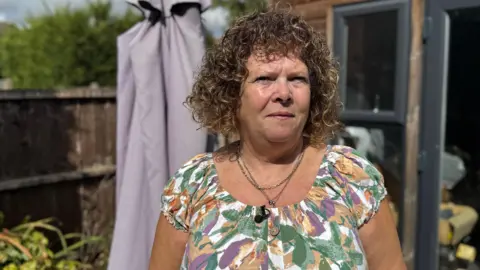
BBCA mother has said she has seen "very little progress" in improving treatment for brain cancer patients since her son died from the disease.
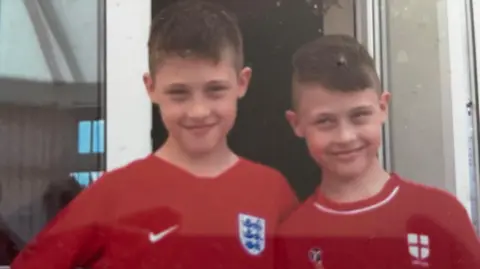
Julie Parton's son Ben was diagnosed with a glioblastoma - a rare brain tumour – in 2019 and died just eight months later, aged 12.
Since his death, she has been trying to raise awareness of the issue, which was recently highlighted by swimmer Archie Goodburn in an impassioned plea on BBC Breakfast.
Parton, from Cannock, Staffordshire, told BBC Midlands Today that watching his interview gave her "goosebumps".
"It brought everything to the forefront with what we've been going through with Ben," she said. "I just thought how amazing it was to be talking about this."
After Goodburn, who was diagnosed with inoperable tumours, called on decision-makers to "give us a chance to fight for our lives", Prime Minister Andy Burnham offered to meet with the 25-year-old.
Parton said she hoped research into the disease and potential new treatments would now move at a faster pace.
"Things just aren't moving quickly enough… I can see very little progress in the time since I lost Ben," she added.
 Family
On why it was so important that she continued to raise awareness, Parton said it was her way of trying to keep Ben's memory alive.
She continued: "It is important to me and I'm raising awareness because my son Ben, he knew he wasn't going to make it and he didn't want people to forget him.
"My way of remembering him is by doing all these interviews and bringing awareness to the forefront. He wasn't just my son, he was here for a purpose."
Ben's twin Jack was diagnosed with leukaemia just two weeks after his brother's funeral but is now cancer-free.
Asked what his reaction was to Goodburn's interview, his mum said Jack thought the athlete was brave for speaking out.
'Not enough'
Dr Karen Noble, of the Brain Tumour Research charity, also praised Goodburn for raising awareness of the issue.
"To see him in tears and begging because, as we heard from him, treatment options for patients diagnosed with a brain tumour can be very limited," she said.
She called for greater investment, adding that less than 1% of the money spent on research into cancer was directed towards brain tumours.
Noble said: "This is just not enough for the ninth-most common cancer in the UK.
"For a cancer that takes more lives of people aged under 40 and children than any other cancer – we need to change that."
Follow BBC Stoke & Staffordshire on BBC Sounds, Facebook, X and Instagram.
