'Ebola outbreak is brutal, painful and very distressing'

 Jo Trevor
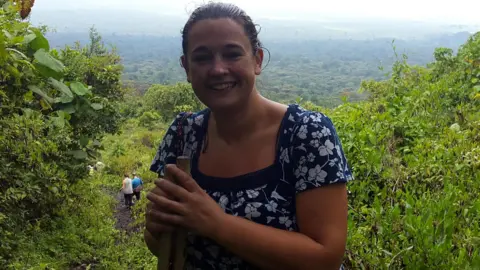
"It's a really brutal disease, it's quite painful and very distressing," says Oxfam water expert Jo Trevor.
She has recently been to the Democratic Republic of Congo, where there are at least 2,011 cases and 754 confirmed deaths due to an outbreak of Ebola disease.
Scientists at the University of Oxford started developing a vaccine to tackle the disease when a public health emergency was declared on 17 May.
Trevor, from Sandford on Thames, Oxfordshire, described the people in DR Congo as "really resilient" and "working hard to ensure that lives continue".
 Azaria Muhongya / Oxfam
Ebola viruses naturally infect animals, mainly fruit bats, but people can become infected if they come into close contact.
"More often than not it will be either when people are first getting ill and they have contact with family members, or during burials is the other key way," Trevor says.
This outbreak of Ebola was caused by the Bundibugyo virus. It is relatively unfamiliar but it killed around 30% of people infected in the two previous outbreaks in 2007 and 2012.
The six different species of Ebola are known as "sisters rather than twins" because while they are similar, they need separate treatments and vaccines. It means there are no approved drugs or vaccines this time.
The disease starts with flu-like symptoms before developing into severe bleeding and often death. It has never been spread from person-to-person in the UK.
"There has been a vaccine created for Ebola, but it isn't available for this strand and it's moving relatively quickly," Trevor says.
"It's a really brutal disease actually and it's quite painful and very distressing for family and friends, as well as the person who has it."
 Azaria Muhongya / Oxfam
Trevor managed teams and programmes in DR Congo, including the three eastern provinces where the outbreak currently is.
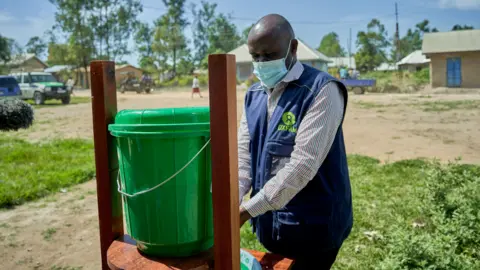
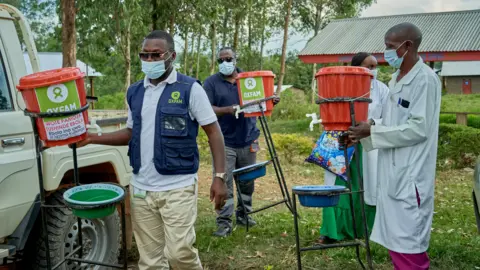
"We continue to do everything around water and sanitation, which is a key part of Ebola response, because it's about prevention," she says.
"The area has a high level of conflict, both local and regional, so there's a lot of displaced populations that have limited access to basic services."
Trevor says she has also seen another side of DR Congo - one with "brilliant" food and "stunning geography".
"In the east where the Ebola outbreak is, is the [Great] Rift Valley ... it's got the hills, there's an active volcano in the region, there's a big national park where you can see the gorillas, the people move across their areas and are creating livelihoods for themselves around fruit and veg."
She also talks of the "massive" Congo River and "the second biggest rainforest in the world after the Amazon".
"People in Congo have had this for a while and are working very hard to ensure that lives continue, that kids go to school - they really believe there is an amazing future for that country," she says.
