Meet the Windrush women who helped rebuild Britain

 BBC
BBCWindrush Day, celebrated every year on 22 June, remembers the contribution by migrants from the Caribbean and their families to the UK.
Between 1948 when HMT Empire Windrush docked at Tilbury, Essex, to 1971, the "Windrush Generation" came, by invitation, to help rebuild post-war Britain in the 1950s and 60s.
Many women worked as NHS nurses or machinists in London, sewing garments to clothe the nation.
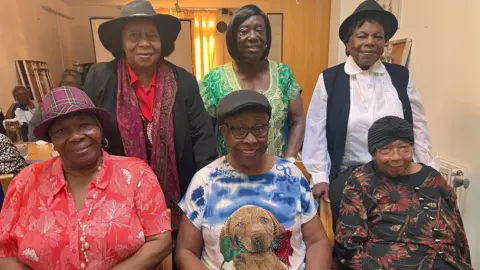
At the Positive Network Community Project in Balham, south-west London, a group of friends told me their stories of the "daunting" move to London as young women using their courage and resilience facing an often hostile environment.
Carmen Hinkson, 92
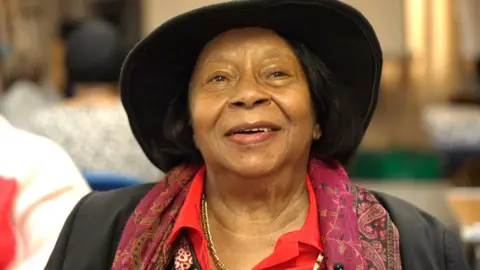
The day Carmen left Jamaica in 1956, she remembers: "The sunshine. And my mother screaming, 'you're going to England to get killed'.
"She didn't want me to go.
"I didn't know what I was coming to, I was so young. It was daunting."
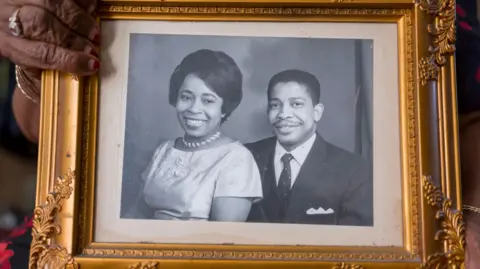
She had no friends and knew only her husband, Keith, who was a London Ambulance Service (LAS) mechanic until he retired.
 Steve Reeves
Carmen's biggest surprise was the accommodation.
She said: "In Jamaica I had a big house with a veranda. I can go out there, sit and eat me mango and me cashew. Here we were in one room. I couldn't believe it."
Back home, friends would call up to ask if she wanted anything from town as they passed. But it was very different in London at first.
"Nobody wants to know you. And especially when you're my colour.
"Being black, it was terrible at that time, believe me.
"If you want somewhere to live, and you go knock on the door, some of them might answer and some of them might peep through the window and some of them might say, 'I have the room - but my friend wouldn't like it if I rent it to you'."
Carmen was a machinist, sewing clothes for Marks & Spencer until she retired.
After Keith died, she withdrew from life until her daughter encouraged her to go to a Positive Network Elders session.
"I made lots of friends. We talk and we listen to music and play domino, and exercise. It helps me a lot."
Jessie Plummer, 88
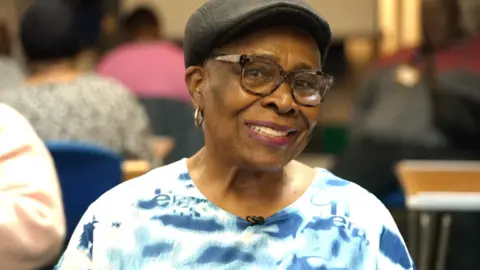
"We were invited to this country. We just happy to come here to see what tings is like. I jumped for joy," said Jessie.
She came to London in 1960 and worked for British Rail, the NHS and the Home Office.
Life in the city was very different to her childhood in Jamaica.
"I helped my father look after the cows, the goats, two donkeys, one mule."
She added: "When I landed in London and looked out and see the buildings - the tears start flowing. I want to go back home but I couldn't.
"My father said, you're too far away now to turn back."
Jessie said that finding somewhere to live was difficult and she often faced discrimination.
"If you knock at a door and you get that reaction, you just go somewhere else again - and you persevere until you conquer."
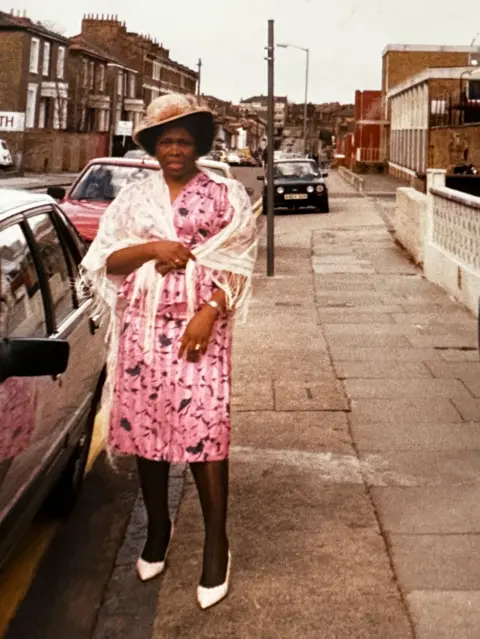 Jessie Reid
Zena Josiah, 92
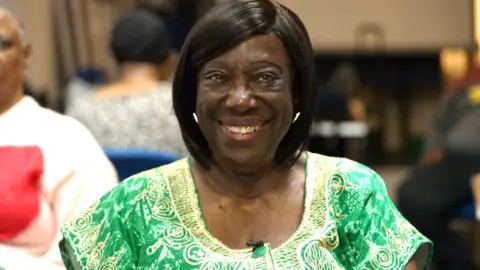
Zena was born in Guyana, South America and arrived in London at the age of 22.
"I came here in the April, 1956, and it was the hottest April in a long time. I brought the sun with me.
"I was happy to come to London because my fiancé was here," she said.
They were married in September and lived in Finsbury Park.
The biggest culture shock for her was the crowded markets in London.
"We haven't got a million people in Guyana and when I see this amount of people, I said, 'what is happening, is there something going on?'"
She quickly found work using her skills learned in Guyana.
"I was a machinist at home, I used to do sewing and I did the same thing here. I worked even for a hat factory for six months."
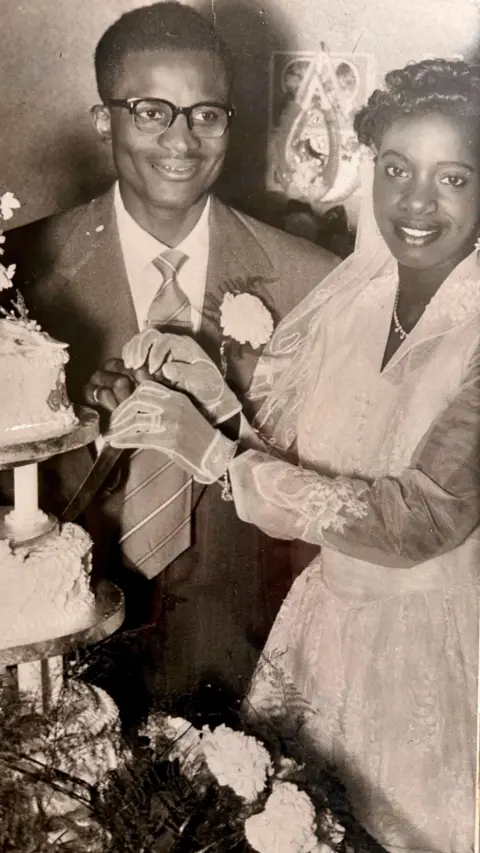 Steve Reeves
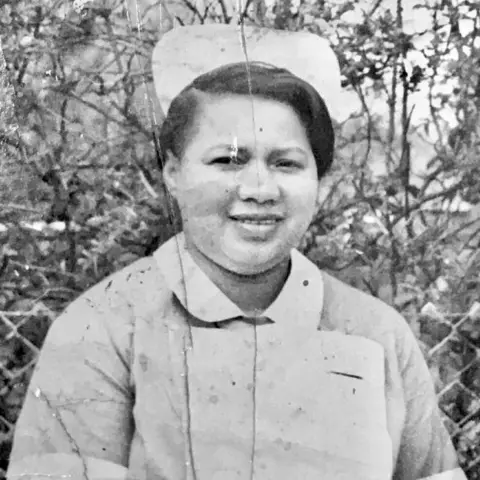
Alicia Henry, 90
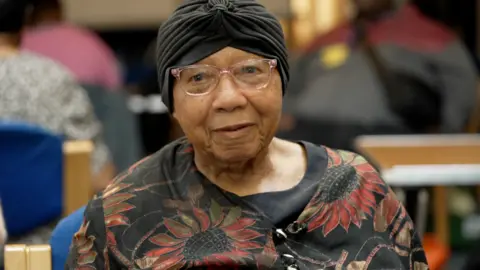
When Alicia came to London in 1961, she was struggling to find a job at home in Guyana.
Job vacancies and studying opportunities in the UK allowed her to build a profession - but she had to leave her four children behind with her parents.
She trained as a nurse and specialised in burns and plastic surgery on the wards.
 Steve Reeves
Eventually she brought her children to live in a house she purchased and renovated in Croydon.
"It's 30 years I worked with the National Health Service - 30 years because I had children to bring up and I had a mortgage to pay."
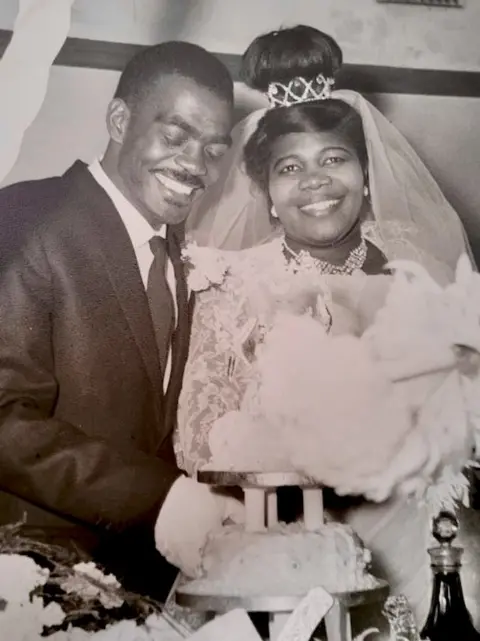
Betsy Osbourne, 86
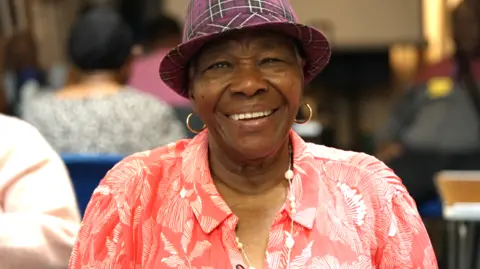
Betsy came in the 60s and lived in Cricklewood, north-west London.
"I didn't know anything about England.
"It took me about three weeks to find something to do and I made injection needles. It was a little factory, you know."
 Steve Reeves
Beryl Palmer, 88
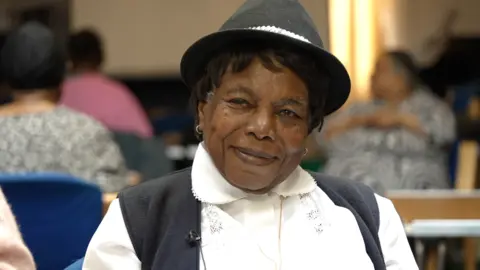
Beryl was young and keen when she left Jamaica to find work in England.
"Everybody was coming and they said, 'go and see what it's like'."
Her parents paid for her fare and found a room for her with a cousin.
"I got a job shortly after I came here and I've been working until I retired."
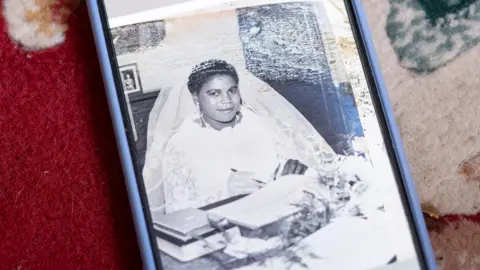 Steve Reeves
She met her husband, Noel, in Manchester and eventually they moved to London together.
She enjoys spending time with the other Windrush women at the Positive Network Community Project.
"Instead of sitting in the house, you have a day where you treat yourself. We come here, mix with other people, have a laugh."
Listen to the best of BBC Radio London on Sounds and follow BBC London on Facebook, X and Instagram. Send your story ideas to hello.bbclondon@bbc.co.uk
