Parents 'judged and isolated' over children's food disorders

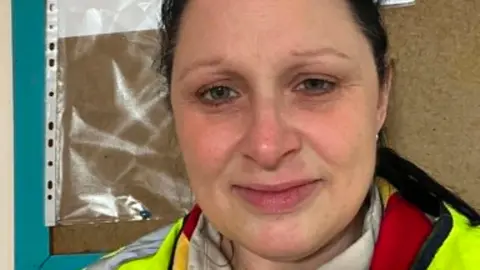 Annabell Storm
Families on the Isle of Man say a lack of awareness around Avoidant/Restrictive Food Intake Disorder (ARFID) is leaving parents feeling "judged", "isolated" and "drained" as they struggle to find support for children with extreme eating difficulties.
People with ARFID only eat a small number of foods, which can severely affect their mental and physical wellbeing.
Three parents who spoke to the BBC, described years of searching for help, repeated dismissals from professionals, and the emotional toll of trying to manage a condition they had never been told existed.
Ramsey mother Annabell Storm said they had years of appointments with doctors who were not aware of the condition and instead "lectured" her on diet.
The BBC has contacted Manx Care for a response.
'We were told to starve him'
Annabell said her son Neo ate normally as a baby and toddler, but his relationship with food changed dramatically when he started school.
She said: "He was only trying to eat the same things and he wouldn't eat any of the stuff he used to eat."
Neo's diet is centred around five foods.
The 17-year-old described the physical reaction he has when trying unfamiliar foods.
"As soon as I start actually trying to taste the food it just feels so weird in my mouth and I just have an instinct to spit it out… I just can't deal with it," he explained.
He said he often ate separately at college to avoid attention, adding that he did not "really share my eating habits with friends".
Annabell said early advice from professionals made the situation worse.
She said: "We were told to starve him, just put in front of him healthy food, and he will eat it when he's hungry."
"That was the advice we were given by several healthcare professionals," she added.
The guidance caused conflict at home and "the emotional toll was insane".
Eventually, she stopped following the advice, and let him eat the same food everyday. Once they did that, "life just got so much better", she said.
'I feel like I'm failing her'
Natalie Casson, from Baldrine, said her eight‑year‑old daughter also ate normally as a young child before gradually cutting out foods.
"She would eat fruit, vegetables... most things she would try," she said, adding: "Then gradually just all the things that she used to eat one by one she just stopped."
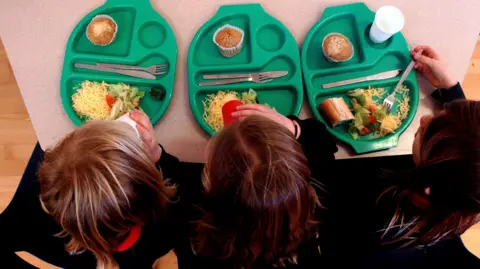
Her diet is now predominantly limited to bread, garlic bread, and chips, with attempts to introduce new foods "awful" for the family.
Natalie said: "Before it even got anywhere near her mouth she was retching. Her eyes were streaming, she was crying. It was awful."
The experience of trying new food was "obviously traumatising for her" and there was "clearly a mental block there".
 PA Media
Natalie said she often felt judged and unsupported. "I feel as a parent like I'm failing her… we have tried everything," she said.
Natalie said that despite five years of trying to get help, the family had been dismissed at repeated appointments because her daughter was not underweight.
She said she was also turned away by the children's mental health service.
Natalie said she felt alone, adding: "I don't know how to do this. You don't know if what you're doing is right."
'Completely alone'
Another Ramsey mother, who asked not to be named, said her son's eating difficulties began in infancy and became more severe as he grew older.
She said: "It wasn't a normal level of fussiness because he wouldn't even eat junk food."
She described how her son would stand outside the room and "retch because of the smells".
She said she too received little understanding from professionals.
"I got one very unhelpful comment from the GP, who said, 'Have you tried hiding vegetables in your food?' I can't hide a carrot in a bowl of corn flakes," she said.
She said the family had faced years of exhaustion and judgement.
"It just felt like we were completely alone and that there was no help. You do feel judged that people are judging you and your parenting."
Her son eventually underwent clinical hypnotherapy in London, which she said was "life‑changing".
"He picked up this pizza and he had a bite. He was absolutely buzzing. It was like a different child had come home," she said.
But she said families should not have to travel off‑island and pay privately.
She said: "There needs to be some sort of a clinic and ultimately if you can't fix a problem... then they should be referring to somewhere in the UK or at least seeking advice from somewhere in the UK."
Read more stories from the Isle of Man on the BBC, watch BBC North West Tonight on BBC iPlayer and follow BBC Isle of Man on Facebook and X.
