What a council shake-up could mean, or not, for taxpayers

 BBC
BBCWe often hear new leaders of councils claim they are changing how they run the authority to save money for taxpayers and make it more efficient.
But do they?
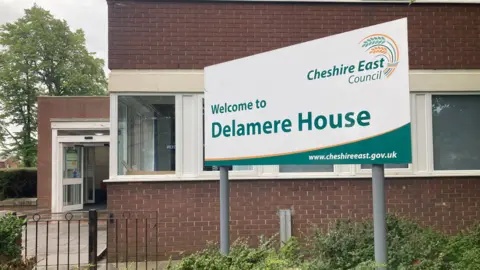
In the north west, Cheshire East Council has just made such a change, returning to a cabinet and leader model after five years making decisions through a series of committees.
The authority's leader, Labour's Nick Mannion hailed it as a "big step forward".
What is the difference?
The committee system involves councils being divided into politically balanced committees to make decisions.
But in the cabinet and leader model, the cabinet is made up of members of the ruling administration and a leader is chosen.
Stuart Wilks-Heeg, professor of politics at the University of Liverpool, said there was a view that, with the cabinet and leader system, decision-making could be streamlined.
"But just because you've made things quicker, doesn't necessarily make it better," he added.
"You might actually want it to be slower, subject to more challenge.
"In the committee system, you share the power more, all the councillors are more involved. That can slow things down, but that might be a good thing.
"Likewise, it's assumed that having a leader and cabinet, it makes the accountability clearer because it's much clearer who's made the decisions."
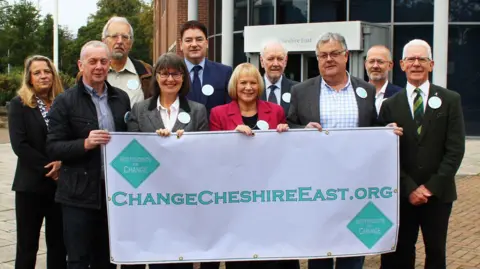
Why is Cheshire East making the change?
A review in 2024 highlighted issues, particularly around the authority's finances and also said the authority should "urgently review" its decision-making.
A best value notice was issued to the authority last year over concerns about its leadership, governance, scrutiny and culture.
The council said it made the change because of the government requiring councils to adopt a leader and cabinet system.
Dr Greg Stride, from the Local Government Information Unit (LGIU), said local government was "so varied and complex that no one governance model is obviously the best, especially when politics is becoming more fractured".
Will it reduce costs?
There is not much evidence, explained Wilks-Heeg, but "in terms of common sense, the committee system is going to be more expensive" because of it taking up more of councillors' time and duplication of reports.
"But if you look at the total budgets of councils and how much goes on the payment of councillors, how much goes on the support of council meetings, it's small beer," he added.
"On the surface level [it might] be cheaper" but if an authority then "makes a few bad decisions because you've given so much executive power to a small number of people and they're not subject to enough scrutiny, then you've undone all of those cost savings", Wilks-Heeg said.
Mannion and his deputy, Michael Gorman, said the move would allow the authority to be "more agile, clear-sighted and joined up" in its decision making.
But they admitted it was "not a magic bullet" and there are "many tough decisions ahead".
Stewart Gardiner, the leader of the Conservatives, said his group was "never convinced" by the arguments for moving to the committee system.
He said the move to the cabinet system was "the only sensible way forward" and welcomed the decision.
 Cheshire East Council
What is the national picture?
There have been various changes over the past 25 years around the systems in place in local government.
It changed again recently with the English Devolution and Community Empowerment Act which had a section around abolishing committee systems.
The LGIU said it knew of 36 councils using the system at the start of 2026.
Wilks-Heeg said there should be a "serious analysis" of the pros and cons of the different models.
While Stride said he believed councils "should be able to run their own governance models and be judged on the results".
A spokesperson for the government said: "Our changes will mean councils run more efficiently by boosting transparency and speeding up important decisions, making it easier for them to deliver high-quality public services for local people.
"Most councils already use the cabinet model successfully."
Read more Cheshire stories from the BBC and follow BBC Stoke & Staffordshire on BBC Sounds, Facebook, X and Instagram.
