Parties hit the road for final week of campaigning

 Getty Images
Scotland's political parties have been hitting the campaign trail during the final week of campaigning ahead of the Holyrood election.
On Thursday, 7 May, voters will head to their local polling station to choose who they want to lead the next Scottish government.
They will be able to back a candidate in their constituency, as well as cast a regional ballot for a party.
There are 440 candidates standing in constituency races, and no fewer than 29 different parties contesting the eight regional lists.
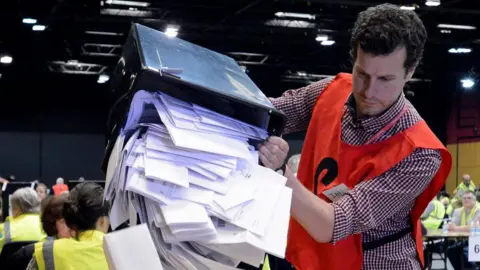
By the end of this week Scotland should have decided who its 129 MSPs will be, with results expected throughout Friday as there will be no overnight counting.
Parties are offering a very broad range of policies, as can be seen in BBC Scotland's interactive guide.
The six larger parties have met at a series of head-to-head debates in the lead up to the Scottish Parliament election.
But it could all come down to the final push.
On Monday, the parties highlighted a range of policies as they hit the road hoping to court undecided voters.
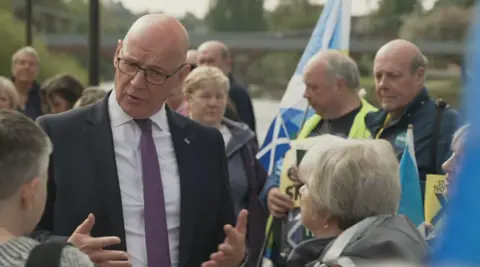
Campaigning in Dumfries, SNP leader John Swinney said his party would continue improvements in the NHS, support people through the "cost of living issues that people face" and "put Scotland's future into Scotland's hands".
"All our opponents are saying vote for them to stop the SNP. It's a negative message - we want to improve people's lives, our opponents want to stop us," he said.
"I'm confident the SNP has got very good prospects of winning the election on Thursday."
His party is calling for an independence referendum in 2028 if a majority of at least 65 MSPs can be achieved.
The SNP has pledged to use devolved powers to compel supermarkets to limit the cost of bread, milk, cheese and other groceries.
Swinney has also announced ambitions to simplify the income tax system, roll out a £2 cap for single bus fares and deliver extra funded childcare.
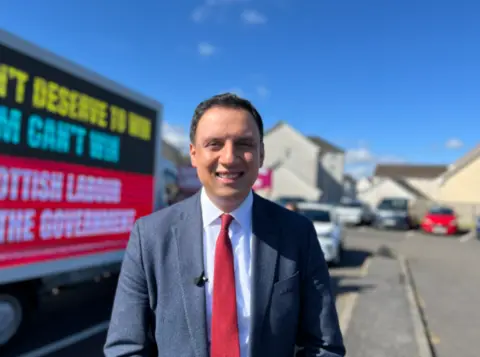
Scottish Labour leader Anas Sarwar said voting for his party was the only way to get a change of government after Thursday's election.
Speaking at a campaign stop in West Lothian, he claimed the SNP "don't deserve to win" and that Reform "can't win".
With pollsters predicting a low turnout, Sarwar said he understood why people were "scunnered, disappointed and angry".
But he added: "Scotland is in chaos under an SNP government, we need a new government and only I can deliver that new government."
Sarwar has said his top priority is to "fix the NHS". Labour has also pledged childcare tax breaks for parents, to fix potholes and to lift a Scottish government block on new nuclear power.
At his party's manifesto launch, Sarwar said the choice at this election was between "more of the same with the SNP or change with Scottish Labour".
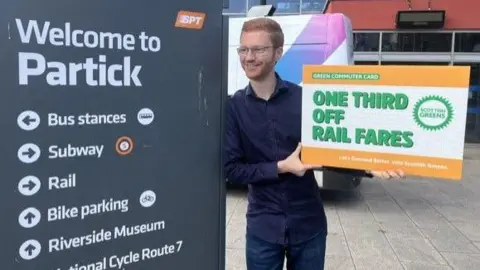
Scottish Green co-leader Ross Greer was in Partick in Glasgow to call for the introduction of a rail card available to all, which would save a third off rail tickets.
He said "scunnered" was the word of the election as many Scots were struggling with rising prices and were looking to politicians to help them.
Greer argues that the rail card is the kind of policy that would help thousands of people save money.
The party also has plans to expand free childcare.
Currently the government funds 1,140 hours of childcare for two and three-year-olds per child per year. The Greens want to extend this to all two-year-olds, and provide 570 hours of free childcare from six-months-old.
They also want to recruit more NHS staff including GPs, nurses and social care workers, and change the school starting age to seven.
 PA Media
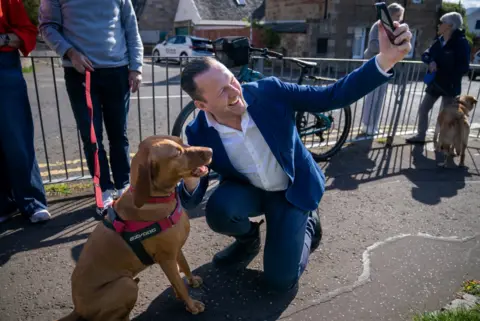
Campaigning in Edinburgh, Scottish Conservative leader Russell Findlay said Scotland's benefits system was "wide open to abuse".
He said: "You're getting people claiming for mental health conditions without a medical diagnosis and in many cases, even with a diagnosis, they don't need that money to live their lives."
Findlay said his party would guarantee more funding for the NHS, with the focus on frontline services.
Asked about voter apathy, he said dissatisfaction with politics went to some way towards explaining why some people might choose not to vote - but that it was politicians' job to motivate them.
Findlay has promised to cut income tax, deliver faster GP appointments and send prisoners abroad.
The party's manifesto also details plans to fix roads, employ more police officers and to introduce a two-child cap on the Scottish Child Payment.
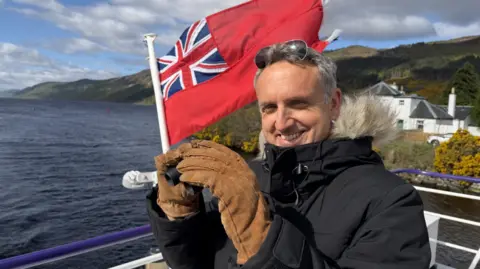
Alex Cole-Hamilton, leader of the Scottish Liberal Democrats, cruised down Loch Ness to take part in some Nessie watching.
His party was focusing on housing with a pledge to build 25,000 homes each year of the next parliament, reserving 10,000 for key workers like carers and teachers in areas like the Highlands.
He said the policy was "a win-win. We'd get Scotland building again and secure a supply of workers in vital industries."
Asked why voters appear to be disengaged with this election, Cole-Hamilton said voters have been "failed by other parties, particularly parties of government" but that there was "great enthusiasm" in the constituencies the Lib Dems were targeting.
If his party wins power, he has vowed action to improve NHS performance and bring down the cost of living.
Lib Dem proposals include recruiting 900 extra NHS staff, and 2,000 pupil support assistants in schools. They also plan to spend an extra £400m on social care.
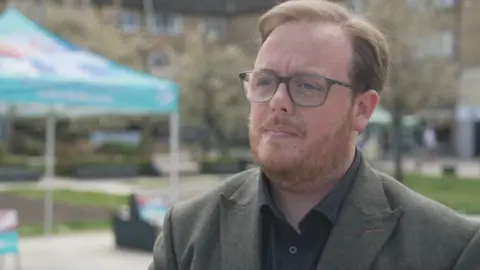
Reform UK Spokesperson Thomas Kerr said he was in Helensburgh to warn people that a vote for the "extremist Greens" could see a loss of jobs in the area.
"The base just a couple of miles up the road in Faslane would be closed down, we would see thousands of jobs in places like here in Helensburgh absolutely decimated because of policies that these extremists support," he said.
He also hit out at the prisoner early release scheme, and said Reform would deport those who had come from abroad and committed crimes in Scotland.
The party's leader in Scotland, Malcolm Offord, has pledged to cut income tax below the UK rate and reform the NHS.
Its manifesto also outlined plans to cut "unsustainable" welfare spending and "rehabilitate" the North Sea oil and gas industry.
Polling stations are open from 07:00 until 22:00 across the country on Thursday, and many people will have already voted through a postal ballot.
- The main results programme on BBC One Scotland and BBC Radio Scotland will air from 09:30 on Friday, the morning after the vote, and the BBC Scotland news website will publish all results as they come.

