Cold sore virus left mum with brain damage

 Jane Richards
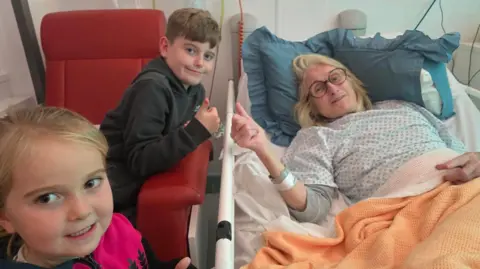
Helen Edwards could never have imagined a virus she may have had since childhood would leave her with brain damage.
At first, the 74-year-old thought she had flu, but ended up spending 12 weeks in hospital.
Doctors diagnosed her with encephalitis - an uncommon but serious condition in which the brain becomes inflamed or swollen, with one in five cases proving fatal.
This was caused by herpes simplex virus type 1 (HSV-1), also known as the cold sore virus, estimated to affect 3.8 billion people under 50 globally, or 67% of the world's population.
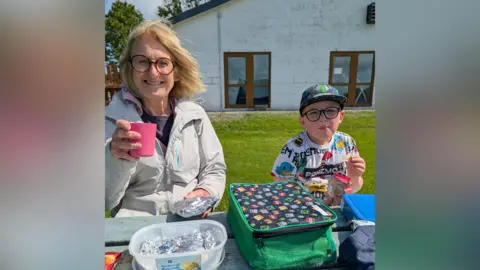
It has had a devastating effect on Helen, from Penrhyn-coch near Aberystwyth, Ceredigion, who went from enjoying sea swims and daily dog walks to "struggling to make new memories", according to daughter Jane Richards.
"When she returned to her home, she no longer recognised it and could not navigate familiar spaces, even forgetting routes between rooms," said Jane.
Encephalitis affects an estimated three people every minute worldwide, yet campaigners warn that awareness remains dangerously low, with 77% of people not knowing what it is.
 Jane Richards
What is encephalitis?
Anyone at any age can get encephalitis, with up to 6,000 cases in the UK each year and potentially hundreds of thousands worldwide, according to Encephalitis International.
It happens when an infection invades the brain, with symptoms including a high temperature, fever, confusion, headaches or seizures.
However, it is often hard to diagnose it from these alone, and often takes a brain scan or other procedures.
It can be caused by a number of viruses - including HSV-1, also known as the cold sore virus.
This is primarily transmitted through close, direct skin-to-skin contact with an infected person, such as kissing or sharing items contaminated with saliva, like lip balm or cutlery, according to the World Health Organization.
It is a lifelong condition with no cure, and many people contract it in childhood through close contact with loved ones.
While it can cause painful blisters or ulcers that recur over time, it can lay dormant with most people having no symptoms - and Helen never had a cold sore herself.
 Jane Richards
Describing her mother as "really lively and fit", Jane said she would exercise daily, help run the family transport business and her own animal feed venture.
But then on 5 September last year, Helen started feeling unwell, experiencing a fever, aches, fatigue and nausea.
A GP suspected a urine infection, but within days she became confused and "behaved really strangely", according to Jane, 40.
Helen was then admitted to A&E at Ysbyty Bronglais in Aberystwyth where her condition rapidly worsened, with severe confusion, loss of coordination, and increasing drowsiness.
Despite antibiotics, she showed no improvement, with Jane saying she would "have to explain every little step of anything to her".
A CT scan later revealed brain inflammation, and on 12 September she was diagnosed with viral encephalitis.

In total Helen spent 12 weeks in hospital, and because of the brain damage she suffered, her recovery has been slow.
She has had intensive physiotherapy and occupational therapy sessions, but has struggled - especially since returning home.
Jane added her mother did not even recognise some of the rooms, adding life had "changed quite dramatically".
Along with her siblings, she now takes it in turns to look after Helen including preparing meals, doing shopping for her and looking after her.
"That was sort of a big change from her looking after the grandchildren - she used to take my son to school three mornings a week before," Jane said.
"Once she had carers coming in three times a day that came in for like half an hour, but she actually needed more support than that."
Helen is currently at Swansea's Morriston Hospital after developing autoimmune encephalitis, a complication that can follow the viral form.
"In my mother's case, she now has an acquired brain injury which means that part of her brain is not working," Jane added.
"Now it's a big impact because obviously we're working and we're travelling to Morriston to visit her as much as possible.
"We don't know what the long-term impact is going to be."
'Time is of the essence'
According to Encephalitis International, which is supporting the family, delays in diagnosis may result in further long-term damage.
Jane stressed "time is of the essence", as antiviral treatment within 48 hours can reduce the risk of severe symptoms.
She wants to encourage other families to be on the look-out for the symptoms, adding: "They [the patient] can't talk and say what's wrong.
"Doctors don't always know about it because they don't come across it often.
"As the timeline is important, knowing the symptoms is really important."
Hywel Dda health board declined to comment on the specific case but said staff were highly trained to respond quickly to "a wide range of situations".
Executive medical director Mark Henwood said encephalitis was a "rare and serious condition which is difficult to diagnose because the symptoms are similar to many other conditions".
He said the health board was committed to raising awareness of diseases, especially common ones, adding staff were highly trained to respond quickly to "a wide range of situations".
