'It's pure joy' - How silent discos can transform dementia care

 BBC
BBCWe all have a soundtrack to our lives - a song that can instantly transport us back to a certain time and place.
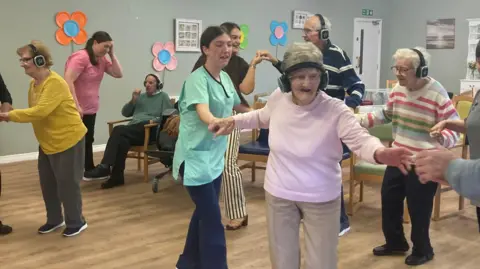
At one care home, staff have been using silent discos to help residents with dementia reconnect with some of those musical memories.
Unlike a traditional disco, the music is played through wireless headphones, allowing each resident to enjoy songs chosen especially for them.
Every week, residents at Melmount Manor in Strabane gather in the activity room where staff say music is "reaching places dementia cannot take away".
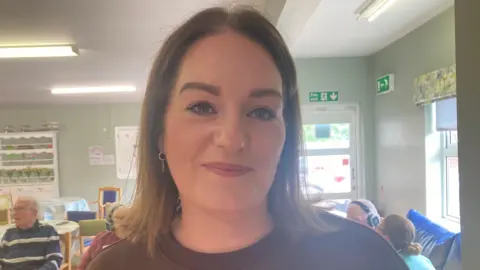
Hayley Phillips, who has worked at the home for 26 years, said the impact has been "extraordinary".
"It's just pure joy," she told BBC Radio Foyle's North West Today programme.
"You can actually see that wee bit of personality that can be lost after a dementia diagnosis coming back when they put the headphones on.
"We see the music bring back that spark in them."
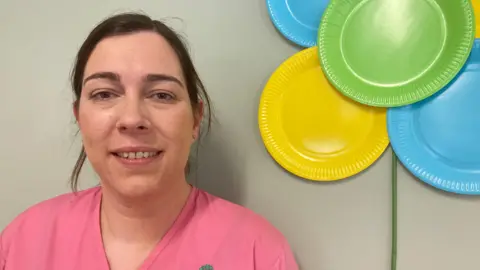
Choosing the playlists is activities co-ordinator Elaine Kelly, who said classics from Chuck Berry, Elvis Presley and Kenny Rogers are among the favourites.
She said the residents "just come to life" when the music begins.
"The music brings them back to a sense of safety and security again," she said. "In that moment, nothing is worrying them.
"It's like the dementia is gone and they are free. It's really beautiful to see that.
"Dementia robs people of so much, but it can't touch music - it stays within them forever."
More than 944,000 people in the UK are living with dementia, with that figure expected to rise to more than one million by 2030, according to the NHS.
For the residents, the music is doing exactly what staff hoped.
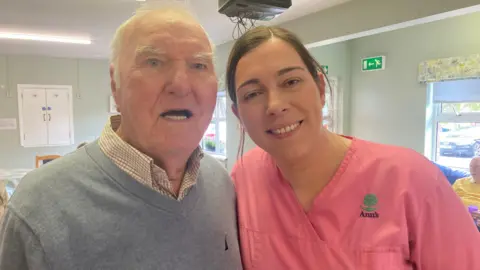
Seventy-nine-year-old resident Eamon said the discos are "just wonderful".
"We have a great time and I am so glad we are able to do it.
"Music brings people together and it brings good people together."
Sylvia, 87, said the sessions remind her of going to dances when she was younger and give her the chance to "get up and get moving".
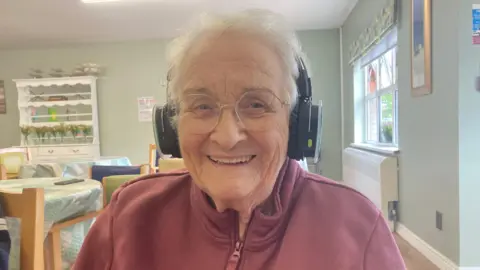
For Rosemary, 80, the music "takes her back through the years".
"I loved going to the dances in my day and I did a bit of Irish dancing too.
"The music brings it all back to me.
"The songs remind me of my mother and her piano."
Dementia UK said music can help a person with dementia to connect with the past by evoking memories, feelings and emotions that they might otherwise find hard to express.
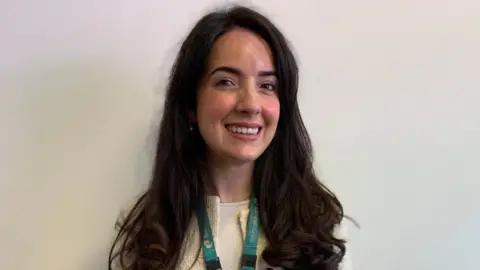
Lauren Williamson, who works at clinics across Northern Ireland, said music can be a "simple but powerful" way to help.
She is a Dementia UK admiral nurse, a specialist position that sees her working alongside family carers and the person living with dementia
She said the sessions help people "reconnect with their past and aids reminiscing".
"Music can be a real source of comfort and calming as well.
"Knowing the person well is really important, so you know what to play as you want the music to bring back positive memories.
"I have cared for patients who are unable to verbally communicate, but when a song comes on that is personal to them, you can see them tapping, humming or even singing along.
"It is absolutely incredible.
"Helping somebody with dementia to connect with their youth or music they used to sing to their children, is really just so powerful and can be truly transformational."
