Sewage, rat pee and toxic algae: Open water swimming is booming, but is it bad for your health?

 Getty Images
Swimming in rivers and lakes is booming, but heavy rain, sewage overflows and farm runoff can lead to disease outbreaks. Here's how to spot when the risks to health are highest.
On a heat‑bleached Saturday, a line of swimmers waits by a London slipway, dry robes flapping, phones glowing in their hands. A pollution app shows an amber warning for the tidal Thames River. Some people shrug and put their phones aside before wading into the water despite the waiting sewage, joking about getting "a bit of vitamin S".
Others, more cautious, pause. They sniff the river, think about the storm that hammered the city the night before, and decide to sit this one out.
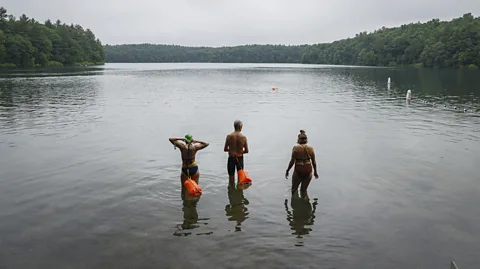
Open‑water swimming, also known as wild swimming, have boomed in countries from the UK and the US to Australia in the past decade, fuelled by social media, urban "blue space" campaigns and a search for low‑cost ways to feel better in difficult times. Studies suggest that spending time in or near natural water is associated with better mental health and lower stress, even after accounting for exercise and income. (Read more about the surprising benefits of blue spaces.)
 Getty Images
Sewage, rats and toxic algae
Almost two centuries ago, hot weather combined with a seriously polluted Thames to create a stench so nauseating it became known as the "Great Stink". The public outrage over the smell led to reforms including a new sewage system for London.
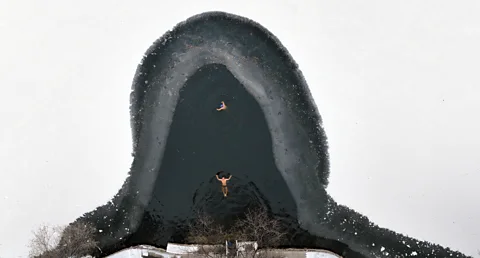
These days, the river is busy with the bright tow‑floats and bobble hats of swimmers. Similar scenes play out along revived rivers from the Seine to the Danube and the Hudson. In Basel, Switzerland, some companies even give new employees "wickelfisch" – a fish shaped swim bag that locals use while swimming in the Rhine.
Rivers, once treated as open sewers, are now increasingly seen as clean and swimmable. Paris has invested about €1.4bn (£1.2bn/$1.6bn) in cleaning up the Seine, building a vast underground basin at Austerlitz that can hold about 50,000 cubic metres – roughly the volume of 20 Olympic pools – of stormwater instead of dumping it straight into the river.
Meanwhile London's Tideway "super sewer", a 15-mile-long tunnel (25km) that traces the Thames, can store around 1.6 million cubic metres of combined sewage and rainwater before sending it for treatment. Governments are designating more official bathing waters each year.
Yet a summer storm can undo weeks of clear test results as water quality is often hit by weather events. In the US, stormwater runoff and sewage overflows are among the main sources of pollution leading to public warnings and beach closures along lakes or coastlines.
"After heavy rain and storm events, urban rivers typically become microbiologically unsafe for swimming for at least 24 to 72 hours, mainly due to sewage overflows, runoff and disturbed sediments," says Isabel Douterelo Soler, a senior lecturer in environmental microbiology at the University of Sheffield in the UK.
"When there is too much rain, these systems can become overloaded," she adds. When that happens, water companies release sewage-polluted water directly into rivers to prevent it backing up into homes or overwhelming treatment plants. Those overflow outlets into rivers are known as "combined sewer overflows".
 Getty Images
Substantial outbreaks ofinfectious disease have been reported among wild swimmers, with risk linked to swallowing river water. Even when routine monitoring seems reassuring, river swims can trigger significant illness depending on the conditions on the day.
Studies on health and wild swimming show a consistent pattern: the more contact people have with the water (especially if they swallow it), the higher the risk of gastrointestinal illness.
The clearest increases are seen in sports such as surfing, coasteering and extreme kayaking. Children tend to be at higher risk than adults, partly because they swallow more water when they swim.
Most of these illnesses are short‑lived bouts of diarrhoea or stomach cramps. Occasionally, the pathogens are more serious.
Leptospirosis, a bacterial disease carried in the urine of rodents and livestock, can cause organ failure and death. It remains uncommon in temperate countries, but there have been outbreaks among triathletes in the UK, for example, who swim in open water as part of their competitions.
Public health agencies advise avoiding floodwater and rodent-infested areas. You should try to swallowing as little water as possible, shower after swimming, cover cuts and scratches before swimming and seek medical advice if you develop symptoms such as fevers, chills and headaches after a river swim.
Slow-moving or warm stretches of river can also support blooms of cyanobacteria, sometimes called blue‑green algae. These can release toxins that irritate skin and eyes and, more rarely, affect the liver or nervous system of people.
Signs that it may be unsafe to swim
Precautionary guidance is simple: don't swim if the water is visibly "bloomy" – if it's cloudy and opaque green, blue‑green or pea-soup green, looks as if there is green paint swirling in the water, or if there are floating clumps, streaks, or a scum or foam along the edges or surface. Visible surface scums most likely to coincide with potentially harmful toxin levels.
Avoiding wild swimming in the days after a storm or heavy rain may also be a safer choice. Check the water for blooms, brown flow, sewage or chemical odour. Any sign of dead fish provides another clue that you should skip a dip.
Leptospirosis, a bacterial disease carried in the urine of rodents and livestock, can cause organ failure and death. It remains uncommon in temperate countries, but there have been outbreaks among triathletes in the UK, for example, who swim in open water as part of their competitions.
Public health agencies advise avoiding floodwater and rodent-infested areas. You should try to swallowing as little water as possible, shower after swimming, cover cuts and scratches before swimming and seek medical advice if you develop symptoms such as fevers, chills and headaches after a river swim.
Slow-moving or warm stretches of river can also support blooms of cyanobacteria, sometimes called blue‑green algae. These can release toxins that irritate skin and eyes and, more rarely, affect the liver or nervous system.
Antimicrobial resistance adds another risk to wild swimming and other wild water sports. For example, research suggests that regular surfers are much more likely to carry antibiotic-resistant Escherichia coli(E. coli) bacteria in their gut than non‑surfers. (Read more on the antimicrobial resistance crisis in rivers and seas.) These superbugs are present not just in seas but in rivers too.
"Antibiotic-resistant bacteria are present in river environments, which could have come from pollution sources like wastewater treatment plants," says Isobel Stanton, an environmental microbiologist from the UK Centre for Ecology and Hydrology.
This antibiotic resistance makes any infections harder to treat, adds Douterelo Soler.
 Getty Images
Tests don't tell the whole story
Many swimmers assume that official tests will capture most of these risks. The reality is more complicated, especially for rivers.
Under European Bathing Water rules, designated sites are monitored for two main faecal indicator bacteria: E. coli and intestinal Enterococci. In England, the Environment Agency typically takes around 20 samples each season at each site. Classifications such as "excellent", "good", "sufficient" or "poor" are based on the previous four years of data rather than a single result.
In the US, the picture is similar but varies by state. Federal guidance focuses on the same kind of faecal indicator bacteria – E. coli (mainly in freshwater) and Enterococci (especially in marine waters) – rather than testing routinely for every pathogen.
Many coastal and Great Lakes beaches in the US are monitored, with sampling frequency varying by location (often weekly, sometimes more often). However, it usually takes about 24 to 48 hours to produce results – so public warnings can arrive after people have already swum. Faster same‑day DNA‑based detection methods exist but are not universally deployed.
Essentially, the current approach to monitoring is designed to track longer‑term trends, and tends to work best at more stable coastal sites. It's less useful for on-the-spot decisions, such as deciding whether a river is safe the morning after heavy rain – because short pollution events can be missed by routine sampling.
Because pollution is so influenced by changing weather conditions, even an official, designated bathing site may at times actually not be safe to swim in. Heavy rain often stirs up sewage and farm run-off and can overwhelm sewage system, leading to spikes in pollution.
Generally, inland sites such as rivers, ponds and lakes lag behind coastal places in terms of water quality, because inland rivers and lakes are more exposed to sewage from the land, and the pollution doesn't dilute as much as it would in the sea.
More like this:
In farming areas, heavy rain washes livestock manure and soil from fields into rivers, creating short‑lived spikes in faecal indicator organisms and adding nutrients that fuel algal and cyanobacterial blooms.
In short, alerts help, but they don't replace making a personal judgement by observing the river and the weather and thinking about who is swimming. Avoiding wild swimming in the days after a storm or heavy rain may be a safer choice. Checking the water for blooms, cloudiness, brown flow, sewage or chemical odour, surface scum, pea‑soup green water or foam in slow eddies, or any sign of dead fish can provide other clues that you should skip a dip.
Areas away from outflows, marinas and livestock fields, with an easy way in and out, are likely to be cleaner and safer than those close to sources of pollution. Extra caution is required – and in some cases, avoiding the wild swim altogether – if you have a weak immune system, are ill, have open wounds, or plan to swim with children. In addition to pollution, cold and currents can pose risks, as can swimming alone with no one around to help in an emergency.
The point is not that rivers are off-limits, but that the pleasures of wild swimming are best preserved when enthusiasm is matched by caution, timing and local knowledge.
--
For essential climate news and hopeful developments to your inbox, sign up to the Future Earth newsletter, while The Essential List delivers a handpicked selection of features and insights twice a week.
