Not just books - how renting a sewing machine from the library can improve democracy

 Oodi Library, Helsinki
Finland's libraries are increasingly being valued not by how many books they lend, but how they help societies function.
On a freezing January morning in Helsinki, around 20 people gather outside Oodi, the city's central library, waiting for the doors to open.
"I have tears in my eyes when I see people almost run into the building at 08:00, heading straight to their favourite spots," says Katri Vänttinen, director of library services for the whole of the Finnish capital. "It shows that the library really belongs to the public."
By lunchtime, the building is so full that visitors wander between floors looking for an empty seat. Students work on laptops beside huge windows overlooking Finland's parliament and parents read with babies and toddlers in brightly coloured play areas.
A small group sits in a circle: they're knitting woollen socks, those with more experience helping newcomers with techniques and patterns. In a library music pod, a middle-aged man records his first saxophone track. In the library café, an elderly woman holds a Finnish conversation class for two foreign girls. By the entrance, a teenage boy picks up a basketball he's borrowed and joins his friends on the library court just outside.
Oodi, voted the world's best newly built library in 2019, is thriving – a striking contrast to the situation in many other countries where public libraries are slowly disappearing.
Between 2008 and 2019, 766 public libraries closed across the United States, while in the United Kingdom, between 2016 and 2023, more than 180 council-run libraries were either closed or handed over to volunteer groups. Finland, instead, is expanding its libraries and transforming them into publicly funded community service centres where people can borrow much more than just books.
Research emerging from these initiatives – not just in Finland, but also in Norway, Sweden, Denmark and Canada – already suggests that libraries play a significant role in promoting social inclusion, making a poignant argument: what if the value of libraries is not in how many books they lend, but more in how they help societies function? And what can the world learn from this Finnish model?
Not just books
Finland has more than 700 libraries for a population of 5.6 million, offering everything from podcast studios and 3D printing to tennis rackets and swimming pool passes.
According to Vänttinen, the most borrowed items after books in Helsinki libraries are spaces: rooms that can be pre-booked, free of charge, to meet, study, hold political discussions or make music. Among portable items, board games and console games top the list.
 Oodi Library, Helsinki
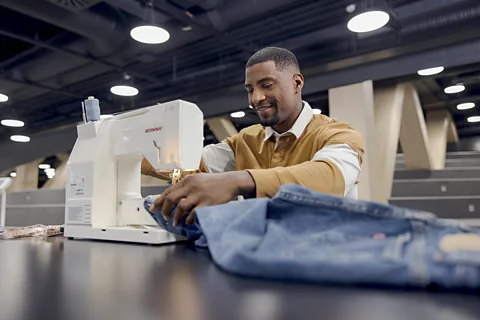
This culture of borrowing, Vänttinen explains, is rooted in deep-seated pragmatism that stretches back to Finland's rural past, when people routinely shared farming machinery. "Today, many people in cities live in small homes, and they might need a sewing machine only once a year," says Vänttinen. "So why buy one? People prefer not to spend their own money when they can access a sewing machine for free, funded through their taxes."
Six hundred kilometres north of Helsinki, the city of Oulu's newly refurbished central library Saari reflects the same thinking, says library clerk Chris Stephenson while loading a microfilm reader for a visitor to browse an old newspaper.
Around him, readers fill long tables beneath soft lamps. A newly retired teacher is printing sheet music for the choir he sings in and the band where he plays the guitar. One floor up, a young man arrives to shorten his jeans after booking a slot for a sewing machine. In the same room, a 3D printer hums behind a schoolgirl using a heat press to make a T-shirt she's designed for a friend's birthday. A laser cutter sits idly by.
According to a government report, 55% of Finns visit libraries at least once a month. Ministry of Culture and Education data shows Finns use the library 9.1 times a year. In the UK, data analysis suggests a person visits roughly 2.5 times a year on average; in the US, 2.4 and in the EU average is around 3.5 visits.
Before moving to Finland, Stephenson worked in libraries in the UK for 20 years. "I saw many libraries closed down, and communities losing something important," he says.
According to Noora Hirvonen, professor of information studies at the University of Oulu, cutting underused services to save money can become a self-fulfilling prophecy. "We first cut library opening hours and, as a result, library visits drop," says Hirvonen. "This is then used as a reason for additional cuts or even closing the library."
Instead, Hirvonen argues, institutions should ask why the service is not used. Is it because people do not find it valuable, they do not have access to it, or they do not know about it?
"Usage is not only reflective of the value of the service: it's shaped by things like visibility and availability," says Hirvonen.
Pillars of democracy
But the significance of Finnish libraries extends far beyond tools and meeting rooms.
Professors, unemployed and homeless people all use the same library spaces, making libraries a key part of Finland's democratic infrastructure, says Hirvonen. "They're places where anyone can access knowledge, meet others and take part in public debate, regardless of income or background," Hirvonen says.
While these are core values of librarianship everywhere in the world, says Hirvonen, in the Nordic countries, they are embedded in law. Under the Finnish Library Act, public libraries must promote democracy, freedom of expression and active citizenship. (Some other Nordic countries have similar policies too.)
More like this:
Finland's investment reflects this commitment: in 2025, the country spent nearly €371m ($430m/£321m) on its public libraries – that's €65.78 ($76/£57) per person, compared to the average £10 ($13.5) per person spent in the UK, and a total public library expenditure of $15.2bn (£11.4bn ), or $45 (£34) per person in the US.
"Libraries can directly support democracy – this is one thing the world can learn from Finland," says library scholar R David Lankes from the University of Texas, who believes libraries thrive when communities actively use them to learn, debate and create knowledge together.
 Erika Benke
For instance, as partners in Finland's National Digital Support Model, many Finnish libraries provide extensive digital support to allow citizens from all backgrounds to access the nation's digital welfare.
Librarians help customers navigate online bureaucracy, from tax services and bank accounts to pension portals and digital health records, and they routinely provide assistance with writing CVs and job applications. As a result, a recent study of Finnish libraries concluded that libraries function as critical inclusion infrastructure.
"This promotes inclusion," says Mervi Vaara, a manager for regional library services in Oulu. "The library is like a shared living room for everyone."
As a result, an analysis of 38 studies from around the world found that public libraries consistently return more value than they cost, giving back from three to five dollars for every dollar invested. The study emphasises that libraries create both direct benefits – such as savings from borrowing rather than buying, and support for jobseekers – and indirect benefits, including improved literacy, digital competence, employability and community wellbeing.
In annual evaluations carried out by Finland's regional authorities, libraries consistently top the list of most valued public services. "We reach practically everyone, regardless of societal or cultural status," says Vänttinen. "This is true everyday democracy."
In the 2023 report, Finns described libraries as trusted sources of information and digital content. "Trust in government institutions has been declining for decades," says Lankes, nodding to global surveys like the Edelman Trust Barometer, which shows a steady long-term drop in trust in public institutions in many countries. "But trust in libraries and librarians remains extremely high."
Libraries, Lankes argues, are among the few public spaces where people can simply exist without being expected to consume. "You can't go to town hall and just hang out. You can't go to the police station and just hang out," Lankes says. "But you can come to the library and just be."
 Sanna Krook
And while Finns actually also still enjoy high levels of trust in public institutions, according to surveys, they face what researchers call a "participation paradox": despite trusting institutions, many citizens still feel they have little real influence over political decisions. Ultimately, libraries can bridge that gap too, says Elina Eerola of the Finnish innovation fund Sitra, who worked on a report on how libraries can promote democracy.
Eerola says libraries can create accessible spaces where citizens can meet decision-makers and take part in debates. Sitra's pilot projects have used libraries to host community discussions and events to connect citizens directly with politicians and public institutions.
A personal impact
For some Finns, the impact of libraries is not measured in statistics. Nasima Razmyar, now a member of the Finnish parliament, arrived from Afghanistan as a refugee at the age of eight. She still remembers the moment she received her first library card: the first physical object she owned in Finland. "When I signed my name and received it, I suddenly felt this place belonged to me," says Razmyar.
Growing up in the Helsinki neighbourhood of Käpylä, she spent afternoons studying in the local library after school. "My parents didn't speak Finnish, so the library workers sometimes helped me with my homework," she says. "That local library was equality," she says. "The whole Finnish welfare system in one building."
As the afternoon light fades outside a Helsinki library window, Razmyar now watches her young children choose their books. "I think it gives children the feeling that they belong here, and this is for them, which is really important," she says.
--
If you liked this story, sign up for The Essential List newsletter – a handpicked selection of features, videos and can't-miss news, delivered to your inbox twice a week.
