


Back on track
Today's report: South again | A day on walrus beach | Shivering timbers
South again

Paul Rose explains the team's change of direction
The weather's got worse today, but not bad enough to stop our progress. We're 78°26' north, 11°55' east, which means we've actually come south again.
We had a successful day filming beluga whales yesterday, following the drama of our crewman falling sick and being airlifted from the boat. The good news is he's well.
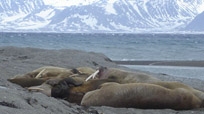
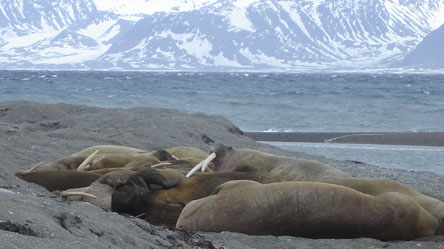
We've headed south to pick up a replacement crew member, and guess what we came across? Right here in front of me now is a fantastic walrus colony. Great news for us and we've had all morning to study them. If the weather improves we plan to dive with the walrus this afternoon, a daunting but exciting prospect.
A day on walrus beach
Marine biologist, Tooni Mahto is thrilled to be observing walruses as they lie on a beach. She keeps a careful distance as these wild creatures can move quickly on land. The walrus is a communal creature and appears to use close physical contact to bond with other walruses.
In order to see this content you need to have both Javascript enabled and Flash installed. Visit BBC Webwise for full instructions
Shivering timbers

Dr Lucy Blue describes exciting finds on the walrus beach
The team came back today having spent the morning observing walruses on the beach and reported that they'd seen lots of pieces of driftwood. I got very excited.
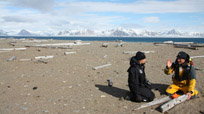
I visited the beach in the afternoon and it was just amazing. There's obviously a confluence here, where the wind and the currents meet in this very exposed little sand spit and the beach is just completely covered in old ship timbers!
On the beach were pieces from masts and spars. There were knees, the pieces of the boats that support the decks, and also frames that create the transverse strengthening of the vessel. What's most remarkable is that these pieces of timber have probably drifted over thousands of miles. Some of them may have come from as far away as Siberia to end up on this beach. Others may be part of the shipping that was going on in the area. Perhaps boats involved with the whaling industry, hunting or fishing that had wrecked near by and ended up on the beach.
The other remarkable thing is that some of them may be hundreds of years old. One of the things about the Arctic is that because of its very cold and dry conditions, timber and other organics are really well preserved. In warmer, more temperate climates they wouldn't survive. So we've got this sort of treasure trove of material that's lying here on the beach waiting to be explored and discovered.





 Delicious
 Digg
Digg reddit
 Facebook
 StumbleUpon
