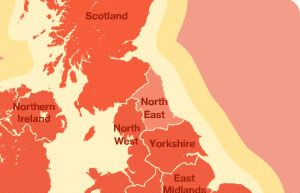
With a history of mining, railways, and engineering; home to the commercial and industrial legacy of towns such as Newcastle, the North East has traditionally been a man’s world. More recently the North East has aspired to the arts, with contemporary art museums, the stunning Gateshead Millennium bridge and the iconic Angel of the North. Are the changes in tradition and employment a move towards the north revealing its more feminine side? Parts of the North East have a higher-than-average concentration of divorced and single lone parents. Marriages ending in divorce last longer today than the marriages of people who divorced in 1981: 14 years compared with nine. Over the past few decades people have tended to marry later in life. The average age for first marriages in England and Wales in 2003 was 31 for men and 29 for women. This compares with 26 and 23 for men and women respectively 40 years earlier. There's a lower percentage of single people aged 20 to 59 living in the North East than in most other parts of the country. This is also true of Yorkshire and Humberside and the East Midlands. According to Darren Smith, from The University of Brighton "The evidence of a North-South divide is not as pronounced as is sometimes suggested. However, there's definitely an East-West split in some family forms and relationships as well as a difference between middle England and The South." The North East has the fewest same-sex couples among all cohabiting and married couples living together in the UK. Along with Wales and the East and West Midlands, this is the least likely area for people looking for a same-sex relationship to find like-minded people. Newcastle-upon-Tyne has the highest number of lone parent households in the North East. Households with children and only one adult are now the fourth most common type of home in the UK with more than seven per cent of the population living this way, an increase of more than 1 million people in the last decade.

|