Summary

Have a question about life under the Taliban?

  1. 'I work with 10 brave women and hope for success in the future'published at 19:31 BST
    A blue banner with the words "Noori, 24. Works in Kabul jam factory".

    When I could no longer continue my education, I felt extremely disappointed, heartbroken, and depressed.

    However, I did not lose hope. I decided to start working and become financially independent. I found a job at a jam-making company and started working there. I have now been working for three years.

    Today, I am very happy and proud because I have become self-reliant and have gained valuable skills and experience.

    Now, I have decided to establish my own company so that I can provide employment opportunities for other women. I want them to become independent, strong, and successful women like me and have a better future.

    I have established my company, and currently, 10 brave women are working there. I hope for even greater success in the future.
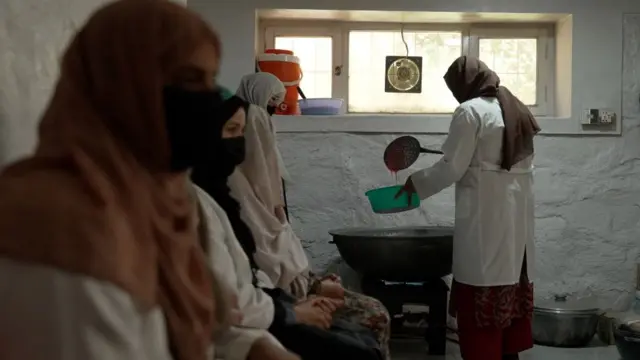
    A woman using a large ladel to transfer jam from a large bowl into a smaller one, as other women sit in a line with their faces covered
  2. 'Sometimes my mind is filled with thoughts of the future I am afraid I may lose'published at 19:17 BST

    A blue banner with the words "Shakiba, 18. Jewellery maker in Kabul".

    I want to study so much.

    I want to continue my education, have a profession, help my family and become useful to my community.

    I do not want my life to be limited simply because I am a girl. I also have dreams. I also have abilities, and I also deserve the chance to build a future.

    There are days when not being able to go to school or university becomes very painful. Sometimes my mind is completely filled with thoughts about education and the future I am afraid I may lose.

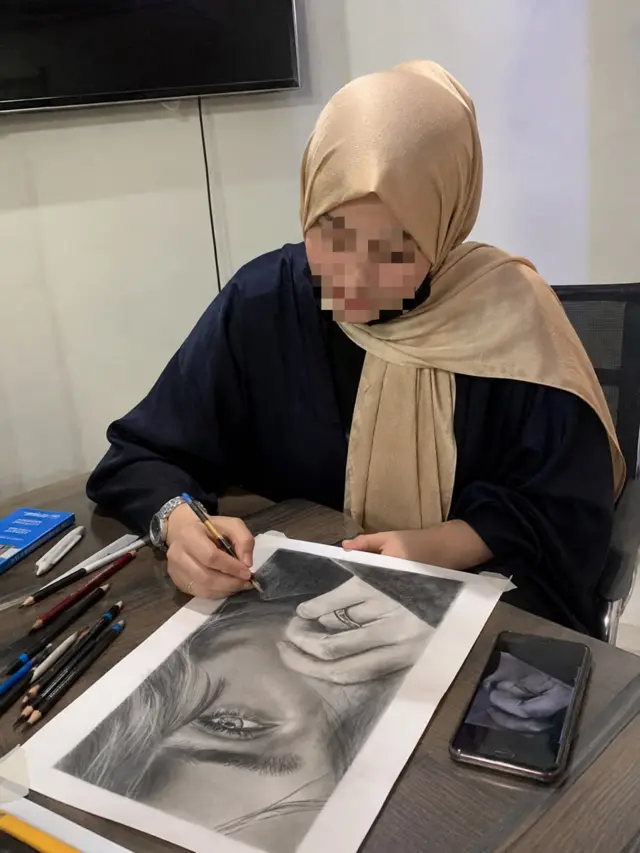
    To keep myself from falling completely into sadness, I turned to painting.

    Painting has become more than a hobby for me. It is a place where I can express the feelings that I cannot always put into words. When I paint, I can forget my limitations for a few moments.

    On paper, I can create the future that I wish I could have in real life. I can paint the sky and imagine myself flying.

    I can paint a girl who has achieved everything she once thought was impossible.

    Shakiba drawing a picture of a woman at a desk, with pencils on the table, and her face pixalated
  3. 'I had no hope left in life' after being released from prisonpublished at 19:07 BST

    A blue banner with the words "Manizha. Flogged by Taliban - age & region held for security reasons".

    For the first time since the Taliban's reintroduction of public lashings, the BBC Afghan Forensic team has exclusively spoken to women about their experiences of being publicly punished.

    For security reasons their names have been changed and the dates and locations of the incidents have been withheld.

    Some audiences may find these accounts distressing.

    After I was released, I practically lost my memory.

    I had completed four years of university education, but I forgot everything I had studied. I lost my appetite. I stayed awake all night and tried to sleep during the day.

    I had no hope left in life. Only my mother stood by me.

    I had no desire to continue living. I used to say that the first thing I would do after getting out of prison would be to take my own life.

    I had become a source of shame for my family and friends. The way my friends treated me changed.

    I could no longer think about marriage.

    • If you are affected by any of the issues in this story, information and support is available at BBC Action Line
  4. 'People are simply struggling to survive, rather than truly live'published at 18:58 BST

    A blue banner which says Ela, dental assistant from Kabul province

    We used to have an art workshop where girls could engage in art and painting.

    Unfortunately, after everything changed, everyone has lost the energy and opportunity to pursue art and their passions.

    In one way or another, people are simply struggling to survive, rather than truly live.

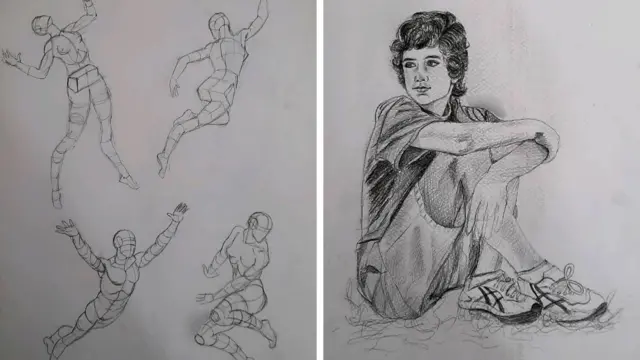
    Two pencil sketches side by side, showing a young girl sitting on the ground, and figures playing sports.
    Image caption,

    Some of Ela's sketches, which she shared with the BBC

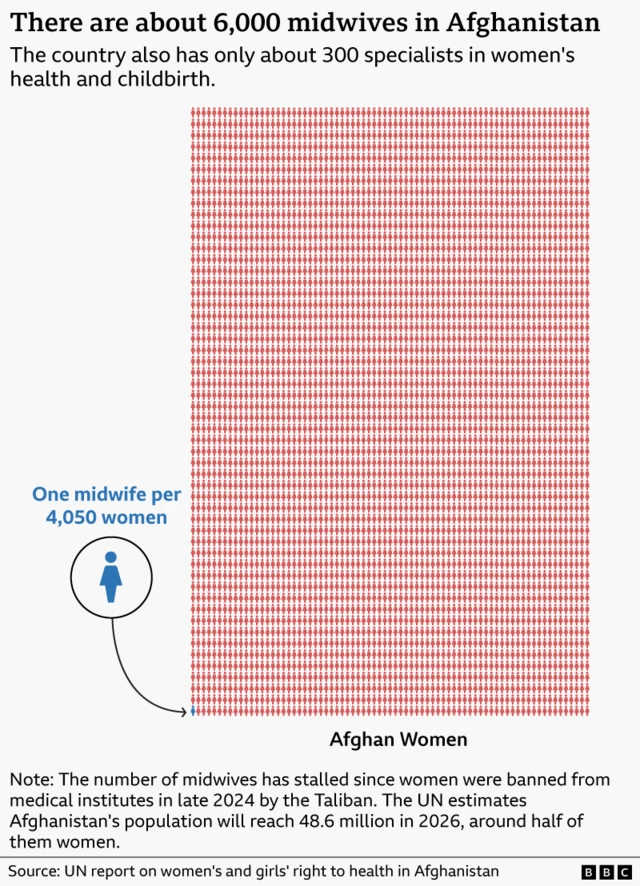
  5. 'No new female doctors or midwives are being trained'published at 18:49 BST

    A blue banner with the words "Maryam. Midwife - age & region held for security reasons".

    Maryam says many health workers in Afghanistan are deeply worried about the future.

    Now that women are no longer allowed to study at medical institutes, no new female doctors or midwives are being trained.

    Those already working have very limited opportunities to update their knowledge and skills.

    She also says some of her colleagues have stopped working because of Taliban restrictions, including rules requiring women to travel with a male guardian.

    I know women who have been forced to stay at home because they cannot meet these conditions.

    A graphic showing the proportion of Afghan midwives compared the number of women in the country. There is one midwife per 4,050 women
  6. 'My left shoulder is still badly scarred'published at 18:41 BST

    A blue banner with the words "Shaima. Flogged by Taliban - age & region held for security reasons".

    For the first time since the Taliban's reintroduction of public lashings, the BBC Afghan Forensic team has exclusively spoken to women about their experiences of being publicly punished.

    For security reasons their names have been changed and the dates and locations of the incidents have been withheld.

    Some audiences may find these accounts distressing.

    After that incident, whenever I see two people talking outside or in a mosque, I feel as though they are talking about me.

    My left shoulder is still badly scarred. For several months, I could not sleep on that side. I thought the bone in my shoulder might have been broken.

    They slapped me so hard that the imprint of their hand remained on my face.

    This incident has had a profound impact on my children. My eldest daughter wakes up frightened almost every night, saying, “Mother, they are beating you”, or “Mother, they are killing you".

    That is what causes me the greatest pain.

  7. 'Please remove ban on Afghan student visas,' says woman admitted to UK universitiespublished at 18:33 BST

    Yogita Limaye
    Afghanistan Correspondent

    This photograph taken on August 6, 2026 shows Afghan girls attending a lesson by their father at their residence in Kabul.Image source, Getty Images

    Earlier this year, the UK Home Office announced it was ending study visas for people from four countries including Afghanistan, because of what it called "visa abuse" and a surge in asylum claims.

    We have spoken to Afghan women and men who say the ban is having a devastating impact.

    Amira, whose name has been changed for her safety, showed us her admission letters from four UK universities and her invitation to a Chevening Scholarship interview.

    “Two days before my interview, I received an email saying Afghans are banned. I felt so disappointed, I just cried and cried,” she told the BBC. “In Afghanistan, because I am a woman I can’t be educated. And now I can’t pursue education abroad, because I am an Afghan."

    To clear the English language requirements, Amira had to go through extraordinary challenges.

    She studied in an underground school and when that was closed by Taliban authorities, she did online courses.

    “I want to say to the UK government, please open the education visa for people from Afghanistan. We need help, and we don't have any help in our country,” said Amira.

  8. 'Sometimes when I do housework, my mind goes back to the past'published at 18:24 BST

    A blue banner with the words 'Zuhal, 32. Former journalist from central province'

    After the change of government, everything changed suddenly. The life I had built for myself suddenly stopped.

    I could no longer go to work and continue the activities I loved. I had to stay at home. For me, it was not just the loss of a job; I felt like I had lost part of my personality and social identity.

    The days when I used to wake up to the sound of my alarm clock and get ready to watch TV have now become days when I wake up in the morning knowing that I have to spend the whole day at home.

    Most of my daily tasks are limited to preparing bread and food for my husband, washing clothes, sweeping the house, and doing other household chores.

    These things are part of life and I don’t deny their value, but when a woman’s entire life is limited to these tasks and she is no longer allowed to use her talents and abilities in society, it can be very difficult and painful.

    Sometimes when I do housework, my mind goes back to the past. When I wash clothes or sweep the house, I think of the days when I sat at the news desk. I think of myself confidently standing in front of the camera and reading the news to people.

    Sometimes I ask myself how my life has changed so much.

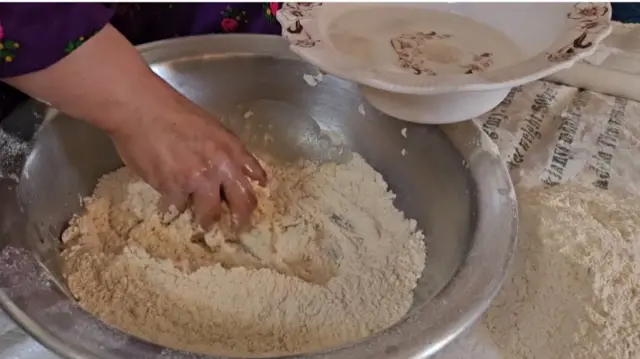
    A woman's hand in flour as she prepares bread
  9. 'Classrooms offer a shield against child labour, early marriage and abuse,' says Unicef chiefpublished at 18:16 BST

    As we have reported earlier, figures from children's charity Unicef state that over 2.6 million girls in Afghanistan have been denied secondary education since the Taliban re-gained control of the country in 2021.

    Catherine Russell, the charity's executive director, says that classrooms offer young people not just learning, but also a voice and the ability to reach their full potential.

    She adds: "It offers a shield against child labour, early marriage, and violence and abuse. When schools closed, that protection disappeared – at a time when girls needed it most."

    The charity has echoed calls from the UN secretary-general to lift the suspension of girls' education in Afghanistan.

    Russell says: "A country cannot thrive when half of its young people are held back. Afghanistan's future is outside the classroom, waiting to be let back in."

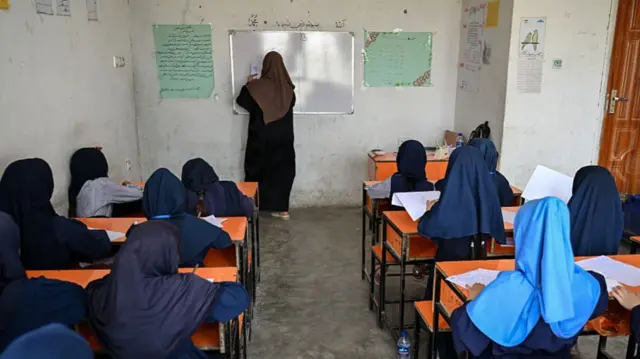
    Multiple girls in Afghanistan sit in a classroom with their backs to the camera. A woman is writing something on the whiteboard.Image source, Getty Images
    Image caption,

    Afghan girls taking a primary school exam in Kabul last month

  10. 'Behind seemingly ordinary daily routines lies a world of fear, caution, and restrictions'published at 18:06 BST

    A banner with a black backdrop fading into a blue material. The words say: "Nadia, 35. Working woman in Kabul."

    The past five years have not been just five years of my life. They have been five years during which many things that once seemed normal and natural have turned into sources of anxiety and concern for me.

    I am a working woman. To someone looking at me from the outside, it may seem quite simple: “She works, goes to the office, and earns a salary.”

    But behind these seemingly ordinary daily routines lies a world of fear, caution, and restrictions.

    After the Taliban came to power, even going outside was no longer simple. Before leaving home, I have to think about many things: What to wear, how I will be perceived, whether any problems might arise, whether or not to wear a mask, and much more.

    One of the most painful aspects of these years is that the restrictions have not remained confined to Taliban rules and official decrees. They have seeped into people’s minds and behaviour.

    Out of fear, some family members and people around us have imposed even greater limitations on women’s lives. At times, I feel that the Taliban built one wall around us, but instead of helping to lower it, society and ordinary people have unintentionally built additional walls around us and made them even higher.

  11. 'Women are not totally restricted on all walks of life,' Taliban foreign minister tells BBCpublished at 17:57 BST

    Haseeb Ammar
    BBC Afghan

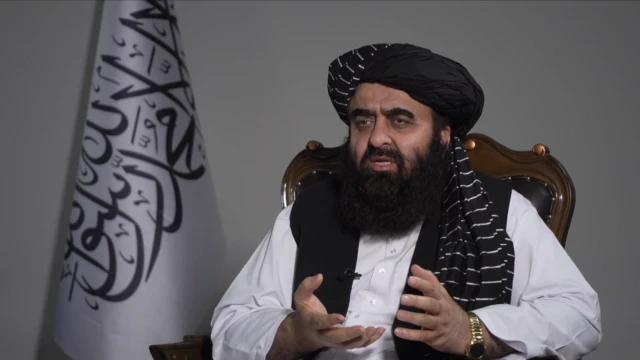
    Amir Khan Muttaqi sits in a chair and speaks while articulating his hands. There is a white and black flag behind him.

    BBC Afghan has been speaking to the Taliban's foreign minister about education for girls in Afghanistan, and asked about a Unicef report stating that around 2.6 million girls in the country are now unable to attend school beyond Grade 6.

    Amir Khan Muttaqi says "it is not correct to say everything is banned for women", adding that "right now, three million girls are going to schools and madrassas (religious centres focused on Islamic teachings)".

    When asked how religious schools can produce doctors in the country, Muttaqi says: "I meant, women are not totally restricted on all walks of life. I meant only one small part [of their affairs] is restricted until further notice."

    According to Muttaqi, Afghanistan had up to 30,000 women in business in 2020 and 2021 - which has since risen to 120,000 female entrepreneurs, he says.

    "[Women] are teachers, and civil servants and entrepreneurs. There is not a total ban on women in all forms of engagement and activities," he adds.

  12. Education barriers and maternity services: Your questions on Afghanistan answeredpublished at 17:41 BST

    Joe Coughlan
    Live reporter

    Women we have been speaking to in Afghanistan have been answering your questions about what life has been like for the past five years under Taliban rule.

    Answering a question about how women's husbands, brothers or fathers may feel, Ela, a dental assistant from Kabul province, has said only a small percentage of men in Afghan families are concerned about the situation.

    When asked how people around the world can help, she recommends speaking up for the right for Afghan women to work and be educated, adding: "We need solidarity, not silence."

    On the topic of foreign aid, our Afghanistan correspondent Yogita Limaye says foreign aid to the country so far this year is nearly 70% lower than 2025.

    And responding to a query onmaternity services, she says maternity wards are "crumbling" due to aid cuts.

    Questions have also centred on barriers to education for women, with 20-year-old Lima saying she was told "it's a sin" for girls to study or improve themselves.

    Noori, who works in a jam factory in Kabul, says accessing online learning is "very difficult" when replying to a question on learning through the internet.

    A purple banner with the words "Your Voice" overlaying the graphic.
  13. 'We are Afghan girls, and we are not going to give up'published at 17:27 BST

    A blue banner with the words "Asma, 13. Studying online, Kabul".

    If one door closes, other doors will open, and we can continue our education.

    Whether online or in person, what matters is our goal and achieving it. We study, we work hard, and we achieve our dreams.

    My goal is to become a doctor, and I know that one day I will achieve this goal. One day, everything will change, and all of us Afghan girls will achieve our dreams. But we must continue with patience, and we will not lose hope.

    Because of the limitations, I cannot go to school, but I continue my studies online.

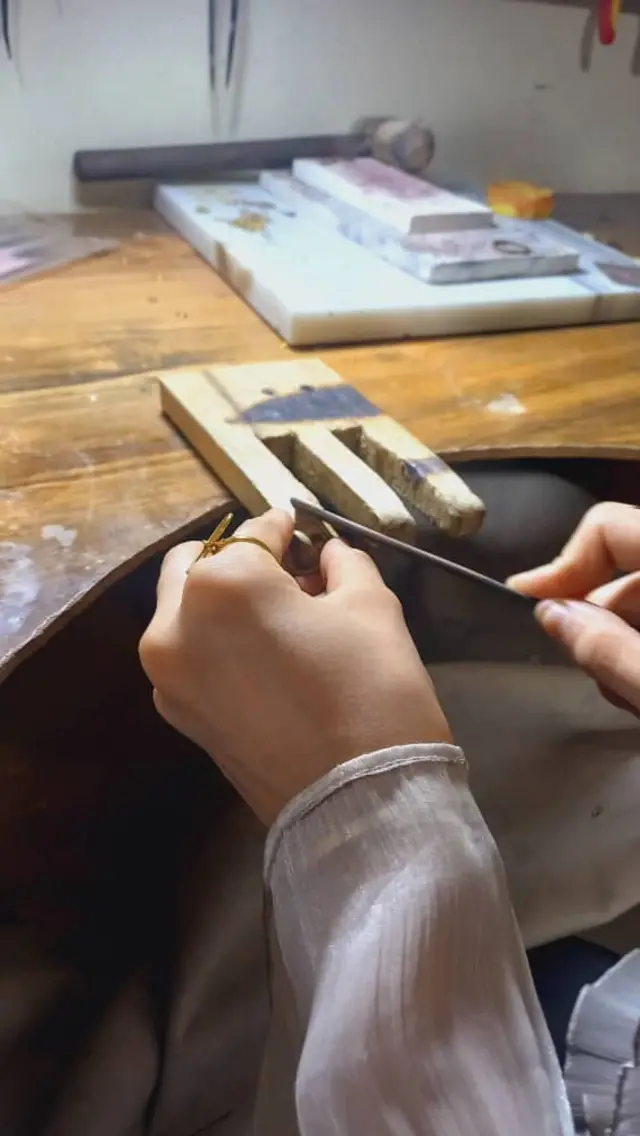
    For now, I make jewels, and I work in jewellery making and painting. I also teach English to the other girls who I work with.

    There are many limitations, and we cannot continue our education in person at schools but we should not give up; we must always keep going.

    We are Afghan girls, and we are not going to give up.

    A woman, her face not shown, making jewelery at a desk
  14. 'Losing a patient is always the hardest part of our job'published at 17:21 BST

    A blue banner with the words "Marzia. Midwife - age & region held for security reasons".

    Marzia has worked as a midwife for the past five years. The clinic where she works provides healthcare for around 51,000 people, but it does not have a specialist in obstetrics and gynaecology.

    It was only three months ago.

    She was a mother of six and around 45 years old. She came from a poor family and arrived at our clinic very late after travelling from a remote district which there were not any doctors or midwives.

    We did everything we could, but both the baby and the mother were in critical condition. She fought for her life for two days and two nights, but in the end she died.

    We managed to save the baby, but now I keep thinking about the baby's future and the future of her six other children. What will happen to them without their mother? What will happen to the whole family?

    We were all heartbroken. For us, losing a patient is always the hardest part of our job. We become exhausted, both physically and emotionally.

    This Flourish post cannot be displayed in your browser. Please enable Javascript or try a different browser.

  15. Maternal deaths rise as Afghanistan faces shortage of female health workerspublished at 17:11 BST

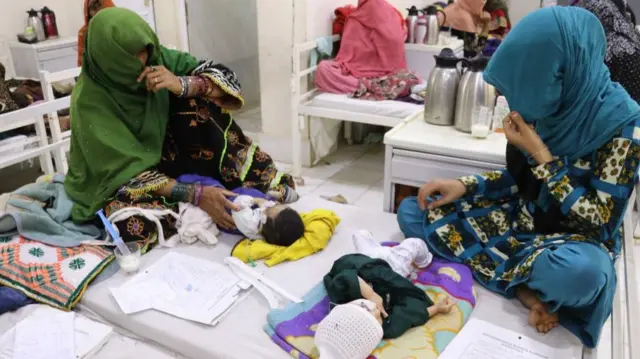
    Two women in full veil coverings are shown on a bed with babies lying in front of them. There are various papers on the bed.Image source, EPA/Shutterstock
    Image caption,

    Children receive treatment in a hospital in Kandahar, Afghanistan, in 2022

    Afghanistan has one of the world's highest maternal mortality rates.

    The country also faces a serious shortage of female health workers, especially midwives.

    Despite this, the Taliban first closed secondary schools to girls, then universities, and later banned women from attending medical institutes that trained nurses, midwives and other health professionals.

    International organisations have repeatedly warned that these restrictions could increase maternal deaths.

    A report published by Afghanistan's Ministry of Public Health at the end of last year says the country's maternal mortality rate increased from 124 deaths per 100,000 live births in 2021 to 185 deaths in 2025.

    UN estimates are much higher, with a report in February suggesting that maternal mortality has increased from 521 deaths per 100,000 live births in 2023 to 638 deaths.

    This Flourish post cannot be displayed in your browser. Please enable Javascript or try a different browser.

  16. 'We all had plans for our work and future'published at 16:57 BST

    A blue banner with the words 'Zuhal, 32. Former journalist from central province'

    One of the hardest parts of this situation for me is that when I think about my former friends and colleagues, I remember that we all had plans for our work and future.

    I also dreamed of gaining more experience, advancing, and contributing to society. But now many of those dreams have stopped.

    Sometimes even hearing the sound of the TV or watching a news programme brings back memories of the past and I want those days to come back.

    Sometimes I miss the woman I used to be, the woman who was full of energy, confidence, and hope. I miss getting dressed and getting ready for work, going to the TV [station] to see my colleagues, sitting at the news desk and hearing myself read the news.

    These memories are both sweet and painful for me. Sweet because they remind me of the good days of my life, and painful because I know that today I no longer have those conditions.

  17. Foreign aid to Afghanistan so far this year is nearly 70% lower than 2025published at 16:40 BST

    Yogita Limaye
    Afghanistan correspondent

    We continue to answer questions we've received about life under the Taliban five years on.

    Stuart asks: Is the UN or aid agencies providing any support to avoid a humanitarian disaster? Is anyone negotiating with the Taliban?

    Prior to the Taliban takeover, three quarters of state funding in Afghanistan came from aid funding given directly to the previous Afghan government.

    That money stopped in August 2021, when the Taliban seized power.

    Aid funding was then routed into the country through humanitarian agencies and they provided a critical bridge keeping the Afghan economy from collapse, distributing crucial food and cash aid to people, funding hospitals and healthcare workers.

    However, they can only continue providing these emergency services, if they continue getting aid.

    So far this year, foreign aid to Afghanistan is nearly 70% lower than 2025.

    Dozens of countries including the UK, the US, and many European nations, regularly hold talks with the Taliban government.

    Some countries including China and India have allowed Taliban diplomats to take over local Afghan embassies. So far, only Russia has recognised the Taliban government.

    A purple banner with the words "Your Voice" visible over the graphic
  18. Analysis

    As the Taliban look for legitimacy, the people demand a solution to extreme povertypublished at 16:27 BST

    Yama Bariz
    BBC Afghan Languages correspondent

    We can now bring you more analysis from our BBC Afghan Languages correspondent on Afghanistan's relations with the international community.

    The current situation has created a little ‘Afghan diplomatic enclave’ in the gulf state of Qatar.

    The US and a few other nations have their Afghanistan-focused diplomatic missions in the capital, Doha. The international community continues to engage with the Taliban, while also calling for changes, including an end to restrictions on women and girls.

    Additionally, the UK’s special envoy to Afghanistan, Richard Lindsay, tells me the Taliban "need to stop any form of terrorism, any threat emanating from their land threatening other countries".

    A demand we shared with the Taliban's Foreign Minister Muttaqi, who rejected suggestions that Afghanistan poses any threat to the other countries.

    “In the last five years, there has been no incident that has posed a threat from Afghanistan to any country in the world. There is not even a single militant group operating anywhere in Afghanistan," he has said.

    On the streets of Kabul, I spoke to some people who say that, for them, bread comes first - they expect the Taliban government to tackle extreme poverty, whatever it takes.

    For millions, and particularly those who don’t know where their next meal will come from, the main concerns are jobs, education and the future of their families.

    Five years after taking power, the Taliban is still seeking a place in the international community. But for ordinary Afghans, diplomacy may only matter if it brings real changes to their lives.

  19. Analysis

    Five years on, the Taliban are still struggling for international legitimacypublished at 16:14 BST

    Yama Bariz
    BBC Afghan Languages correspondent

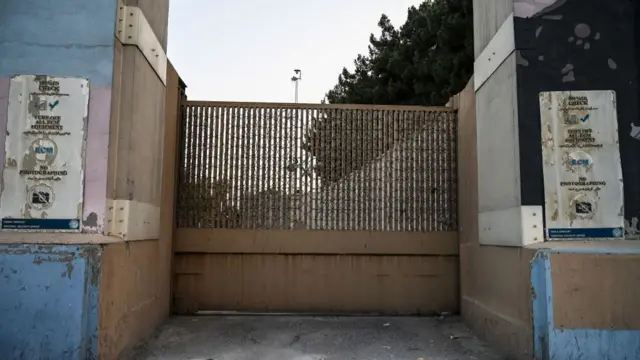
    A brown iron gate, closed, leading to the US Embassy compound in Kabul, Afghanistan. To the side, hanging off cement wall, are damaged sign advising people to carry IDs and not take photographsImage source, Getty Images
    Image caption,

    Several countries, including the US, don't have a constant diplomatic presence in Afghanistan. Pictured, the entrance to the US Embassy in Kabul, which shut down in August 2021

    Five years after returning to power, the Taliban government remains largely isolated from the international community.

    The former US embassy in Kabul, once one of America’s biggest diplomatic missions in the world, is now closed. Its flag is gone and its diplomats have left. Russia is the only country that formally recognises the Taliban government.

    But the Taliban see it differently. The Taliban government’s Foreign Minister Amir Khan Muttaqi has told BBC Afghan Languages that they have active diplomatic relations with over 40 countries.

    Muttaqi believes international recognition may not help ease some international restrictions imposed on their government.

    “Iran is recognised by the whole world, but the country remains under international sanctions. International recognition is tied to the decision of some big powers.”

    As Muttaqi says, Afghanistan is not completely cut off from international diplomacy. Some countries and organisations, including the European Union and the UK, still have visiting diplomats in Kabul and continue to meet Taliban officials.

    We'll bring you more about Afghanistan's current diplomatic relations in the next post.

  20. 'We need solidarity, not silence'published at 15:54 BST

    We can now bring you another question we've received for the women we've been speaking to today. Get in touch if you like to ask your own.

    Susan and Lorraine ask: What can people around the world do which would be of most help to Afghan women?

    Ela, a dental assistant from Kabul province, tells the BBC: “Speak up for Afghan women, support their right to education and work."

    "Keep the world’s attention on their situation. We need solidarity, not silence," she adds.

    Noori, a 24-year-old who works in a Kabul jam factory, says: "People around the world can continue to put pressure on the Taliban to respect their countries."

    She adds: "International organisations should hold Taliban leaders accountable and put more sanctions and other measures that encourage them to reverse restrictions on women's education."

    A purple banner with the words "Your Voice" overlayed.