Summary

Have a question about life under the Taliban?

  1. Maternal deaths rise as Afghanistan faces shortage of female health workerspublished at 17:11 BST
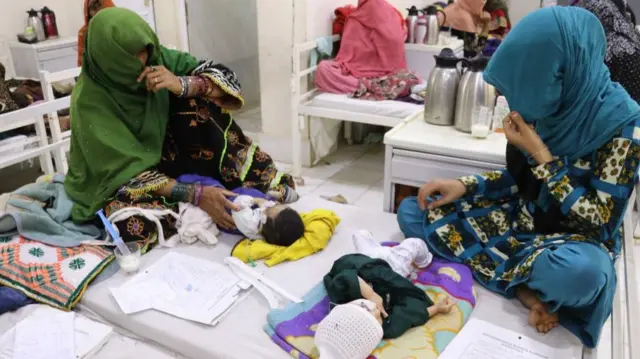
    Two women in full veil coverings are shown on a bed with babies lying in front of them. There are various papers on the bed.Image source, EPA/Shutterstock
    Image caption,

    Children receive treatment in a hospital in Kandahar, Afghanistan, in 2022

    Afghanistan has one of the world's highest maternal mortality rates.

    The country also faces a serious shortage of female health workers, especially midwives.

    Despite this, the Taliban first closed secondary schools to girls, then universities, and later banned women from attending medical institutes that trained nurses, midwives and other health professionals.

    International organisations have repeatedly warned that these restrictions could increase maternal deaths.

    A report published by Afghanistan's Ministry of Public Health at the end of last year says the country's maternal mortality rate increased from 124 deaths per 100,000 live births in 2021 to 185 deaths in 2025.

    UN estimates are much higher, with a report in February suggesting that maternal mortality has increased from 521 deaths per 100,000 live births in 2023 to 638 deaths.

    This Flourish post cannot be displayed in your browser. Please enable Javascript or try a different browser.

  2. 'We all had plans for our work and future'published at 16:57 BST

    A blue banner with the words 'Zuhal, 32. Former journalist from central province'

    One of the hardest parts of this situation for me is that when I think about my former friends and colleagues, I remember that we all had plans for our work and future.

    I also dreamed of gaining more experience, advancing, and contributing to society. But now many of those dreams have stopped.

    Sometimes even hearing the sound of the TV or watching a news programme brings back memories of the past and I want those days to come back.

    Sometimes I miss the woman I used to be, the woman who was full of energy, confidence, and hope. I miss getting dressed and getting ready for work, going to the TV [station] to see my colleagues, sitting at the news desk and hearing myself read the news.

    These memories are both sweet and painful for me. Sweet because they remind me of the good days of my life, and painful because I know that today I no longer have those conditions.

  3. Foreign aid to Afghanistan so far this year is nearly 70% lower than 2025published at 16:40 BST

    Yogita Limaye
    Afghanistan correspondent

    We continue to answer questions we've received about life under the Taliban five years on.

    Stuart asks: Is the UN or aid agencies providing any support to avoid a humanitarian disaster? Is anyone negotiating with the Taliban?

    Prior to the Taliban takeover, three quarters of state funding in Afghanistan came from aid funding given directly to the previous Afghan government.

    That money stopped in August 2021, when the Taliban seized power.

    Aid funding was then routed into the country through humanitarian agencies and they provided a critical bridge keeping the Afghan economy from collapse, distributing crucial food and cash aid to people, funding hospitals and healthcare workers.

    However, they can only continue providing these emergency services, if they continue getting aid.

    So far this year, foreign aid to Afghanistan is nearly 70% lower than 2025.

    Dozens of countries including the UK, the US, and many European nations, regularly hold talks with the Taliban government.

    Some countries including China and India have allowed Taliban diplomats to take over local Afghan embassies. So far, only Russia has recognised the Taliban government.

    A purple banner with the words "Your Voice" visible over the graphic
  4. Analysis

    As the Taliban look for legitimacy, the people demand a solution to extreme povertypublished at 16:27 BST

    Yama Bariz
    BBC Afghan Languages correspondent

    We can now bring you more analysis from our BBC Afghan Languages correspondent on Afghanistan's relations with the international community.

    The current situation has created a little ‘Afghan diplomatic enclave’ in the gulf state of Qatar.

    The US and a few other nations have their Afghanistan-focused diplomatic missions in the capital, Doha. The international community continues to engage with the Taliban, while also calling for changes, including an end to restrictions on women and girls.

    Additionally, the UK’s special envoy to Afghanistan, Richard Lindsay, tells me the Taliban "need to stop any form of terrorism, any threat emanating from their land threatening other countries".

    A demand we shared with the Taliban's Foreign Minister Muttaqi, who rejected suggestions that Afghanistan poses any threat to the other countries.

    “In the last five years, there has been no incident that has posed a threat from Afghanistan to any country in the world. There is not even a single militant group operating anywhere in Afghanistan," he has said.

    On the streets of Kabul, I spoke to some people who say that, for them, bread comes first - they expect the Taliban government to tackle extreme poverty, whatever it takes.

    For millions, and particularly those who don’t know where their next meal will come from, the main concerns are jobs, education and the future of their families.

    Five years after taking power, the Taliban is still seeking a place in the international community. But for ordinary Afghans, diplomacy may only matter if it brings real changes to their lives.

  5. Analysis

    Five years on, the Taliban are still struggling for international legitimacypublished at 16:14 BST

    Yama Bariz
    BBC Afghan Languages correspondent

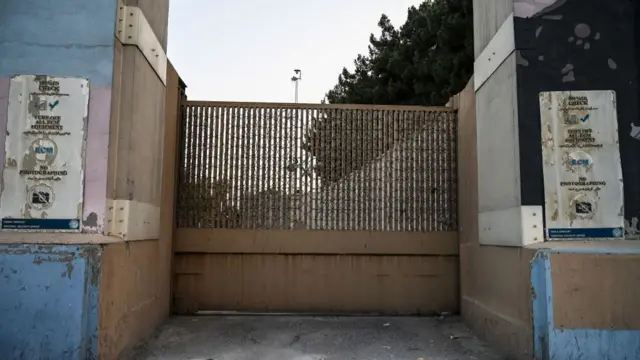
    A brown iron gate, closed, leading to the US Embassy compound in Kabul, Afghanistan. To the side, hanging off cement wall, are damaged sign advising people to carry IDs and not take photographsImage source, Getty Images
    Image caption,

    Several countries, including the US, don't have a constant diplomatic presence in Afghanistan. Pictured, the entrance to the US Embassy in Kabul, which shut down in August 2021

    Five years after returning to power, the Taliban government remains largely isolated from the international community.

    The former US embassy in Kabul, once one of America’s biggest diplomatic missions in the world, is now closed. Its flag is gone and its diplomats have left. Russia is the only country that formally recognises the Taliban government.

    But the Taliban see it differently. The Taliban government’s Foreign Minister Amir Khan Muttaqi has told BBC Afghan Languages that they have active diplomatic relations with over 40 countries.

    Muttaqi believes international recognition may not help ease some international restrictions imposed on their government.

    “Iran is recognised by the whole world, but the country remains under international sanctions. International recognition is tied to the decision of some big powers.”

    As Muttaqi says, Afghanistan is not completely cut off from international diplomacy. Some countries and organisations, including the European Union and the UK, still have visiting diplomats in Kabul and continue to meet Taliban officials.

    We'll bring you more about Afghanistan's current diplomatic relations in the next post.

  6. 'We need solidarity, not silence'published at 15:54 BST

    We can now bring you another question we've received for the women we've been speaking to today. Get in touch if you like to ask your own.

    Susan and Lorraine ask: What can people around the world do which would be of most help to Afghan women?

    Ela, a dental assistant from Kabul province, tells the BBC: “Speak up for Afghan women, support their right to education and work."

    "Keep the world’s attention on their situation. We need solidarity, not silence," she adds.

    Noori, a 24-year-old who works in a Kabul jam factory, says: "People around the world can continue to put pressure on the Taliban to respect their countries."

    She adds: "International organisations should hold Taliban leaders accountable and put more sanctions and other measures that encourage them to reverse restrictions on women's education."

    A purple banner with the words "Your Voice" overlayed.
  7. Unreliable connections have made communication with Afghan women difficultpublished at 15:49 BST

    Aakriti Thapar
    Senior South Asia producer

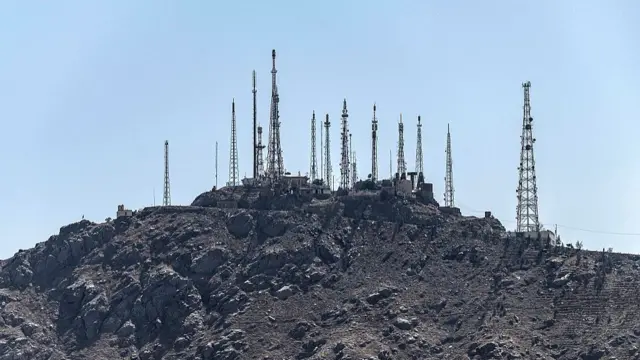
    Several telecommunications towers seen on a hilltop against a light blue sky.Image source, Getty Images
    Image caption,

    The Taliban ordered an internet shutdown in Afghanistan in September last year

    The women we’ve been in touch with have been sharing their experiences and responses via text messages and voice recordings on messaging platforms.

    The posts you see on this page are their thoughts, shared in their own words. We’ve stayed in contact with many of these women over the years and have heard from them about how their lives have changed in the five years since the Taliban took power.

    It has been challenging to receive responses from some women, as messages can often be delayed due to unreliable and patchy connections, particularly in rural areas.

    This is one of the reasons why, while online education works for some, it is not a feasible option for a large number of people in the country.

    While there is no permanent internet ban in place, there have been instances when the Taliban government has ordered internet shutdowns - such as in September 2025.

    There are also concerns that restrictions on the use of smartphones could be expanded to the larger population, following the supreme leader’s order in June for government workers to stop using them.

  8. 'Accessing online learning is very difficult'published at 15:39 BST

    Graphic with a black background moving into a gradient showing a blue material. The words show: "Noori, 24. Works in Kabul jam factory".

    We've had questions come in for the women we've been speaking to today. Get in touch if you would like to ask your own.

    Georgia asks: Are you able to access any form of learning via the internet?

    Noori, a 24-year-old who works in a jam factory in Kabul, says:

    "Accessing online learning is very difficult.

    "The internet connection is often extremely weak and unreliable, and electricity is limited."

    A purple banner with the words "Your voice" overlaying the background.
  9. Millions of Afghan women cannot access basic hospitalspublished at 15:31 BST

    Yogita Limaye
    Afghanistan correspondent

    We continue to answer questions we've received about life under the Taliban five years on.

    Matthew asks: What are the pre and post-natal facilities like for women in Afghanistan?

    There are maternity wards in public hospitals, but along with other public health infrastructure, these facilities are crumbling because of dramatic aid cuts to Afghanistan.

    The maternity wards we have been to are very basic facilities, where women are not even given painkillers while they deliver babies.

    Millions of women do not have access to even these basic hospitals as they live in remote areas. Therefore, small clinics run by midwives have been critical in reducing maternal mortality and neonatal deaths.

    Between 400-600 such clinics have shut down in the past two years, triggered by USAID cuts, but also because of reduced funding from other countries. For more, you can read our report on the impact of aid cuts.

    Due to the Taliban’s restrictions on female education, no new female doctors, nurses or midwives are being trained, which means in the future there will be a severe shortage of medics to treat women.

    There are private hospitals in the big cities but only a very small percentage of the population can afford to use these facilities.

    A purple banner with the words "Your Voice" overlayed on top of the graphic.
  10. International aid cuts directly impact Afghanistan's health systemspublished at 15:28 BST

    Yogita Limaye
    Afghanistan correspondent

    International aid to Afghanistan has seen a dramatic decline. The most staggering cut came when the US stopped nearly all funding to Afghanistan in 2025.

    It caused the closure of more than 400 health facilities. We travelled to areas where clinics had shut down and heard testimony from families and health workers of a surge in maternal and newborn deaths.

    Media caption,

    BBC visits closed down US-backed clinic in Afghanistan after aid cuts

    A new investigation by Refugees International, external has documented at least 161 deaths including 80 maternal deaths that healthcare workers link to the collapse of health services following the withdrawal of US assistance.

    The Trump administration has justified withdrawing aid, saying there were "credible and longstanding concerns that funding was benefiting terrorist groups, including... the Taliban”, a claim the Taliban denies.

    But it’s not just the US. Funding from the UK this year is half of what is was last year, and there is a significant cut in aid from the European Commission as well.

    Sources in aid agencies have told the BBC that while global economic factors have affected foreign aid to Afghanistan, the Taliban government’s policies, particularly its restrictions against women are also a reason donors are turning away.

  11. 'I was told it's a sin for girls to study or to improve themselves'published at 15:18 BST

    A blue banner which says Lima, 20, former student, from a north-eastern province

    This post contains distressing details.

    We're still passing on questions to the women we've been speaking to - you can ask your own here.

    Adam asks: What were you told about why you couldn’t go to school anymore?

    Former student Lima, 20, from a north-eastern province of Afghanistan, tells the BBC: "Just... girls are not allowed to study anymore and it's a sin for girls to study or to improve themselves.

    "Maybe for two years, or more, I was depressed and reclusive and never dared to go out of the home even for a second."

    Lima says she suffered from insomnia and fevers, ultimately attempting to take her own life. She's since received psychological treatment but says she remains "hopeless" about her situation.

    "Anytime I think about what I'm [going] through, and my future and myself... I just become more hopeless."

    • If you are affected by any of the issues in this story, information and support is available at BBC Action Line
    BBC Your Voice banner (white wording on purple background)
  12. 'I'll keep believing in my right to have a future'published at 15:05 BST

    A blue banner with the words "Shakiba, 18. Jewellery maker in Kabul".

    Still, there is a small hope inside me.

    I hope that one day the doors of education will open again for girls like me. And when that day comes I want to be ready.

    I want to study. I want to work. I want to serve people. And one day I want to look at my parents and say: "I told you I could do it. Your daughter made it".

    Until that day I will keep learning in whatever way I can. I will keep painting. I will keep dreaming.

    And I will keep believing that being an Afghan girl should never mean giving up on the right to have a future.

  13. The economic impact of restricting education for womenpublished at 14:53 BST

    Zainab Mohammadi
    BBC Dars producer

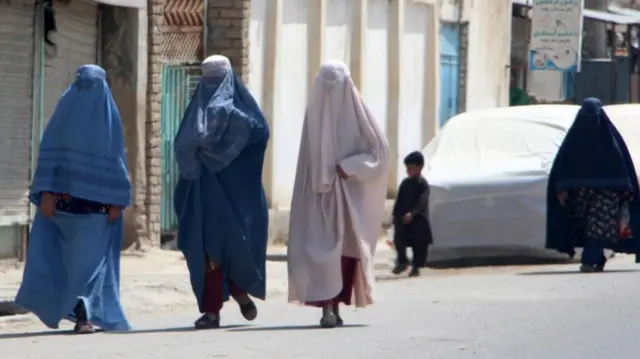
    Four women dressed in burqas that cover their whole bodies are shown walking down a street in Afghanistan.Image source, EPA/Shutterstock

    More now from the Unicef analysis published earlier this year.

    It estimates that restrictions on girls' education and women's employment are already costing Afghanistan's economy around $84m (£62m) every year.

    In a separate report published in 2024, Unesco estimates that over the next 35 years, around 600,000 women who would otherwise have joined the labour force may never enter it.

    This will reduce household incomes, affect the financial wellbeing of their families, and have a serious impact on the country's economy.

    Unesco estimates that by 2066, the suspension of higher education for women could cost Afghanistan $9.6bn (£7.1bn) in lost economic output - equal to about two-thirds of the country's current GDP.

    This Flourish post cannot be displayed in your browser. Please enable Javascript or try a different browser.

  14. Afghan girls intentionally failing lessons so they can stay in schoolpublished at 14:44 BST

    Hafizullah Maroof
    BBC Afghan Languages

    Half a dozen young girls wearing headscarves are shown sitting on the floor with lesson books and pencils.Image source, EPA-EFE/REX/Shutterstock
    Image caption,

    Afghan children attend class in Kandahar, Afghanistan, in January 2025 - the Taliban only allows girls to be educated up to sixth grade

    I have been to Afghanistan nearly a dozen times and have travelled across many provinces over the past five years since the Taliban returned to power.

    Even in Kandahar, the southern province widely regarded as the Taliban's strongest stronghold, many families urged the Taliban government to allow their daughters to attend school.

    I spoke with many girls who intentionally failed in Grade 6 in order to remain in school for another year.

    Fatima (name changed), a 12-year-old girl from eastern Afghanistan, told me she was trying to fail for the second time.

    "My only wish is to stay in school," she said.

    Today, she is out of school. She was unable to fail a second time because she had grown older and advanced beyond the grade level she hoped to repeat.

    For millions of girls like Fatima, going to school is now only a dream in Afghanistan.

  15. Millions of girls denied education in Afghanistanpublished at 14:29 BST

    Zainab Mohammadi
    Producer, BBC Dars

    A group of young students are pictured from behind in a classroom, with boys segregated to the left and girls on the right. One of the girls has her hand raised.Image source, EPA/Shutterstock
    Image caption,

    Students at the 'Mansoor Rasa Mohammad' private school in Kabul in April. The Taliban only allows girls to attend school until sixth grade

    Afghanistan is currently the only country in the world where girls are officially banned from secondary and higher education.

    According to information the BBC has obtained from Unicef, around 2.6 million girls in Afghanistan are now unable to attend school beyond Grade 6, with a further 400,000 reaching secondary-school age each year.

    By 2030, more than four million girls will be denied education beyond Grade 6.

    Unicef analysis published earlier this year warns that if these restrictions continue, Afghanistan could lose around 20,000 female teachers and 5,400 female health workers by 2030.

    By 2035, the country could lose around 9,600 female health workers.

    This Flourish post cannot be displayed in your browser. Please enable Javascript or try a different browser.

  16. Afghan women living 'blindly' tell the BBC of life under Taliban rulepublished at 14:21 BST

    Joe Coughlan
    Live reporter

    As we approach early evening in Afghanistan, women across the country have spoken of being imprisoned, abused and humiliated since the Taliban resumed control in 2021.

    Our chief international correspondent Lyse Doucet tells us of harsh Taliban edicts erasing women and girls from public life, such as restrictions to education and jobs, as the UN says "deep-rooted barriers" have held women back long before the Taliban retook power.

    Lima, a 20-year-old former student, tells the BBC she is living her life "blindly" and has lost all hope, while dental assistant Ela says "survival has become the priority".

    The situation has left most Afghan women describing their mental health as "bad" or "very bad", the UN reports, as other factors such as an ongoing hunger crisis and the rise of corporal punishments exacerbate the issue.

    We have been passing your questions on to the women we've been speaking to today, including how their husbands or brothers feel about the current state of play in the country.

    Get in touch if you would like to ask a question about life under Taliban rule.

  17. Analysis

    Little chance sanctions will be lifted until Taliban address universal rights concernspublished at 14:03 BST

    Lyse Doucet
    Chief international correspondent, in Kabul

    A group of girls wearing veils and abayas sit down at wooden desks taking notes on exercise booksImage source, Getty Images

    Five years after the Taliban took charge, the world is still divided over if, and how, to engage with this ultra-conservative Islamist movement.

    United Nations officials admit they’ve made little progress on issues such as reopening girls’ schools, more inclusive governance, and counter-terrorism.

    Human rights groups, and Afghan activists, insist there shouldn’t be any dialogue on issues other than desperately needed humanitarian aid until the Taliban offer something in return.

    The acting head of the UN's mission in Kabul, Georgette Gagnon, told us “a stalled process is better than no process”.

    So far, only Russia has formally recognised Taliban rule. But dozens of countries, including China, India, and other neighbours, have accredited their diplomats and signed investment deals. It amounts to de facto recognition.

    The Taliban chief spokesman, Zabihullah Mujahid, told us “if the West wants to resolve these issues, it can’t do it from a distance".

    The Taliban want sanctions lifted, assets unfrozen, and what they see as their rightful seat at the UN in New York.

    That won’t happen until they sign up to what the world, including Islamic nations, regards as universal rights – including the rights of women and girls to education and work.

  18. Going to work 'was part of my identity and life'published at 13:49 BST

    A blue banner with the words 'Zuhal, 32. Former journalist from central province'
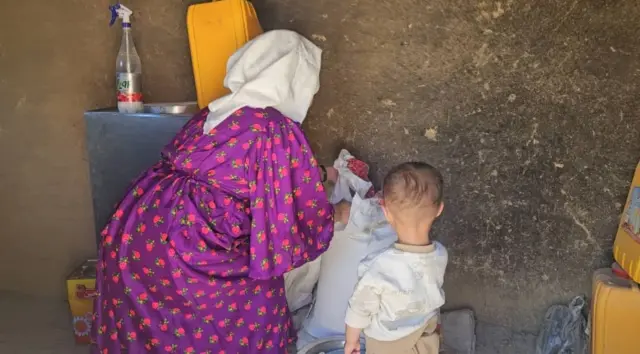
    A woman and child from behind, kneeling down while picking something up from the floor

    During the republic, my life was completely different. Every morning when I woke up, I would get ready to go to work with enthusiasm.

    I would get dressed, tidy myself up, and leave the house with energy. For me, going to television was not just going to a workplace, it was part of my identity and life.

    When I entered television, I felt that I had a place and value in society. I read the news, I connected with people, and I felt that my voice was heard.

    I was very passionate about my work and did it with love. Every time I sat in front of the camera and read the news, I felt proud and happy.

    I had plans for my future and had many dreams. I thought that I would gain more experience day by day, progress, and maybe I could find a better place in work and society in the future.

    My life was full of hope and I worked hard every day to achieve my goals.

  19. 'I'm living my life blindly... I lost all of my hope'published at 13:28 BST

    A blue banner with the words "Lima, 20. Former student, from a north-eastern province"

    Lima was in the 10th grade, and dreamed of being a doctor, when the Taliban reclaimed power over Afghanistan in 2021.

    Now the 20-year-old, from a north-eastern province bordering Tajikistan, says she is "out of hope".

    I’m living my life blindly because I can’t watch my future, and everything I could have is flying away.

    Even right now I can’t imagine anything else. I lost all of my hope.

    How am I feeling today? Nothing special.

    I’m kind of tired, the weather is too hot: 33 or 34 degrees. And I’m not going anywhere. I’m just at home.

  20. For Afghan women, jobs are few and far betweenpublished at 13:16 BST

    Charlotte Scarr
    Senior South Asia producer, reporting from Kabul

    The private sector is where some women in Afghanistan are able to find opportunities to work.

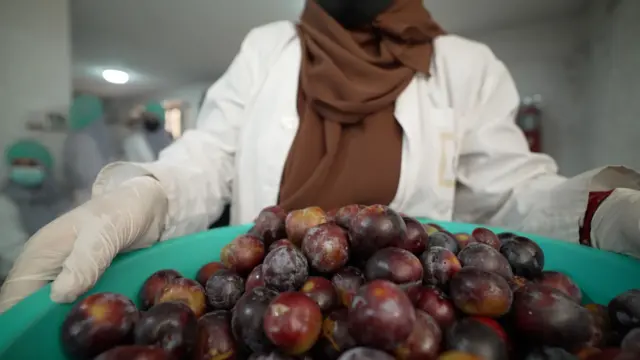
    We drove to a small village on the outskirts of Kabul to visit a jam workshop. Down a flight of stairs, in the basement of a house we found over a dozen young women preparing plum jam.

    All dressed in long white coats wearing hair nets and face masks, they gathered around a large cauldron where the jam mixture was bubbling. Its sweet smell consumed the room.

    For many working of the women there, this is not the job that they dreamt of doing.

    Noori, 24, told us that she had two semesters left of her university degree when the Taliban took over.

    “I really wanted to finish my degree,” she told us.

    “Now when I apply for jobs and offer my CV or go to interviews, they first ask me to bring my university degree. But the university won’t give it to me. Because of that, wherever I go, they tell me that I am only a school graduate.”

    Even though jobs like these are allowed by the Taliban, women business owners face a litany of restrictions. They can’t sell their products or attend trade fairs - they need to send a man in their place.

    A woman, whose face is obscured, carries a large tub of fruit in a factory.