Applicable context
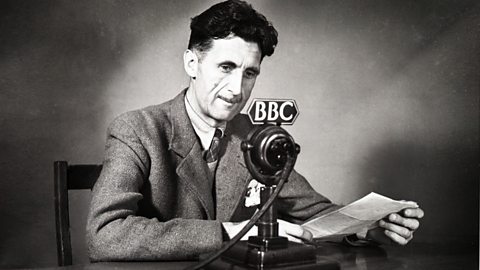
George Orwell
George Orwell was an English writer from a privileged background, but he was passionately concerned with creating a fairer society. He described himself politically as a Democratic Socialist – like the The ideas of Karl Marx who supported a system of rule where industries were run by the government for the good of the people., he too believed that Capitalism exploited working people. He even fought against A type of far-right government that first appeared in Europe in the early 1900s. Fascist countries are usually ruled by one party, led by a dictator who has all of the power. Other features of a fascism include the use of violence against political opponents, the government keeping tight control of different aspects of everyday life, racist beliefs and discrimination against minority groups.in the Spanish Civil War.
Orwell didn’t write Animal Farm to say that the ideals of The ideas of Karl Marx who supported a system of rule where industries were run by the government for the good of the people. ideology or the An uprising led by the Bolshevik party under Lenin. The revolutionaries were committed to the ideas of Karl Marx and believed that the working classes should liberate themselves from the economic and political control of the ruling classes. were wrong, but to criticise the way the revolution and the new Russian government were corrupted, and how their promise of fairness for everyone was ruined by those who wanted to have power for themselves.
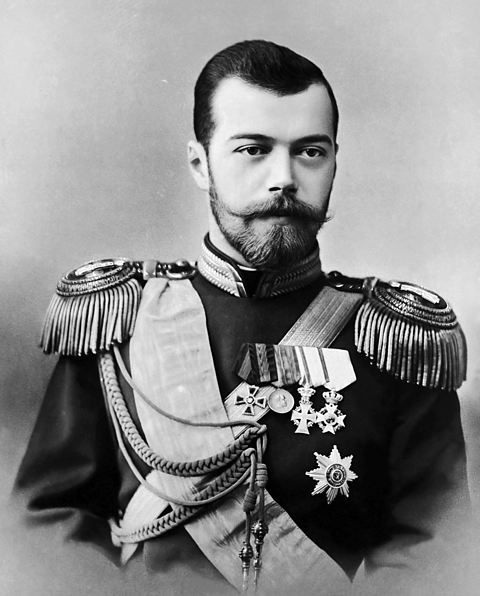
Tsar Nicholas II
Before the Revolution of 1917, Tsar Nicholas II ruled Russia.
The ruling classes had money and power, whilst most of the population were poor, exploited peasant workers or from the working class. These people lived in terrible conditions and what they farmed was taken from them leaving them to face starvation and poverty.
The An uprising led by the Bolshevik party under Lenin. The revolutionaries were committed to the ideas of Karl Marx and believed that the working classes should liberate themselves from the economic and political control of the ruling classes. that came in 1917 sought to overthrow the Tsar and change the balance of society to give power back to the working class.
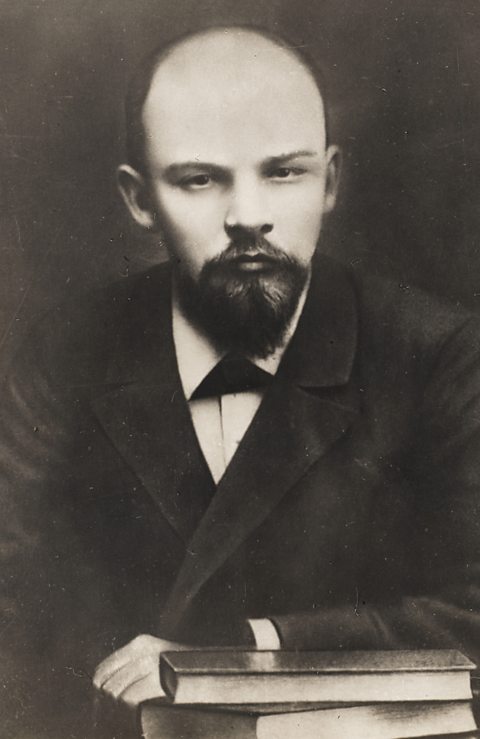
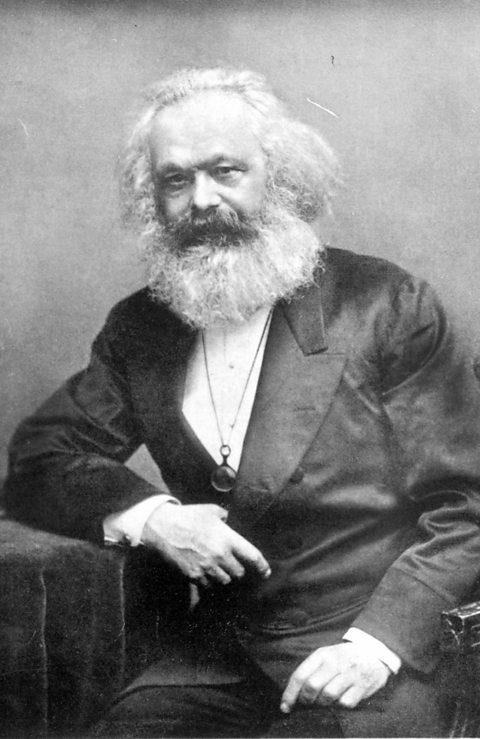
Karl Marx and Vladimir Lenin
Old Major is partly based on Karl Marx and Vladimir Lenin.
Karl Marx was a German philosopher who lived during the 19th-century. His ideas formed the basis of communism – his ideas are collectively known as 'The ideas of Karl Marx who supported a system of rule where industries were run by the government for the good of the people.' thought, like 'Animalism' in the novel. He developed theories on how power structures in society keep people under control.
Vladimir Lenin was a Russian revolutionary who established a form of Marxism in Russia in the early 20th-century.
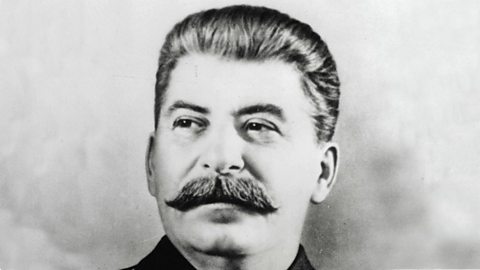
Joseph Stalin and Napoleon Bonaparte
Napoleon is based on the Soviet A ruler with total power over a country, who has generally come into power through force. Dictators usually rule in a cruel and brutal way. Joseph Stalin. Stalin was involved in the An uprising led by the Bolshevik party under Lenin. The revolutionaries were committed to the ideas of Karl Marx and believed that the working classes should liberate themselves from the economic and political control of the ruling classes. of 1917 and came to rule Soviet Russia after the death of Vladimir Lenin in 1924. He ruled until his death in 1953. During his time in power, the country was gripped by famine and fear, millions of people starved to death and those who opposed him were imprisoned or killed.
The name also evokes the French military leader, Napoleon Bonaparte (1776-1821), who seized power after the French Revolution, crowned himself Emperor and ruled France until 1815.
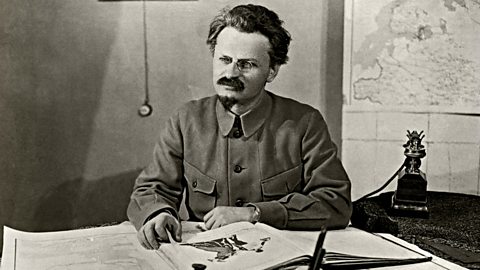
Leon Trotsky
Snowball represents Leon Trotsky. Trotsky was a political theorist, revolutionary and a leader of the Red Army. After the Revolution he was involved in Russian foreign affairs and policy making. He opposed Stalin's decisions and eventually was forced into exile from the The Soviet Union existed from 1922 to 1991. It was a state made up of modern-day Russia and several republics that are now independent countries in Eastern Europe and Central Asia, which were under the control of the Soviet government. in 1929. He resided in Mexico.
He was assassinated by a Soviet agent in 1940. Most of the family members he left in the Soviet Union were arrested and killed.
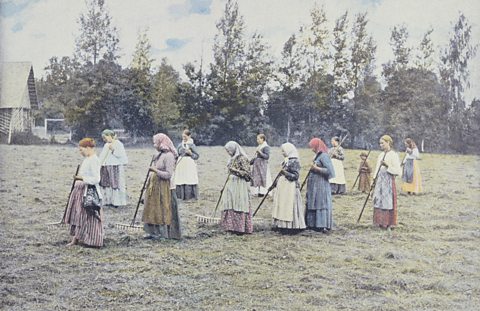
Peasant workers
Boxer represents the peasant workers of Russia. They were exploited by the Tsar Nicholas II who ruled from 1894 until his expulsion in 1917.
The workers were kept in a position where they never earned enough money to pay for food or accommodation, while royalty and rich people lived extravagantly.
The Revolution of 1917 sought to address this problem, but only led to more hardship and starvation under the rule of Stalin.
Social and cultural background
Watch three videos explaining the historical, political and social context that inspired Orwell to write his dystopian novel, Animal Farm.
These clips are taken from In Context: Animal Farm, part of the English File series originally broadcast in 2002.
In Context: Animal Farm (part one)
In Context: Animal Farm (part two)
In Context: Animal Farm (part three)
The plot of George Orwell's Animal Farm
Animal Farm is a novel about a group of animals who take control of the farm they live on.
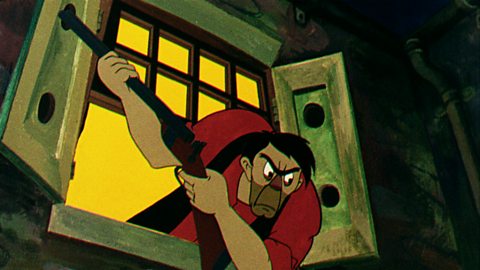
The animals get fed up of their master, Farmer Jones, so they kick him out. Once they are free of the Jones, life on the farm is good for a while and there is hope for a happier future of less work, better education and more food. However, trouble brews as the pigs, Napoleon and Snowball, fight for the hearts and minds of the other animals on the farm. Napoleon seizes power by force and ends up exploiting the animals just as Farmer Jones had done. The novel ends with the pigs behaving and even dressing like the humans the animals tried to get rid of in the first place.
- Old Major, the prize boar, calls a secret meeting of all the farm animals on Manor Farm. He states that a rebellion against their human master, Mr Jones, will one day come.
- A cow starts the rebellion by walking into the store-shed. The animals end up chasing Mr Jones off the farm.
- Now they are free, the animals all agree on the Seven Commandments that they will live by. The farm is renamed 'Animal Farm'. There is hope for a better future.
- The pigs start to order the other animals around and take more food than they should.
- The animals bravely fight off a human attempt to retake the farm, this becomes known as 'The Battle of the Cowshed'.
- The animals set to work building a windmill and Napoleon takes charge.
- Napoleon reduces the rations and rights of the animals and starts breaking the commandments. There is another invasion by the men and the windmill is blown up. Boxer collapses whilst rebuilding it for the second time.
- Napoleon and the other pigs learn to walk on their hind legs, wear human clothes and carry whips. Despite all their hard work, the animals of the farm are right back to where they began – hungry, scared and exploited by those in charge.
Test your knowledge of the plot of Animal Farm
Further study
Listen in full to Animal Farm by George Orwell. audio
The landmark allegory about hypocrisy and corruption of power.
The Real George Orwell. collection
A journey exploring the man Eric Blair and the writer George Orwell.

Animal Farm by George Orwell. collection
A selection of programmes about George Orwell's classic Animal Farm.
More on Animal Farm
Find out more by working through a topic
- count2 of 5
- count3 of 5
- count5 of 5