| 29 October 2014 |

| |
| BBC Homepage | | |
| |||
| Contact Us | | |
FaithYou are in: Tees > Faith > The evil that men do 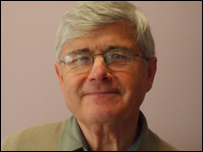 Michael Wright The evil that men doMichael Wright is a Quaker and chairman of Middlesbrough Council of Faiths. How do we make sense of the extremes of evil and greatness that human beings are capable of? We have learned recently about the horrific violence in Kenya, and at the same time, we have seen the nobility of those working to feed and shelter the thousands who have fled the killing. The violence has indeed been horrific. Some scenes have been too awful for the TV to broadcast. Other events are so dreadful I found it difficult to listen to descriptions of them.
Truly the inhumanity that some people can practice seems unbelievable. They have done this even to people to whom they were neighbours and friends until the dispute arose about the election result. Tens of thousands of people have had what I can only describe as “crucifiying” experiences. A famous experiment in America some years ago involved students, all of whom agreed to take part. Some of them were given the role of guards, with control of pain-giving electric machines. Others were given the role of prisoners, who could be punished on the say-so of the person in charge. It was amazing to the scientist who constructed the experiment to discover how much pain and humiliation those playing the role of guards were willing to inflict on the “prisoners”. The “guards” all seemed to lose any sense of proportion, and simply followed instructions. Self-interest rather than unselfishnessIt is an awareness of this potential in human beings to behave badly that lies behind the Christian teaching about sin. There is a disposition in each of us to act with narrow self-interest: it seems we find it harder to act unselfish love. Pressure from those around us to conform can be powerful. There were vivid examples of that in the recent disturbances in Kenya. Normally most people do not behave with the extreme savagery that we have heard about here. However we cannot take any comfort in thinking that such behaviour is just not how people like us would behave. There are too many accounts in the last 100 years, two world wars, and examples of cruel and evil behaviour from the nazi concentration camps, the communist gulags, and the treatment of hostages,to water torture in American prison camps, with the knowledge and support of our own security people, for us not to recognize that. Sadly too many people will behave very badly in situations of extreme stress, anger, fear, and group identity, or simply because they believe people in authority want them to behave like that. There are examples of children and vulnerable adults being brutally treated. There is official behaviour in this country towards many refugees and asylum seekers, sending people back to situations of torture and possible death, of which I am ashamed. I am ashamed that the government of my country authorizes these deportations. Employees who carry out such deportations have been heard to say “It’s my job”, “I am only carrying out orders”. Friends from the Teesside area have been sent back to persecution and torture in the Congo. Many have disappeared without trace. A woman with acute liver disease was recently deported to west Africa where she cannot get the regular dialysis which she has been receiving in Britain. It is a death sentence for her. The challenge to behave noblyWe can admire from afar the self-sacrifice and willingness to help people in need of those who serve in organisations such as the International Red Cross, Oxfam, Christian Aid, Cafod, and Muslim Aid. I am often full of admiration for “whistle blowers” who time and again seem to be the ones to suffer when they reveal illegal or immoral practices that their employers expect them to keep quiet about. The challenge to each of us is how far we are prepared to put our heads above the parapet when faced with a difficult moral dilemma. Have we the courage to speak and act against something we believe to be wrong, and face the consequences? It takes courage – and the source of that courage are our own convictions about what is right and wrong, and our own individual responsibility and willingness to act appropriately. One very important source of such convictions is the teaching, example, inspiration, and spiritual strength that many of us find in our religious faith. Some years ago I found myself in a position in which I was asked to act to help a group of people in a very fraught situation, who were in dispute with the Department I worked for. My colleagues and employer did not approve of what I was doing, and many misinterpreted my motives. I lived for two years being treated as something akin to a traitor by them. It was very difficult: what kept me going was my conviction that what I was trying to do was appropriate, fair and just. I weathered that storm, and although my career suffered for it, I feel that given a similar set of circumstances again I would hope to act again on my convictions. I am glad I haven’t been faced with a far more serious moral dilemma that many people in Kenya have faced in recent weeks. I very much hope that those people who are trying bravely to do the right thing, and to build reconciliation and trust again, will be well supported by us in Britain. last updated: 07/05/2008 at 15:12 
Podcast[an error occurred while processing this directive]
| ||||||||||||||||
| | About the BBC | Help | Terms of Use | Privacy & Cookies Policy |