The first of three short videos celebrating the contribution of black British music makers, spanning the period of 1900 to the present day. This episode covers the racial and cultural roots of the composer Samuel Coleridge-Taylor, the popularity of jazz in Britain in the 1920s and 1930s, and the musical impact of those who arrived in Britain following World War Two.
These videos have been produced in collaboration with V&A East Museum.
The video
EXPERTS: Heritage. Political. Identity. Inventive. Resistance. Celebration.
KAYLEE GOLDING: Black music has been part of Britain’s history for hundreds of years, gradually shaping musical styles and influencing UK culture.
KEVIN LE GENDRE: Black British music is basically the music that’s been created by communities of African and Caribbean heritage and then their children as well, the subsequent generations, once they put down roots in Britain.
KAYLEE: From little known classical brilliance, though jazz from America to calypso and reggae from the Caribbean and the music that we hear today… This is a journey through time, through sound, and through the lives of the artists who changed Britain forever.
TITLE: PART 1: 1900 - 1960
DR MONIQUE CHARLES: Music generally has a family tree. You can trace elements of particular genres all the way back.
KAYLEE: We are picking up the story at the start of the last century with Britain’s first major classical composer of African descent. Samuel Coleridge-Taylor was born in 1875 to a British mother and a father from Sierra Leone in West Africa.
KEVIN: Samuel Coleridge-Taylor grows up in Croydon in the South London suburbs. He enters the Royal College of Music at the age of 15. He really embraces European classical music but also starts to integrate the melodies and rhythms celebrating his African heritage.
KAYLEE: And Coleridge-Taylor would produce work that made him a star.
KEVIN: It’s performed throughout his lifetime and beyond his lifetime.
KAYLEE: But Coleridge-Taylor wasn’t just writing music: he was making a statement about his identity. He supported the new idea of pan-Africanism that aimed to unite black people around the world.
PROF MYKAELL RILEY: Having sold out the Albert Hall at that point than anyone else, he’d be no different to Stormzy today, translating his experience of being a black individual commenting on the diaspora within the context of his music genre.
KAYLEE: Britain at the time was a sea-faring nation with a global empire. And black communities formed around the busy ports.
KEVIN: London’s East End, Bristol, Cardiff, Liverpool had maritime trade. There were lots of merchant seamen who came from Africa, as well as Caribbeans - people from the West Indies.
KAYLEE: Sailors, labourers and other workers - many of them the descendants of enslaved people - brought with them a range of musical forms. Drumming traditions, work songs and religious music known as spirituals.
KEVIN: They’re very uplifting, they’re very rousing, they are emotionally charged. On the one hand it’s a celebration of faith. On the other hand, it can be a statement of determination to be free.
KAYLEE: And a sense of freedom was something that drove a new musical style. Jazz has been called the first global youth music subculture. By the 1920s and 30s, the Western world was dancing to it and Britain wanted in. American musicians began touring here, playing music halls and clubs, bringing with them a sound that was fresh, exciting and rebellious.
KEVIN: Musicians like Louis Armstrong and Duke Ellington performing in Britain to great acclaim is hugely important in terms of Britain becoming aware of this exciting new art form. They’re creating new techniques which are revolutionary. But the other thing as well is this idea of dancing freely, as opposed to dancing in a very strict, rigid way.
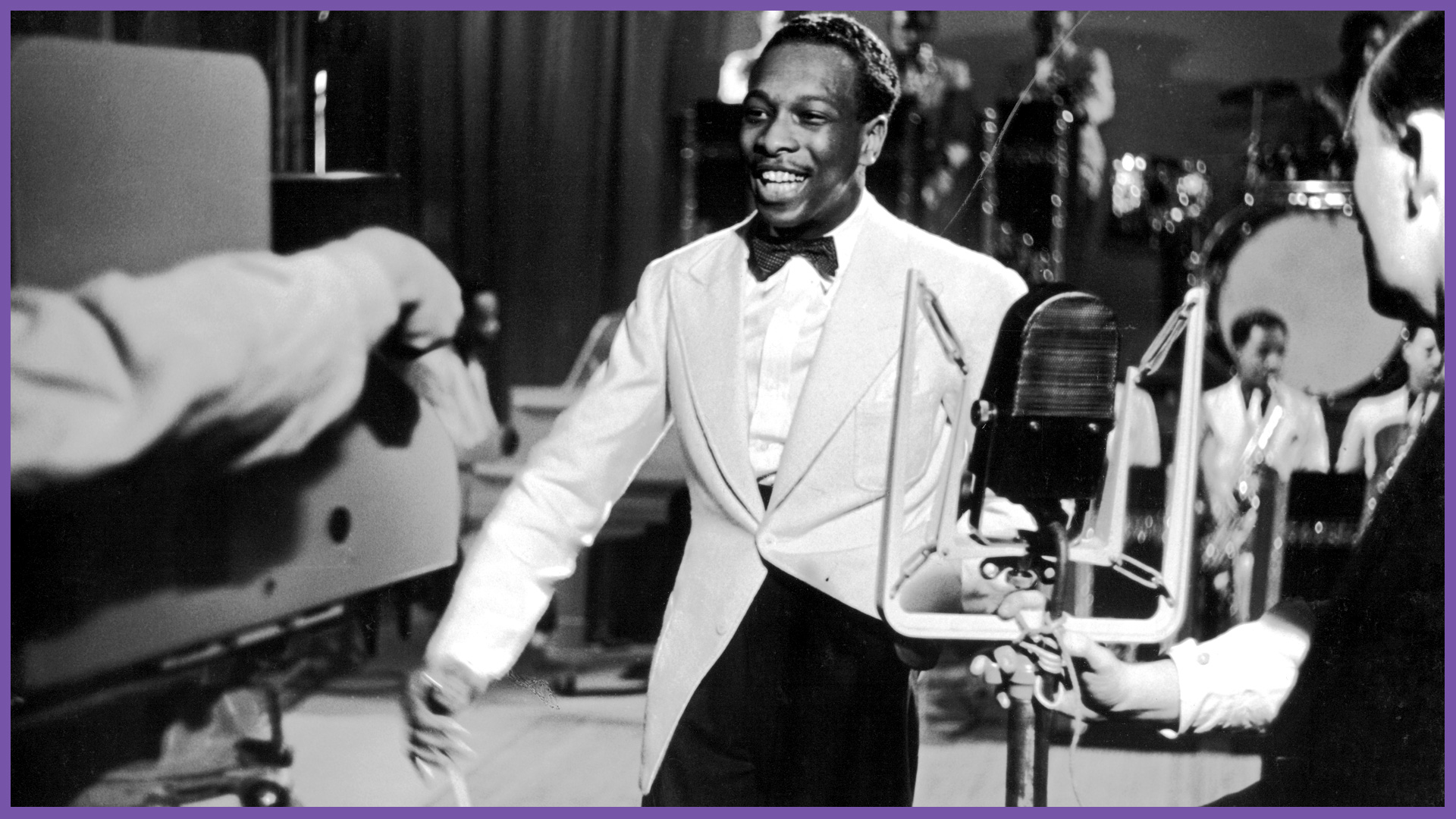
KAYLEE: The popularity of jazz and it’s new style, swing, continued into the 30s. Ken “Snakehips” Johnson was a dancer and a pioneering bandleader who’s all black orchestras enjoyed huge success with the wider British public. He was killed during World War Two when a bomb dropped on the London nightclub where he was performing.
The War ended in 1945 and had been hugely damaging. So Britain called on countries of the British Empire to help rebuild the nation. The Nationalities Act 1948 gave Commonwealth Citizens the right to live and work in the UK…and people from the Caribbean were invited to come.
LINETT KAMALA: I think that moment of Caribbean immigration is really important because it was a huge shift culturally for this country. There’d always been a black presence here, but the numbers that came at the call of what was then the British Empire. Of course, the people came and they brought along their culture, their music, and there was excitement.
KAYLEE: And in June 1948 the now famous ship, The Empire Windrush, arrived at London’s Tilbury Docks.
MYKAELL: This was some of the best musicians who were coming over looking for work.
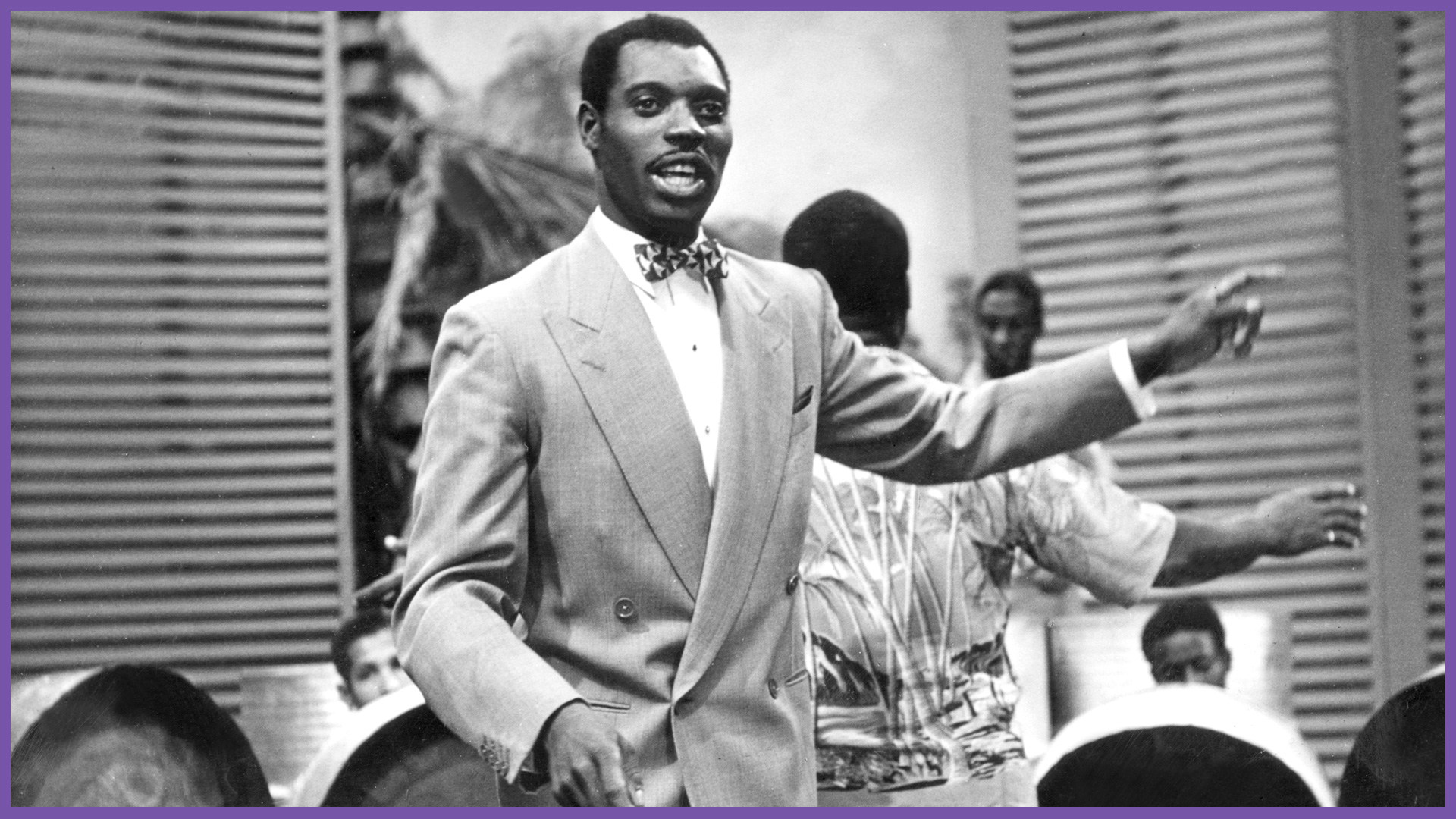
KEVIN: There are musicians who arrive on the Windrush. Very famously, Lord Kitchener, the great calypso singer from Trinidad…
LORD KITCHENER [SINGING “LONDON IS THE PLACE FOR ME”]
KEVIN: When you see Lord Kitchener’s actually performing “London is the Place for Me”, it’s another chapter in black British music that’s being written before your very eyes.
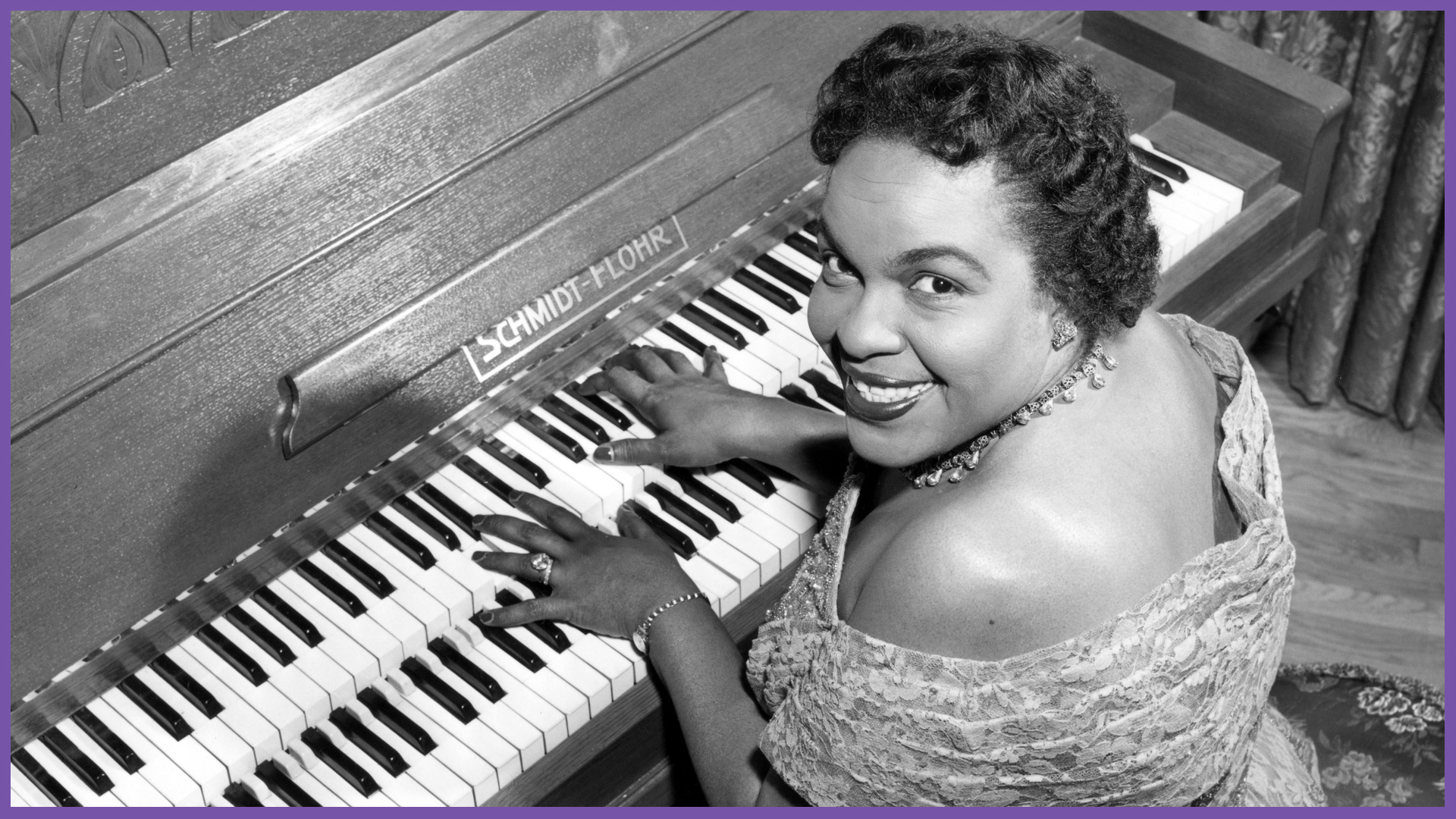
KAYLEE: Black music was having a broad impact as never before. The singles chart, now the UK top 40, started in 1952. And two years later Trinidadian pianist, Winifred Atwell, was the first black artist to go to Number 1 with her record “Lets Have Another Party”.
MYKAELL: She’s famous for playing upright piano in a very honky-tonk style. But this belies her true expertise, which is a classical musician.
KEVIN: She has number one records. She has her own TV show. And, very importantly, she becomes an international star.
KAYLEE: At the start of the 1960’s - the so-called “Swinging Sixties” - black British artists would be presented with both opportunities and challenges.
Part 1: 1900 - 1960
Download / print a transcript of this episode
This video begins with an exploration of the racial and cultural roots of the composer Samuel Coleridge-Taylor (1875-1912). Coleridge-Taylor was born in London to an English mother and a father from Sierra Leone. He studied at the Royal College of Music from the age of 15 and became a professional musician.
Coleridge-Taylor's career as a composer began in the late 1890s and he achieved his greatest success with three cantatas on the poem 'The Song of Hiawatha' by Henry Wadsworth Longfellow, earning praise from Edward Elgar among others. The success of these compositions enabled Coleridge-Taylor to make three tours of the United States between 1904 and 1910. At the same time he began to explore his paternal heritage and he participated in the First Pan-African Conference held in London in 1900.
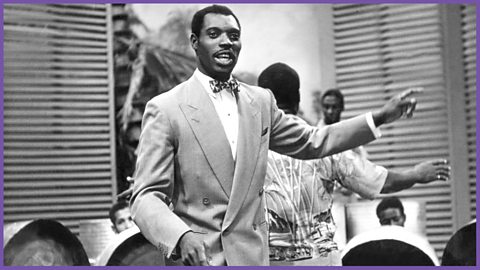
Jazz took off in Britain immediately after World War I with a tour by the Original Dixieland Jazz Band in 1919. Both Louis Armstrong and Duke Ellington subsequently played concerts in the UK. Ken 'Snakehips' Johnson (1914-1941) was a hugely popular dancer and band leader in London during the 1930s. He was born in present-day Guyana, was educated in the UK, spent time in New York immersing himself in jazz culture and returned to the UK to set up jazz bands including the West Indian Dance Orchestra. He died during the Blitz when a bomb fell on the Café de Paris in London, where he was performing.
The Empire Windrush arrived at Tilbury Docks in 1948. On board were a number of musicians from the Caribbean - notably the calypso singer Aldwyn Roberts (1922-2000), who used the stage name Lord Kitchener. He quickly became a regular performer on the BBC and remained an important figure for expatriate Caribbean communities in the UK.
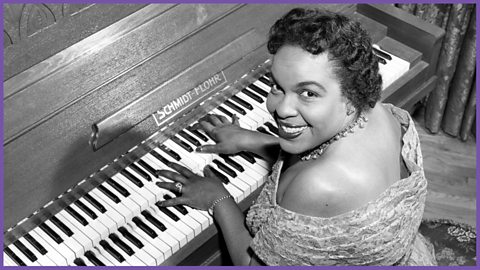
Another star of the era was pianist Winifred Atwell (c 1910-1983). Atwell was born in Trinidad and travelled to the UK in 1945, where she completed her studies at the Royal Academy of Music. Her 1954 hit 'Let's Have Another Party' made her the first black artist to reach No 1 in the UK singles chart. Atwell's famous piano was bought from a junk shop, but subsequently toured all over the world with her.
Notes
Diaspora. The African diaspora refers to the worldwide collection of communities whose heritage is from the people of Africa. It therefore includes many people from the Caribbean.
Pan-Africanism. This global movement has its origins in the late 19th century. It aims to connect all people of African descent - both in Africa and in the diaspora. Its goals are to promote solidarity, a shared sense of identity, and freedom from oppression. The First Pan-African Congress was held in London in 1900. The Congress still meets on an irregular basis, including in 2025 in Togo.
British Nationality Act, 1948. This Act of Parliament, which became law on 1 January 1949, defined British nationality as being a 'Citizen of the United Kingdom and Colonies' - in effect, giving citizens of colonial countries the same status as those living in the UK. Many of the provisions of the Act were subsequently repealed by legislation that significantly tightened controls on immigration.
Empire Windrush. The ship sailed from Trinidad to London's Tilbury Docks in 1948. She was not the first ship to bring significant numbers of West Indian migrants to the UK, but she has since become symbolic of post-war migration to the UK. The generation of people who migrated to the UK in the years immediately after the War, including those on the Empire Windrush are often referred to as the 'Windrush generation'. There were 1,027 passengers on board; about 800 of them from the Caribbean.
Ken 'Snakehips' Johnson
Click to display the image full-size
Lord Kitchener
Click to display the image full-size
Winifred Atwell
Click to display the image full-size
Links
- Celebrating Black British Music: Assembly for Secondary Schools - Assembly pack for secondary schools on the theme of celebrating black British music.
- The Music is Black - Content curated from across the BBC celebrating black British music.
- Popular Music Styles - A Bitesize guide for students on popular music styles, including Jazz, Reggae and Rap.
- West Indian Community during the 1960s, 70s and 80s - Bitesize for Teachers resources exploring the lives of London's West Indian community during the 1960s, 70s and 80s, produced alongside the BBC One Small Axe films directed by Oscar winner Steve McQueen.
- Samuel Coleridge-Taylor: 'Nonet in F minor' - Performed by the BBC National Orchestra of Wales.
- Errollyn Wallen: Mighty River - A Ten Pieces resource with a lesson plan, classroom video introducing the piece, and a performance by the BBC Concert Orchestra.
- Cassie Kinoshi - the colour of all things constant - A Ten Pieces resource with a lesson plan, a classroom video of Cassie Kinoshi describing her inspirations for the composition, and a performance of the piece by the BBC Philharmonic Orchestra.
- BBC Get Singing: Cat Burns - Resources for secondary schools including activity videos, scores, backing tracks and guidance notes – everything needed to explore Cat Burns’ song with young singers aged 11-14.
- V&A East - These videos have been produced in collaboration with V&A East Museum.