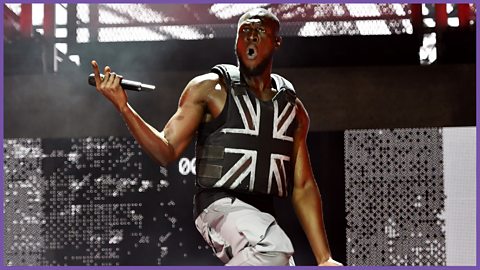
The final episode spans 1995 to the present day, covering the evolution of UK Garage and Grime, their use of modern technology and independent media, to Stormzy's headline stage performance at the 2019 Glastonbury Festival.
These videos have been produced in collaboration with V&A East Museum.
The video
KAYLEE GOLDING: New technology, new sounds, and new ways of being heard.
DR MONIQUE CHARLES: They were building a scene and building an economy and it was on their own terms.
KAYLEE: Creating UK Garage, Jungle, Drum & Bass and Grime… This generation had their own experience and something new to say. By the 1990s, black British music was changing fast.
TITLE: PART 3: 1995 … & BEYOND
PROF MYKAELL RILEY: So when we get to the 90s, we have technology that says you can now sample the past, you can go back. So what do they do? They sample their history. They’re going back into Reggae, back into Dub.
LINETT KAMALA: So they would play the music at almost twice the tempo. And then this music became known as Jungle music.
MONIQUE: Jungle has heavy bass lines. It has a lot of fast percussion but the bassline is slow, so it allows you to still follow the bassline. So you can still dance to it.
KAYLEE: Jungle which was followed by Drum & Bass was closely linked to the club culture that was exploding in the UK.
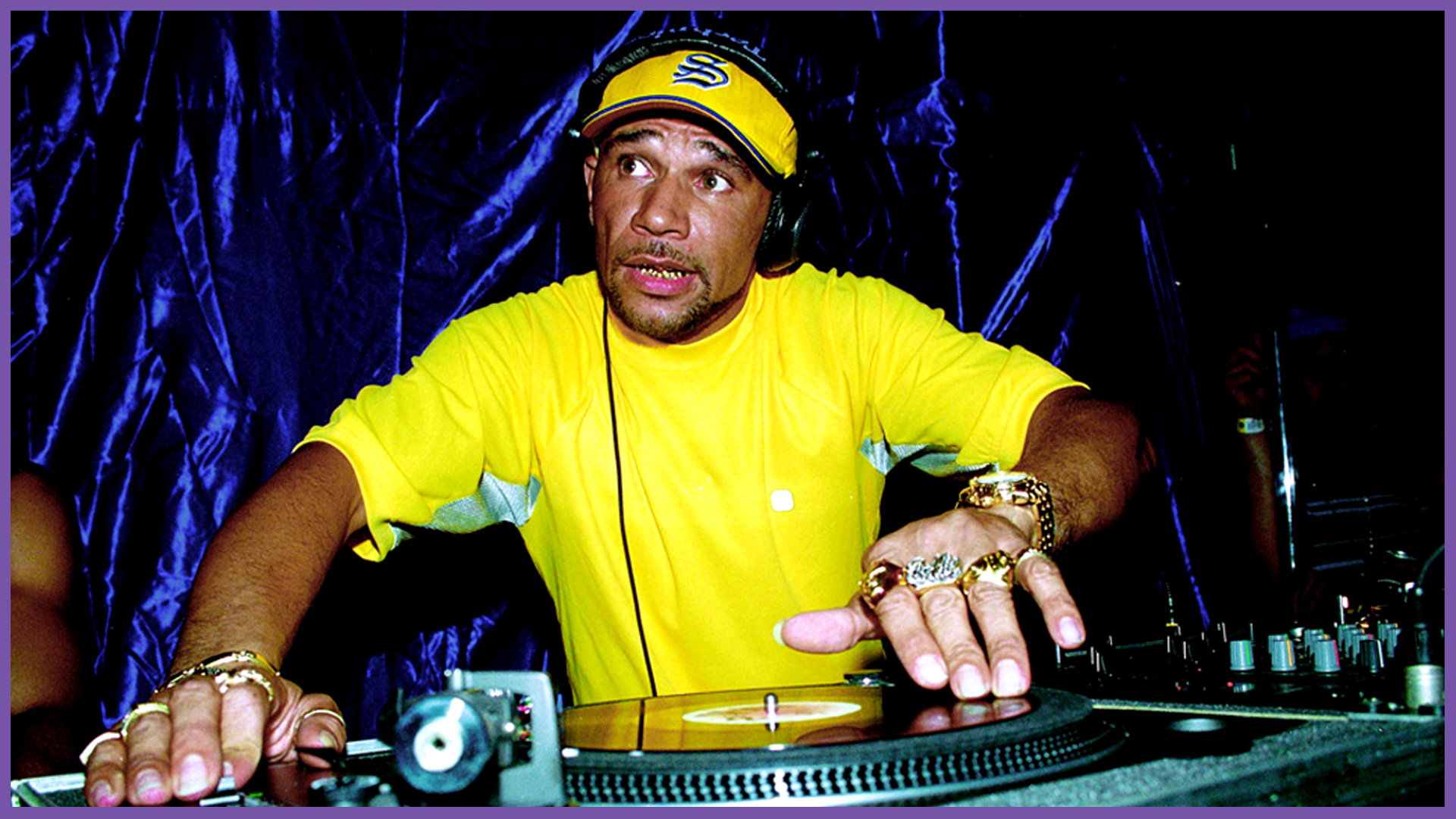
MONIQUE: One of the pioneers of that particular technique is an artist known as Goldie.
KAYLEE: The MOBO Awards were launched in 1996 celebrating excellence in black music, with Goldie picking up the award for Best Album in its first year.
By the late 1990s, UK Garage emerged as a new sound and a new scene.
MONIQUE: It has elements of EDM - electronic dance music - but it has soulful vocals. It’s very, very melodic. It’s designed to be danced to.
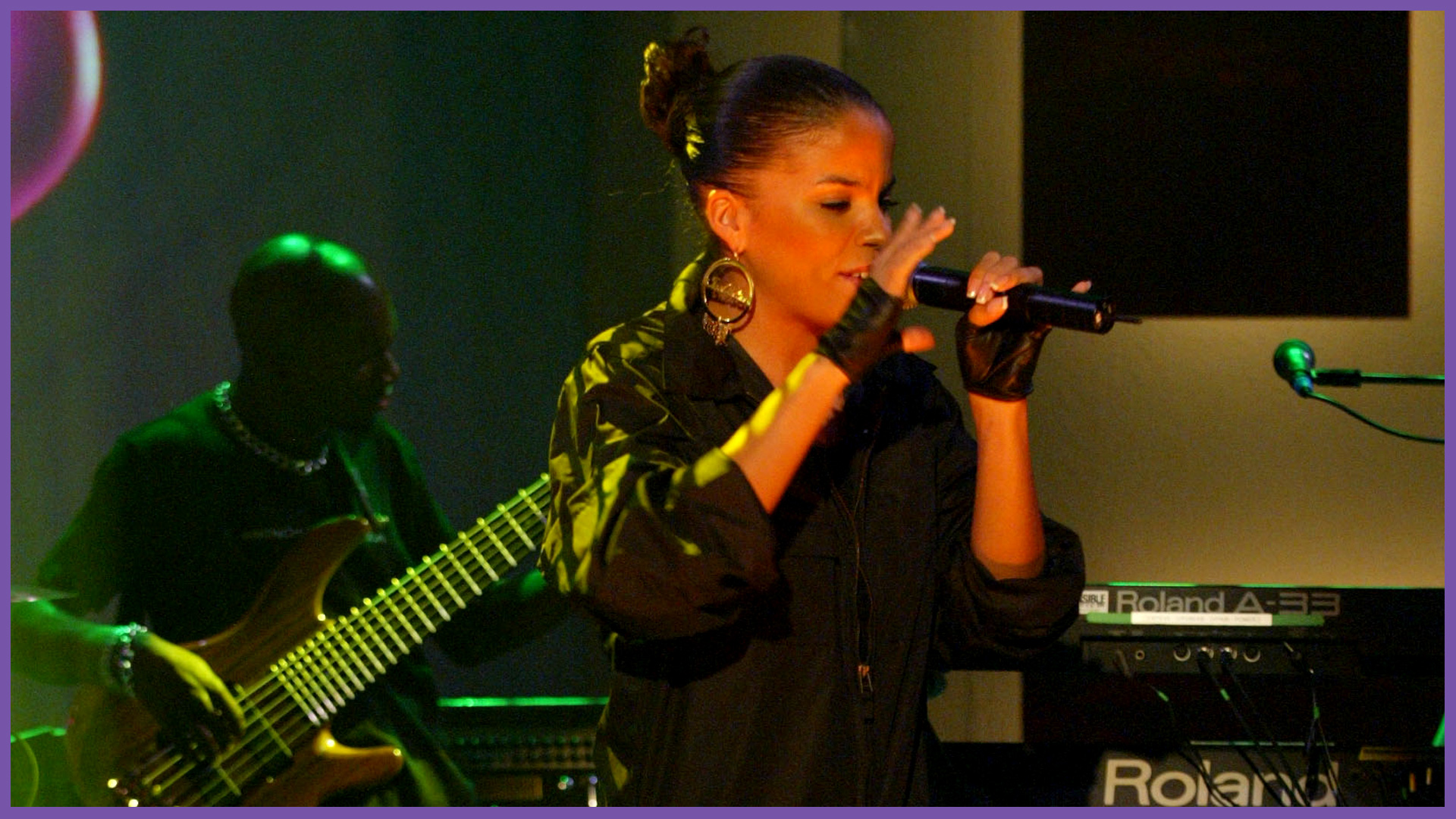
KAYLEE: Artists like Craig David and Ms Dynamite brought tunes from the clubs to the charts. But for some the glamorous UK Garage scene just didn’t reflect everyday life. A raw new sound began to emerge. Grime.
MONIQUE: They want to talk about what their reality is. The hardships that they experience. The social realities of what they might see their parents going through. This is my end. This is where I’m from.
KAYLEE: In the early 2000s it was So Solid Crew that transitioned from UK Garage and laid the foundations for Grime.
MYKAELL: What’s important about So Solid…it set a benchmark that says “Be who you want to be, say what want to say, don’t wait for the industry to recognise and support what you’re saying.”
KAYLEE: Their track “21 Seconds” actually got to Number 1 in the charts, but this was not the typical experience of Grime artists. Producers embraced a so-called DIY or Do it Yourself approach.
LINETT: Technology had become more accessible. People were able to start using software and experimenting with sampling. It was a lot cheaper, so people could literally create music in their own bedrooms.
KAYLEE: As well as producing music, people needed to find a way to get it heard. And one way was unlicensed, so-called “pirate”, radio stations.
LINETT: Pirate radio stations were really popular and important because you wouldn’t hear this youth-driven music on the regular radio stations. So people were setting up their own radio stations in their own blocks of flats. You could literally hear this coming through the windows of people’s homes, bedrooms, as you’re walking through an estate, you know, block of flats.
KAYLEE: Along with the airwaves there was the world wide web.
MONIQUE: Grime was one of the genres that came up alongside the internet.
LINETT: People could create their own music videos very cheaply.
MONIQUE: It’s the ability to upload that on this newly found internet that enables the culture and the scene to kind of spread.
LINETT: It really was a way of people becoming quite entrepreneurial, you know, they became their own managers, their own bosses.
KAYLEE: Business minded people with passion for the music set up their own online platforms.
LINETT: So entrepreneurs, like Jamal Edwards with his SBTV… It was a complete game changer.
MONIQUE: Channels like Channel U, Link Up TV and Grime Daily were really important because again, they created a different kind of space. Different to pirate radio, but an important space, where you could visually see people that are making Grime music.
LINETT: For the first time, black British culture was being beamed across the world on a scale never before.
KAYLEE: By the 2010s, the latest wave of black British musicians - artists like Roadside G’s, Kano, and Skepta - were creating a huge fanbase.
MYKAELL: It was: “We’re not waiting for the industry. We can do this on our terms.”
MONIQUE: It got to the point where they got so big, it was undeniable, and even the record industry wanted to have a piece of the pie.
KAYLEE: The Glastonbury Festival is the biggest live pop music event in the UK. Black British artists had made appearances before but had never been the star of the show…until Stormzy appeared as the headline act in 2019.
LINETT: It was a big moment, particularly for what was known as the Grime music scene. I’d never seen anything like that. For the first time, I think people felt it was much more representational.
MONIQUE: If we think about black music and the spaces that it has been permitted to enter, It has largely been pushed to the side continually…and then eventually taking centre stage.
LINETT: That moment was a very…iconic, I would say. Important moment. With Grime music and why it has such a lasting appeal, it feels like it’s a way that people can really truly express themselves and talk about their experiences. I would say it’s current poetry, current modern day Shakespeare shall we say. You know, to me, that’s what it is!
KAYLEE: And that staying power is demonstrated by Dave, who first appeared as a 16- year-old freestyle rapper on YouTube in 2015. Within ten years he’d had three Number 1 albums.
MONIQUE: When it comes to black British music, a lot of it has been underground. But Grime was the genre that was able to cross over into the mainstream, and stay in the mainstream.
KAYLEE: We’ve followed the journey of black music in Britain for more than 100 years, but what lies ahead?
MONIQUE: I see the future of black British music as ever evolving, very much like the black British identity.
KEVIN LE GENDRE: I think the artists will go telling new stories as they see fit, according to their experience and the experience of the people around them.
LINETT: It’s authentic - it’s the real deal!
MYKAELL: Black musicians will continue to be creative - because they have to. It’s not going to be easy. But we’re not going anywhere!
Part 3: 1995 … & Beyond
Download/print a transcript of this episode
By the 1990s a new generation of black British artists was emerging and expressing themselves in new ways - UK Garage, Jungle, Drum & Bass, Grime… A key factor was the development and wide-spread availability of digital technology, which allowed the new generation to experiment and explore, often choosing to incorporate samples of earlier genres - such as Reggae and Dub - in their music.
Goldie was an early pioneer of the new techniques, combining elements of Jungle with Drum & Bass in a sound that took music beyond the dance floor. The MOBO (Music Of Black Origin) Awards began in 1996 and Goldie was the very first winner of the 'Best Album' category.
In the early 2000s So Solid Crew transitioned from UK Garage and laid the foundations for Grime - a gritty new urban sound featuring fast-paced rapping. 'Pirate' radio stations helped to spread the new sound. Later, the internet - combined with widely available, inexpensive software - made it possible for artists to literally DIY their music. A new type of music executive emerged - figures like Jamal Edwards - who were able to harness the internet and challenge the traditional role of the record companies.
Grime is described in the video as the genre which moved from the margins to the mainstream - where it has stayed. A key indicator of that is Stormzy's headline act at Glastonbury in 2019, the first black solo artist to headline the festival in its history. It was a performance celebrating black British culture and creativity, addressing a number of important social issues and fixed in public consciousness by Stormzy's outfit of a Union Jack stab-proof vest designed by Banksy.
Goldie
Click to display the image full-size
Ms Dynamite
Click to display the image full-size
Stormzy
Click to display the image full-size
Links
- Celebrating Black British Music: Assembly for Secondary Schools - Assembly pack for secondary schools on the theme of celebrating black British music.
- The Music is Black - Content curated from across the BBC celebrating black British music.
- Popular Music Styles - A Bitesize guide for students on popular music styles, including Jazz, Reggae and Rap.
- West Indian Community during the 1960s, 70s and 80s - Bitesize for Teachers resources exploring the lives of London's West Indian community during the 1960s, 70s and 80s, produced alongside the BBC One Small Axe films directed by Oscar winner Steve McQueen.
- Samuel Coleridge-Taylor: 'Nonet in F minor' - Performed by the BBC National Orchestra of Wales.
- Errollyn Wallen: Mighty River - A Ten Pieces resource with a lesson plan, classroom video introducing the piece, and a performance by the BBC Concert Orchestra.
- Cassie Kinoshi - the colour of all things constant - A Ten Pieces resource with a lesson plan, a classroom video of Cassie Kinoshi describing her inspirations for the composition, and a performance of the piece by the BBC Philharmonic Orchestra.
- BBC Get Singing: Cat Burns - Resources for secondary schools including activity videos, scores, backing tracks and guidance notes – everything needed to explore Cat Burns’ song with young singers aged 11-14.
- V&A East - These videos have been produced in collaboration with V&A East Museum.