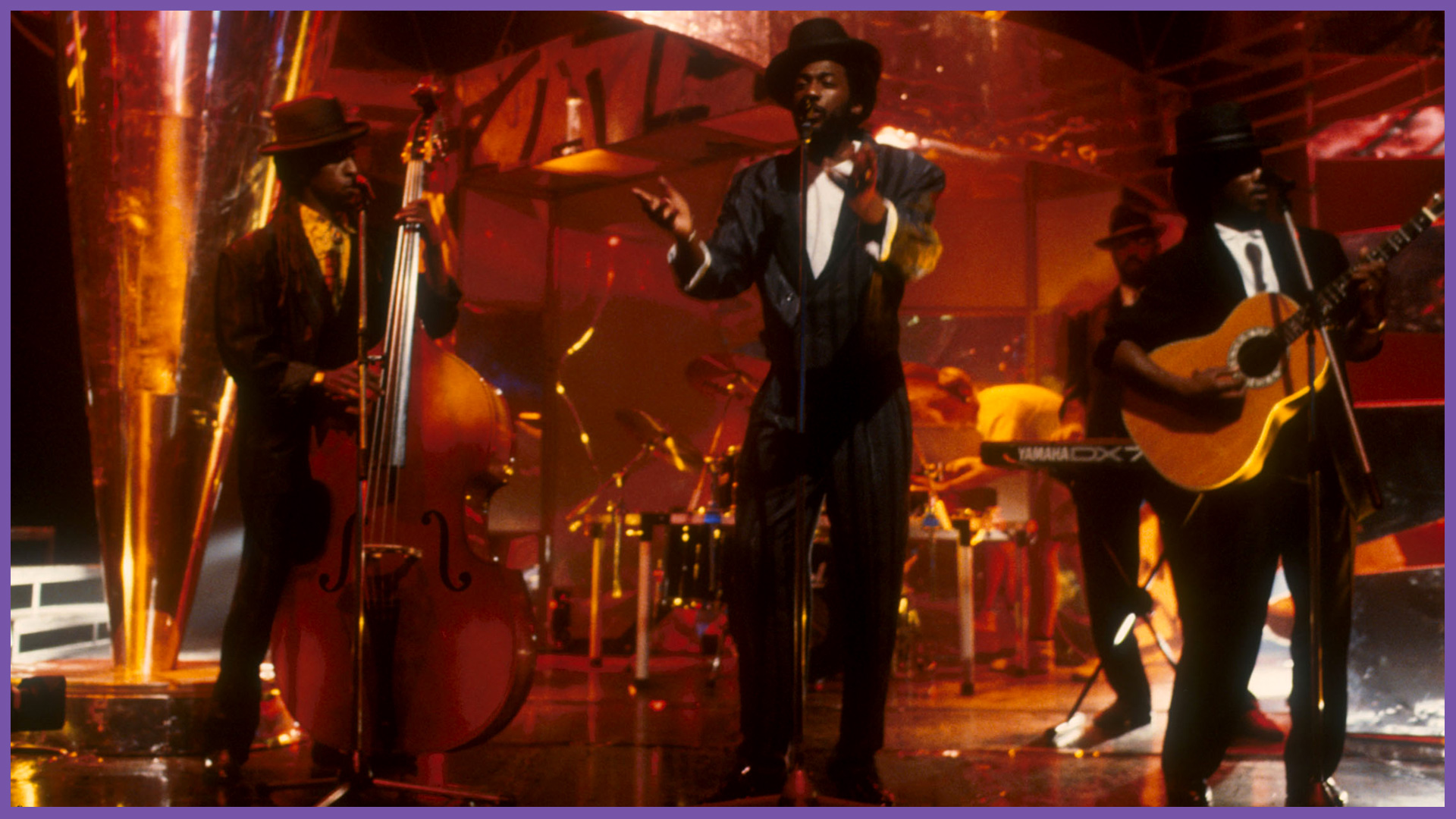
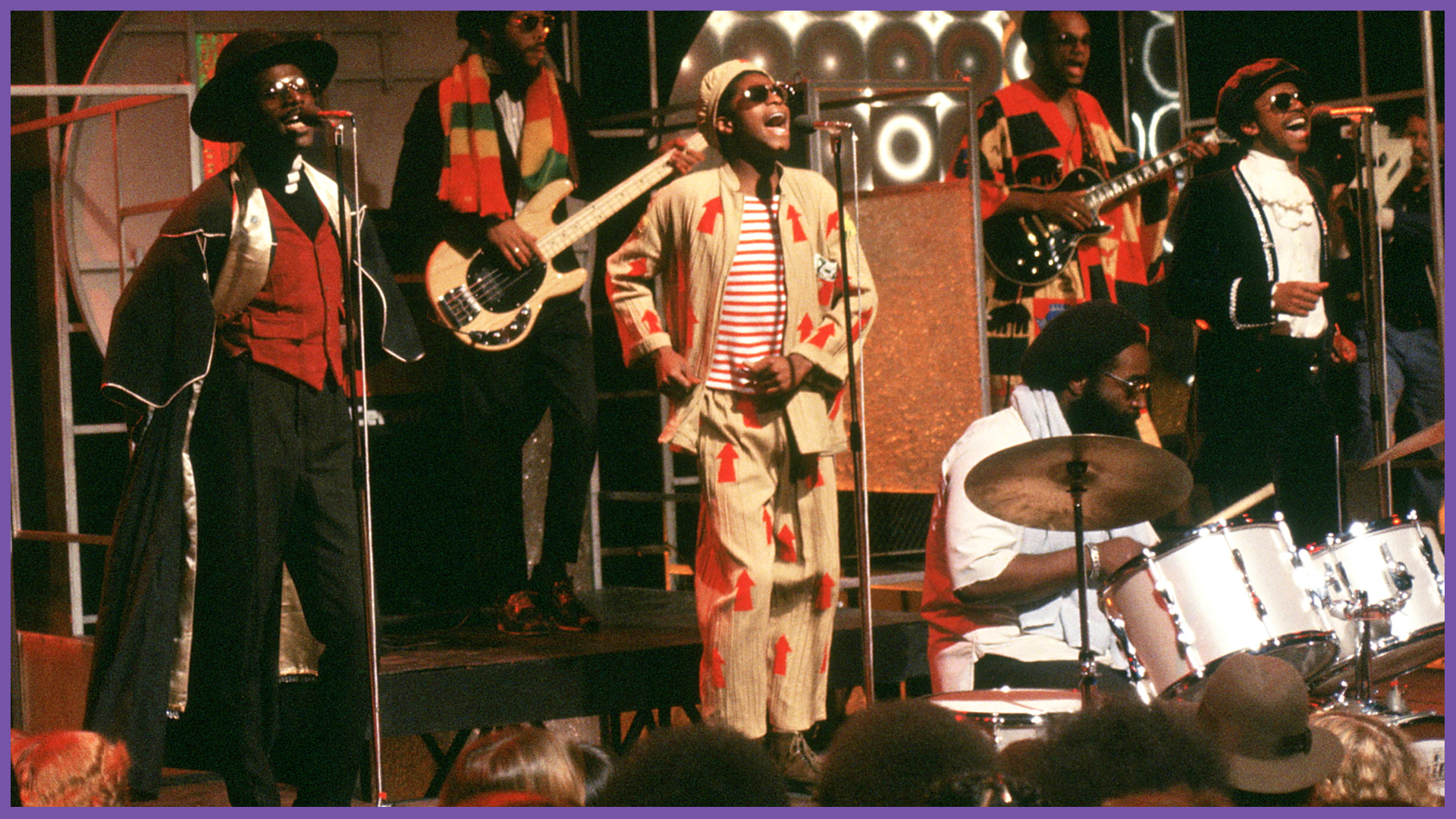
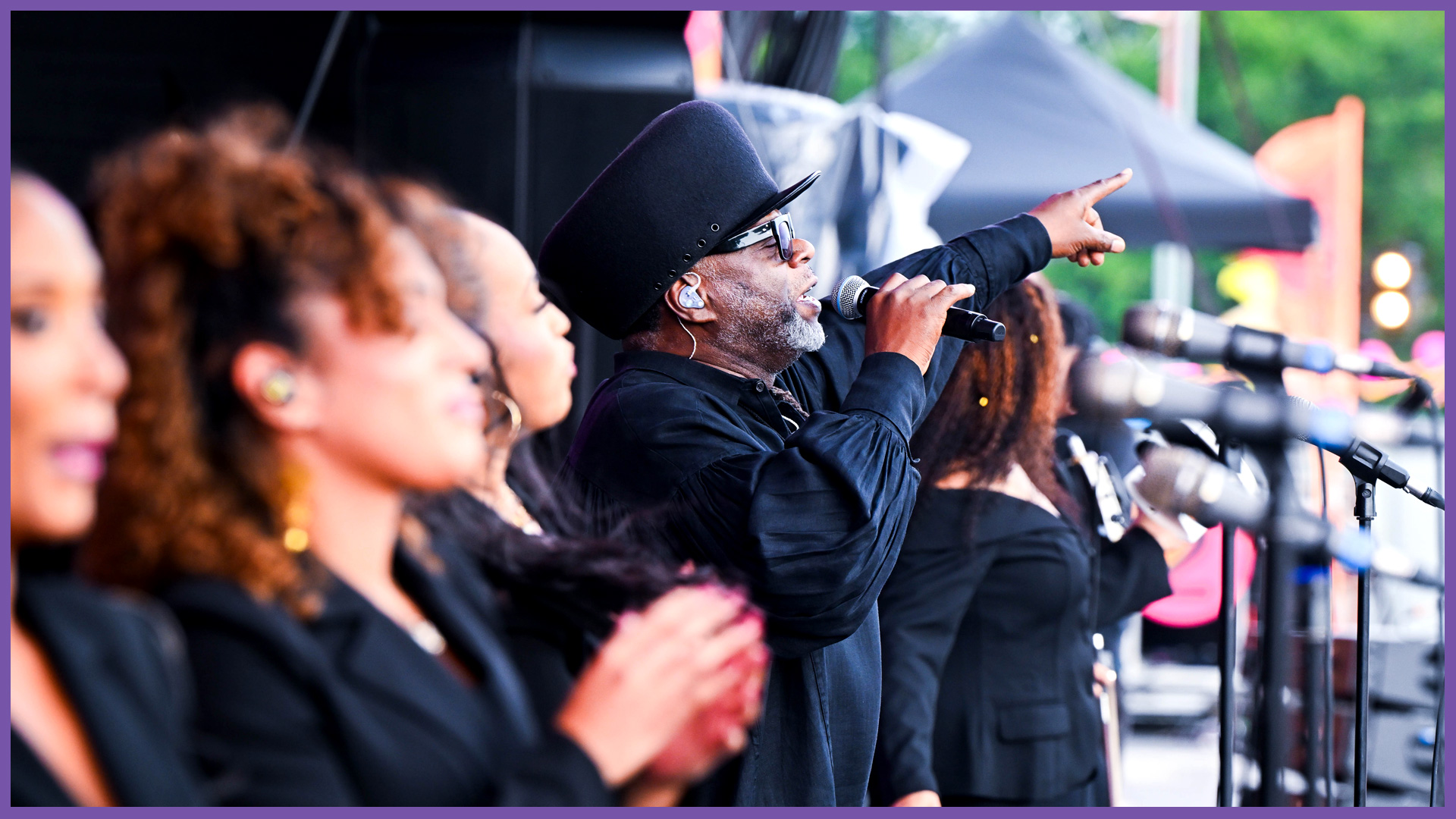
The second video in this series celebrating the contribution of black artists to British music spans the period 1960 to 1995. The popularity of imported music like Jamaican Ska and Reggae influenced British-born black music. We trace the growth of home-grown British musical styles like Lovers Rock alongside others inspired by Soul, Funk, Punk, Jazz, Rap, Disco and House Music, all of which emerged in this exciting period.
These videos have been produced in collaboration with V&A East Museum.
The video
Teachers please note that at 1' 30" in the video we see archive footage of two men walking in front of a wall daubed with the letters K.B.W. The letters stand for 'Keep Britain White' - as can be seen in the archive footage of the banner in Trafalgar Square that follows immediately after. This racist slogan is presented in the context of it being prevalent in Britain in the 1950s - 1970s.
KAYLEE GOLDING: Into the 1960s, 70s and beyond, a new generation was energising music in Britain.
DR MONIQUE CHARLES: We find young people finding ways to kind of articulate and express what their identity - being black in Britain at that time - means to them.
PROF MYKAELL RILEY: The period in the early 60s is really important in the birth of counterculture. It’s youth pushing back against the system, against their parents, against the politics of the day. African-Caribbean music was part of that.
KAYLEE: A cultural revolution was underway and black music had a seat at the table.
TITLE: PART 2: 1960 - 1995
KAYLEE: The Windrush Generation, who’d arrived in 1948 and beyond, brought music from the Caribbean. Calypso and early reggae. Now a new variation - Ska - was easing into Britain’s pop culture.
MYKAELL: Ska, the music that celebrated Jamaican independence, was also now being accepted and celebrated in the UK. And that came in the form of the first major hit, which was “My Boy Lollipop”. 1964. By an artist, 15-year-old female, called Millie Small.
[ARCHIVE: MILLIE SMALL SINGING “MY BOY LOLLIPOP”]
MYKAELL: It stayed in the top five for weeks. This was the British public saying “We love this music!”
KAYLEE: Black music was becoming increasingly popular but in everyday life racism was a stark reality. Accommodation could be hard to find. Often people were turned away from clubs and bars.
LINETT KAMALA: Because people experienced a lot of discrimination and there wasn’t the opportunity and spaces to hear black music, people created their own.
MONIQUE: “Blues Parties” are unlicensed parties, house parties, where you’d pay a little bit of cash to kind of get inside.
MYKAELL: They found that the systems, stereo systems here, were not up to scratch and set about building their own amps and speaker systems.
KAYLEE: That early sound system culture would have a vital influence on the music that would follow in years to come.
In the mid 60s something remarkable was born on the streets of West London. The Notting Hill Carnival.
MYKAELL: Carnival started out with steel pans and costumes, the music. But very quickly the big island again - Jamaica - gate crashes the party. In terms of sound system culture.
LINETT: I first got involved in sound system at the age of 15. I was the first girl to go on the decks. So I became what was known as a selector, which is now known as a DJ.
KAYLEE: Sound system crews were bringing the latest Jamaican reggae to the UK which was inspiring home-grown talent.
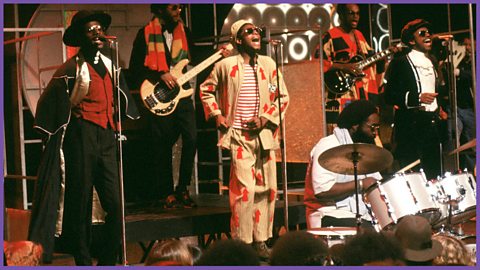
TV ARCHIVE: All the big reggae artists - Bob Marley, Toots and the Maytals - were imports but Aswad, a British band, have helped break the monopoly on Jamaican reggae with their own authentic sound.
MYKAELL: We have a community of young Caribbeans now that are finding their own identity. So we’re “black” and “British”, but we’re still working out what does it mean to be “black and British”.
[ARCHIVE: STEEL PULSE SINGING “BABYLON IS FALLING. BABYLON IS FALLING.”]
MONIQUE: The term “Babylon” - you may or may not have heard of that term - but that term is used often in reggae music. Particularly in the 70s. What does it mean? Well, it’s talking about the oppressive systems and structures, ultimately racism, that young people feel.
KAYLEE: Steel Pulse landed their dream gig of supporting reggae legend Bob Marley.
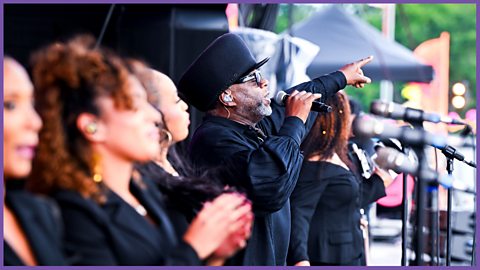
MYKAELL: My band - Steel Pulse - we were in Birmingham and we did Bob Marley’s first European tour and we got the opportunity to speak to our idol and say “Why did you pick us?” And he simply said, “Because you don’t sound like me.” What that said was we had established a sound that was ours and we were black British.
KAYLEE: And a truly Black British music genre, originated in the UK, was born in the 1970s. “Lovers Rock”.
KEVIN LE GENDRE: Lovers Rock is a really interesting genre of music because it basically shows that British musicians who are weaned on reggae, British musicians who are inspired by Jamaican music can manage to put their own spin on it. So the idea of creating songs that are romantic, that focus first and foremost on the female voice.
TV ARCHIVE: Here’s a lady with a great voice. She’s Janet Kay and this is “Silly Games”.
KAYLEE: The classic Janet Kay track, “Silly Games”, became an anthem and went to Number 2 in the charts in 1979.
LINETT: These were like beautiful singers. And they were just singing about everyday things that people just loved and could connect with. And we were very excited to see black British performers on TV. For many of us, it was for the first time seeing that.
KAYLEE: Throughout the 80s black British artists regularly featured in the Top 40.
MYKAELL: Musicians start to transition from reggae into R&B and Soul.
KAYLEE: Bands like Imagination, Omar, and Billy Ocean had a huge impact. In 1984 Sade stormed the charts… And at the end of the decade came Soul II Soul…
MYKAELL: When we look at a band like Soul II Soul, and the importance of Soul II Soul, it’s a transition or an evolution of sound system culture into the best R&B that could happen at that moment in time.
KAYLEE: That moment is recognised as a major point in the history of British popular music: a springboard for what was to come.
MYKAELL: Jumping from, say, Soul II Soul to the…the early 90s, what we find is technology intervenes again. We have technology that says you can now sample the past. Building new connections, new narratives. Jungle did that.
KAYLEE: And with the advent of Jungle a new chapter was about to begin.
Part 2: 1960 - 1995
Download / print a transcript of this episode
Ska originated in Jamaica in the 1950s and combined elements of Caribbean folk music with calypso and jazz. In the UK the genre was popularised by Millie Small's 1964 hit 'My Boy Lollipop', but the genre was also adopted by two contemporary British subcultures - 'mods' and 'skinheads'.
Music by black artists was becoming increasingly popular in the UK, but many black people were subjected to racism in their everyday lives: accommodation could be hard to find - with landlords often discriminating against people of colour - and bars and restaurants frequently barred entry. The discrimination fostered the rise of 'Blues parties' - private house parties - a central feature of which would be homemade sound systems. With the establishment of the Notting Hill Carnival in the mid-1960s, sound system culture moved outdoors and hit the streets.
Many of the most popular black artists in Britain at the time - for example, Bob Marley - were not actually from Britain. But a new generation of black British musicians began to explore what it meant to be both 'black' and 'British' and in the 1970s a new genre - Lovers Rock - originated entirely in the UK. In 1979 Janet Kay's single 'Silly Games' reached Number 2 in the charts and became the first Lovers Rock tune on the BBC's flagship music programme Top of the Pops.
Throughout the 1980s home-grown British talent continued to have a huge impact - artists such as Imagination, Omar, Billy Ocean, Sade, Soul II Soul. Then, in the early 1990s, the development and availability of new technologies led to new techniques - such as sampling - and a new genre, Jungle, was born.
Notes
Babylon. The term is relevant to both Rastafarian religious belief and to black Caribbean culture. It supports the idea of a corrupt, materialistic system that has traditionally oppressed black people. The term became a catch-all for the police, government agencies, financial and religious institutions, etc.
Teachers please note that at 1' 30" in the video two men are seen walking in front of a wall daubed with the letters K.B.W. The letters stand for 'Keep Britain White' - as can be seen on the banner in Trafalgar Square that follows immediately after. This racist slogan was prevalent in the 1950s - 1970s. This Bitesize article charts the campaigns for racial equality in the UK following 1945.
Aswad
Click to display the image full-size
Steel Pulse
Click to display the image full-size
Soul II Soul
Click to display the image full-size
Links
- Celebrating Black British Music: Assembly for Secondary Schools - Assembly pack for secondary schools on the theme of celebrating black British music.
- The Music is Black - Content curated from across the BBC celebrating black British music.
- Popular Music Styles - A Bitesize guide for students on popular music styles, including Jazz, Reggae and Rap.
- West Indian Community during the 1960s, 70s and 80s - Bitesize for Teachers resources exploring the lives of London's West Indian community during the 1960s, 70s and 80s, produced alongside the BBC One Small Axe films directed by Oscar winner Steve McQueen.
- Samuel Coleridge-Taylor: 'Nonet in F minor' - Performed by the BBC National Orchestra of Wales.
- Errollyn Wallen: Mighty River - A Ten Pieces resource with a lesson plan, classroom video introducing the piece, and a performance by the BBC Concert Orchestra.
- Cassie Kinoshi - the colour of all things constant - A Ten Pieces resource with a lesson plan, a classroom video of Cassie Kinoshi describing her inspirations for the composition, and a performance of the piece by the BBC Philharmonic Orchestra.
- BBC Get Singing: Cat Burns - Resources for secondary schools including activity videos, scores, backing tracks and guidance notes – everything needed to explore Cat Burns’ song with young singers aged 11-14.
- V&A East - These videos have been produced in collaboration with V&A East Museum.