| 13 November 2014 |

| |
| BBC Homepage | | |
| |||
| Contact Us | | |
RemembranceYou are in: Manchester > History > Remembrance > The Manchesters' Armistice The Manchesters' ArmisticeWhen the end of the First World War came on 11 November 1918, it was welcome release for all the soldiers fighting in France, Belgium and beyond, including the men of the Manchester Regiment, who had been hit hard by the four years of fighting. 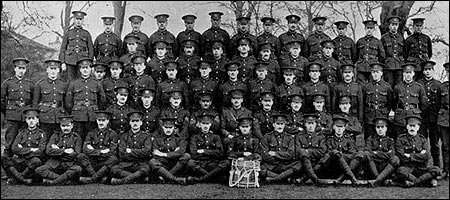 The 16th Battalion in 1917 Of the 42 battalions – known as the Manchesters - that had started the conflict, many had been disbanded or amalgamated elsewhere by late 1918, mainly due to the increasing number of casualties. The regiment's most devastating moment had come a few short months earlier, during the last major German offensive of the war, in March 1918. The 16th and 17th battalions took part in what became known as 'The Battle Of Manchester Hill', when a huge German force attacked them near Saint-Quentin in France. The soldiers fought bravely to defend their hill position, but were overwhelmed, and despite the 17th battalion joining the almost annihilated battalion late in the day, by the end of the battle, both sets of men had suffered a massive number of casualties. 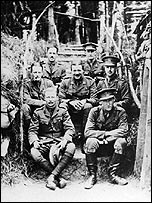 The Manchester Regiment at Ypres in 1915 At the eleventh hourWhen the ceasefire finally came in November 1918, most of the remaining battalions were scattered around France. The 2nd were near 'Manchester Hill' in the ruined city of Saint-Quentin. Being at the heart of the war zone, the place had been systematically looted and devastated – a staggering 80 percent of its buildings, including the impressive Basilica, were damaged. They were not the only battalion to end the war at the front line – the 5th, 6th, 7th and 8th Battalions were further north, along what was known as the Hindenburg Line (a vast system of German defences in northeastern France), at Hautmont, when the news of peace came through. Yet, not all the Manchesters finished their war in France and one battalion’s station reveals just how far the extent of the First World War was. Common thought places the conflict almost exclusively around northeastern France and, in particular, the Somme, but the war spread its grim reach much wider. 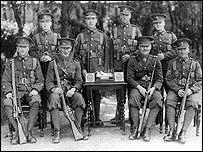 The 1st Battalion in 1914 The 1st battalion finished the war in Palestine, fighting Ottoman troops. The Ottoman Empire had sided with Germany, Bulgaria and Austria-Hungary against the Allied Forces and so, just as in the muddy trenches of northern Europe, British troops fought in sun-scorched places like Palestine and Mesopotamia (now mostly Iraq). A heavy tollCelebrated as the Armistice was, the final cessation of hostilities brought mixed emotions for the men of the Manchesters, as the war had taken a heavy toll on the regiment. The total number of soldiers of all ranks who were killed or died as a result of the conflict was 14,122, with around a further 31,000 being wounded or reported as missing in action. Put in modern terms, that number would account for the entire population of Ashton-under-Lyne. When you take into account the fact that the men of Greater Manchester also fought in the likes of East Lancashire and King’s Regiments (and thus took similarly proportional losses and causalities), there can be no doubt that the Great War had a huge impact on the area. Thanks to Robert Bonner MA Captain (Retd), Chairman of the Museum of The Manchester Regiment for his help with this articlelast updated: 05/11/2008 at 09:27 SEE ALSOYou are in: Manchester > History > Remembrance > The Manchesters' Armistice  |
| | About the BBC | Help | Terms of Use | Privacy & Cookies Policy |