

Wednesday 24 Sep 2014
Programme Information
Network TV BBC Week 48: Thursday 3 December 2009
BBC ONE Thursday 3 December 2009
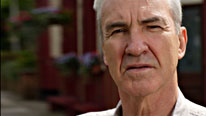
Archie goes to the Vic and pressures Roxy and Ronnie to tell him what happened to Phil, in tonight's visit to Albert Square. He feigns concern, offering his financial assistance but fearing they, too, will get hurt, Roxy and Ronnie tell him he is not welcome.
Meanwhile, Zainab overhears Masood on the phone to Janine, chasing work. She can see how tired he is and worries that his health will suffer just for the sake of a little extra money.
Archie is played by Larry Lamb, Roxy by Rita Simons, Ronnie by Samantha Womack, Phil by Steve McFadden, Zainab by Nina Wadia, Janine by Charlie Brooks and Masood by Nitin Ganatra.
JM3

The Bang Goes The Theory team return for a one-off special, entitled Human Power Station, in which viewers discover just how much electricity people use and abuse when an average British family are taken off the National Grid and their entire house is powered by a team of 80 cyclists for 12 hours.
In a Heath Robinson-style spectacular – and a genuine world first – viewers find out the real cost of home appliances as a team of cyclists, based in the studio next door to the house, generate enough pedal power to keep the Collins family's electricity running, without them knowing. As the family switch on power showers, kettles, iPods and washing machines, the cyclists are faced with the challenge of keeping a typical family of four in the manner to which we have all become accustomed.
Bang Goes The Theory presenters Liz Bonnin, Dallas Campbell and Jem Stansfield, and a team of energy experts, watch in the sidelines and count the pennies, tracking how much electricity the Collins family really use and how much energy they waste, while also offering some unusual tips on energy conservation – including roasting a chicken with nothing more than the heat of two light bulbs.
Packed with fascinating facts about what it takes to keep the average modern home running like clockwork, Human Power Station offers viewers a unique insight into electricity prices and domestic energy demands and raises interesting questions about how much energy supply is taken for granted in a world where energy shortages are increasingly becoming a matter of pressing global concern.
VAA
Stacey is looking for a new job while insuring Gavin sticks to his recent promise, as the critically acclaimed comedy, written by James Corden and Ruth Jones, continues.
Dave's not a happy bunny when Nessa tells him she's taking baby Neil to Essex to see his dad. Meanwhile, over at the Shipmans's house, Dawn and Pete have joined Pam and Mick for a beer and curry night of huge proportions – at the Billericay house of fun.
Stacey is played by Joanna Page, Gavin by Mathew Horne, Dave by Steffan Rhodri, Nessa by Ruth Jones, Dawn by Julia Davis, Pete by Adrian Scarborough, Pam by Alison Steadman and Mick by Larry Lamb. James Corden and Rob Brydon also star.
CS
BBC TWO Thursday 3 December 2009
In what are effectively the quarter-finals in Raymond Blanc's search for new restaurant partners, love is on the menu; a challenge guaranteed to put pressure on the couples and increase the enjoyment for viewers.
First, there's a romantic takeaway dinner for two, followed by a singles' night. When one of the couples starts by asking: "What happens on a singles night? These people are on their own ... where do they sit?" viewers can expect the worst!
JD/PA
Eighty-year-old former concert pianist Pauline is marooned in an ocean of clutter within her five-bedroom South London house, as the observational documentary series continues to seek out the people and places that offer a glimpse of today's Britain usually hidden from view.
Pauline has brought her son, Frederick, who is fluent in seven languages and an expert in robot repairs, face-to-face with a problem that affects millions across Britain – how to deal with an elderly parent. But Frederick's mother is not like other mothers.
This is the story of what happened when Bafta Award-winning film-maker Daniel Vernon went to meet Frederick and his mum. "You are about to enter another dimension," says Frederick, as Daniel enters the house for the first time.
What he finds is not only a house so crammed with hoarded objects that most rooms are inaccessible, but also a poignant and turbulent mother-son relationship. Frederick's mission to clear up the mess of his mother's house unravels an intriguing family history of love, power and dysfunction lying beneath the chaos of her home.
CD3
BBC THREE Thursday 3 December 2009
Russell Howard's Good News Ep 7/7

Russell Howard's Good News concludes tonight as the Mock The Week star offers his unique perspective on the big stories dominating the media this week.
Put together on the brink of transmission, and recorded in front of a live studio audience, each show also gives viewers at home the chance to shape the news agenda by allowing them to submit stories online at bbc.co.uk/russellhoward (where they will also be able to view exclusive extra features) or via Twitter at twitter.com/russellhoward.
Russell Howard's Good News is simulcast on the BBC HD channel – the BBC's High Definition channel, available through Freesat, Sky and Virgin Media
APR
BBC FOUR Thursday 3 December 2009
Professor Diarmaid MacCulloch traces the growth of Evangelical Protestantism, an exuberant expression of faith, driven by a concern for social justice and the claim that you could stand in a direct emotional relationship with God, in the penultimate episode of A History Of Christianity.
It's an explosion that might never have happened were it not for the exiled Moravian Brethren of Central Europe, who revolutionised Protestantism by making missionaries out of ordinary people.
Professor MacCulloch follows the spreading flame of Evangelical Protestantism around the globe – first to England where, inspired by the radical open-air preaching of John Wesley, Methodism thrived during the upheavals of the industrial revolution.
The programme then traces the explosion of Evangelical Christianity to America, where a clash between two Protestant preachers sparked the Great Awakening – the first of two big religious revivals. In America, Christianity cut its ties with the state, paving the way for unprecedented religious liberty and yet further growth as Christianity was marketed with all the flair and swashbuckling enterprise of American commerce.
With Catholicism faltering in the wake of the French Revolution, Evangelical Protestantism then set out to conquer the rest of the world. In Africa, Professor MacCulloch examines how much of the continent was converted to Protestantism when Evangelicals adapted to local traditions, while in South Korea, he asks whether contemporary Pentecostalism – where the devout are rewarded with prosperity – is an adaptation too far.
A History Of Christianity is a co-production with the Open University. Further information can be found at open2.net.
GD/JF
Programme information
Network TV
Network TV – Days
Key

- New

- Live event/outside broadcast

- Interactive programme
- High Definition programme
BBC iD
BBC iDBBC navigation
BBC links

BBC © 2014The BBC is not responsible for the content of external sites. Read more.
This page is best viewed in an up-to-date web browser with style sheets (CSS) enabled. While you will be able to view the content of this page in your current browser, you will not be able to get the full visual experience. Please consider upgrading your browser software or enabling style sheets (CSS) if you are able to do so.
