

Thursday 27 Nov 2014
Programme Information
Network Radio BBC Week 36: Saturday 4 September 2010
BBC RADIO 2 Saturday 4 September 2010
www.bbc.co.uk/radio2
Actress, comedy performer and author Arabella Weir joins Patrick Kielty on this week's show along with X Factor finalist and singer Olly Murs and Masterchef's co-presenter Greg Wallace.
Also on this week's show, another band take the brave step into Patrick's Last Chance Saloon and one family go head to head in Fight For The Right.
Presenter/Patrick Kielty, Producer/Charlotte Worth for the BBC
BBC Radio 2 Publicity
BBC 6 Music's Breakfast host, Shaun Keaveny, sits in for Dermot O'Leary and interviews two rock legends. First up is archetypal rock front-man and living legend Robert Plant who, post Led Zeppelin, has put his wide-ranging musical interests and talent to good use on solo albums including collaborations with Jimmy Page, Alison Krauss and his most recent project, Band Of Joy.
Shaun also speaks to artist and Rolling Stones guitarist Ronnie Wood, whose musical career began with The Birds back in the mid-Sixties, and most recently includes an all-new Faces line-up with Ian McLagan, Kenney Jones, Mick Hucknall and Glen Matlock.
Presenter/Shaun Keaveny, Producer/Ben Walker for Ora et Labora
BBC Radio 2 Publicity
Rhod Gilbert's Bulging Barrel Of Laughs Ep 1/6

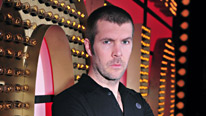
Welsh stand-up Rhod Gilbert hosts a brand new audience comedy show in his first series for BBC Radio 2, featuring comedy regulars Lloyd Langford and Greg Davies (We Are Klang) along with Sarah Millican, who takes a weekly look at The Six Stages Of Woman.
This first episode's guest comedian is country and western singer Wilson Dixon. Listeners can find out whether whales can paint; discover out what annoys Rhod about supermarket potatoes; and hear what childhood wish Greg Davies wanted Jimmy Savile to fulfil.
Presenter/Rhod Gilbert, Producers/Julia McKenzie and Lianne Coop for the BBC
BBC Radio 2 Publicity
BBC RADIO 3 Saturday 4 September 2010
www.bbc.co.uk/radio3
Sir Henry's Hoard is a re-creation of concert life around 1900, through the medium of Proms-founder Sir Henry Wood's previously unknown collection of concert programmes from around Europe and beyond, discovered in the basement of the British Library.
Bound into a succession of volumes, proudly displaying their owner's name in gold leaf, Stephen Johnson uses this fabulous collection to build a picture of concert life of the day: the great performers (for example, Pablo de Sarasate, Fritz Kreisler and Arthur Nikisch); the new music of the day (Richard Strauss, Max Reger and Gustav Mahler); the first early music revival, embracing music from Monteverdi to Bach; the late 19th-century "golden period" for women's music-making; and the seemingly strange make-up of concerts, where, for example, the overture would often be performed last.
There's also a look at how advances in printing techniques made it possible for such programmes to be produced swiftly, attractively and cheaply, together with a sideways glance at the exotic range of businesses that might advertise in such publications – from umbrella and hat makers to life assurance salesmen.
Along the way, Stephen visits: the site of the Queen's Hall, where Henry Wood made his name through the Promenade Concerts; and the Hitchin church, where his wartime funeral took place, a few miles from his last "home" – the Cromwell Hotel in Stevenage. He also tracks down two stray volumes of programmes that turned up in Cambridge.
Presenter/Stephen Johnson, Producer/Andrew Green
BBC Radio 3 Publicity
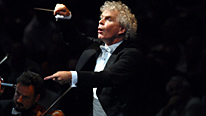
Live from the Royal Albert Hall, London, Petroc Trelawny introduces the second of two BBC Proms by Simon Rattle and the Berlin Philharmonic. Tonight, they play music from the heart of the Austro-German repertoire around the turn of the 20th century.
They start with the prelude to Wagner's last opera, Parsifal, before they're joined by Finnish soprano Karita Mattila for Richard Strauss's swansong, his Four Last Songs, composed in the Forties but full of nostalgia for the first Romantic age.
After the interval, listeners are plunged into the avant-garde maelstrom of early 20th-century Vienna, as Arnold Schoenberg and his pupils, Alban Berg and Anton Webern, take their cue from the innovations of Wagner, Strauss and Mahler – to split traditional tonality at the seams.
This Prom is broadcast on BBC Two at 9pm, and is repeated on BBC Radio 3 on Friday 10 September at 2.20pm
Presenter/Petroc Trelawny, Producer/David Gallagher
BBC Radio 3 Publicity
Bidisha looks at Carl Jung's remarkable Red Book, recently made available to the public for the first time, in which he developed his theories and also created a beautiful work of art.
The early part of the 20th century was a time of great spiritual, intellectual and artistic upheaval in Western Europe. In Vienna, Arnold Schoenberg and his pupils, Anton Webern and Alban Berg, whose music listeners will hear in the second half of tonight's Prom, were rewriting the rules of classical music. Sigmund Freud was practising psychoanalysis in Vienna and Jung was developing his theories of analytical psychology, and the two worked closely together for several years.
Europe was heading for the First World War and, on the eve of the war, Jung had an almost catastrophic spiritual crisis which led him to enter in to a long and complex period of self-analysis.
Jung recorded his psychological experiments on himself in a beautiful manuscript which he called Liber novus (the New Book). Bound in red leather, it became known as the Red Book.
The Red Book contains fine calligraphy, with illuminated capital letters like those found in a medieval manuscript. Jung also created several full-page paintings – some fairly naturalistic, others which appear to be abstract patterns. Jung used these images to help him analyse his own unconscious and to develop some of his most important theories in analytical psychology.
The Red Book remained hidden by Jung's family after he died, first in the family home and then in a Swiss bank vault. It was not until late in 2009 that a facsimile of the book was finally published and made available to the public.
Bidisha talks to professor Sonu Shamdasani, editor of the published edition of the Red Book, and to artist Bettina Reiber about this extraordinary artefact.
Presenter/Bidisha, Producer/Nick Holmes
BBC Radio 3 Publicity
BBC RADIO 4 Saturday 4 September 2010
www.bbc.co.uk/radio4
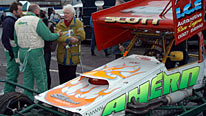
For many years, art critic Brian Sewell has been a devoted fan of stock car racing. In this programme, he explores his passion for these battered beasts of the race track, as he visits the Wimbledon Stadium for a night at the races.
Stock car racing was brought to Britain in 1954 by "Digger" Pugh, who had first seen it in America. The idea was to take everyday road cars and race them on the track. Unlike other forms of racing, contact between cars was allowed, making it a hugely popular spectator sport. During stock car racing's golden era, in the Fifties and Sixties, races attracted huge crowds to stadia up and down the country. These days, stock car racing still has a devoted following.
In Stock Car Sewell, Brian gets to the bottom of his passion – a passion that celebrates speed, exhaust fumes, driving skill and pure throbbing horsepower. He meets Pete Tucker, one of the last surviving drivers to have raced in the first British stock car events, and talks to the people involved in stock car racing today.
Brian also speaks to Janice Bell, daughter of "Digger" Pugh; George Heath, a driver of Banger cars; and Paul Hugget, writer for stock car magazine Wheelspin.
Presenter/Brian Sewell, Producer/Caroline Hughes for Whistledown Productions
BBC Radio 4 Publicity
This new production of Brian Friel's masterpiece about language and power, adapted for radio by Michael Duke, stars Samuel Barnett and Mark Bazeley.
It's the summer of 1833. In a hedge-school in Donegal, the schoolmaster's prodigal son is about to return from Dublin. With him are two army officers. Their aim is to create a map of the area, and, in the process, replace the Irish place-names with English equivalents. It's an act with unexpected and violent consequences.
Thirty years ago playwright Friel and actor Stephen Rea founded the Field Day Theatre Company in Northern Ireland. A company that aimed to provide a "fifth province" in which Ireland's political and social troubles could be explored and re-imagined. Translations was its first production and became an instant classic. BBC Radio 4 has commissioned this new production to mark this anniversary.
The cast stars Samuel Barnett as Yolland; Mark Bazeley as Lancey; John Paul Connolly as Doalty; Dermot Crowley as Jimmy Jack; Roisin Gallagher as Sarah; David Ireland as Manus; Aoife McMahon as Bridget; Gerard McSorley as Hugh; Eugene O'Hare as Owen; and Eileen Walsh as Maire.
Producer/Kirsty Williams for the BBC
BBC Radio 4 Publicity
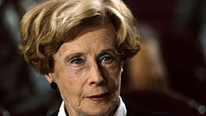
This week's Archive On 4 presents an appraisal of Barbara Castle in the centenary of her birth. Her official biographer, Anne Perkins, examines her life and legacy.
One of the "ironies of politics", Barbara paved the way for Margaret Thatcher; she embodied the spirit of the starry-eyed landslide Labour government of 1945; and was a unique participant in the history of the Left.
Listeners hear of her early life, growing up in a Yorkshire family – more bourgeois than she might admit – devoted to the Independent Labour Party and William Morris. They also hear tales of climbing out of college windows at Oxford with her friend, pioneering broadcaster Olive Shapley; and her devotion to the open air, which led to the founding of the Pennine Way.
There were also her dogged campaigns for equal pay and child benefit – as well as the "breathalyser" and the Unions. Her passionate skills for oratory leap out of the archive, crackling with energy and fire. She was a feminist but was always puzzled by what she saw as the "stridency" the movement took on in the Seventies – and initially resisted the idea of all-women shortlists.
She wasn't averse to using her great personal charm to negotiate her way out of some of the most monumental political battles of the era – dressed impeccably and no stranger to the hairdressers.
The programme also presents intimate archive interviews with Barbara, recorded before her death, and new interviews with Baroness Shirley Williams, Baroness Betty Boothroyd, Janet Anderson and veteran political commentator Geoffrey Goodman.
Presenter/Anne Perkins, Producer/Lindsay Leonard for the BBC
BBC Radio 4 Publicity
BBC RADIO 5 LIVE Saturday 4 September 2010
www.bbc.co.uk/5live
Danny Baker returns for the new season with his irreverent mix of sports chat, fans and special guests.
Presenter/Danny Baker, Producer/Clare Davison for Campbell Davison Media
BBC Radio 5 Live Publicity
5 Live Sport

Mark Chapman presents all the latest sports news and action, including live coverage from this afternoon's League One matches. There is also coverage of this afternoon's Premiership rugby union matches, including the Wasps versus Harlequins clash at Twickenham.
Throughout the show, there are reports on the men and women's third-round tennis from the US Open in Flushing Meadows, New York, as international players compete in the last grand slam of the year.
At 5pm, Mark presents the hour-long Sports Report with reports and reaction from all the day's big games, the classified results read by the legendary James Alexander Gordon, and updates from the day's League One kick offs.
Presenter/Mark Chapman, Producer/Mark Williams
BBC Radio 5 Live Publicity
606

Mark Chapman and Robbie Savage take calls on the talking points from the day's Football League and International games, plus reading out the best tweets, texts and Facebook comments.
Presenters/Mark Chapman and Robbie Savage, Producer/Jo Tongue for Somethin' Else
BBC Radio 5 Live Publicity
Chris Warburton
Chris Warburton presents a new Saturday night programme for BBC Radio 5 Live, with the latest big news stories, plus a look at the week's technology news with podcasters Olly Mann and Helen Zaltzman.
Presenter/Chris Warburton, Producer/Louisa Compton
BBC Radio 5 Live Publicity
BBC 6 MUSIC Saturday 4 September 2010
www.bbc.co.uk/6music
Dave Pearce presents classic dance anthems from big-beat bangers to big-room tunes, via electro, techno and future floor-fillers.
This week, Dave makes his final Ibiza flashback to 2004 – the year of big tunes from Deep Dish, Shapeshifters and Junior Jack. There's also another themed anthem challenge, brand new music from an unsigned bedroom producer, new music from Underworld's forthcoming album, Barking, and future anthems from Alex Gaudino and Afrojack, as well as a selection of listener requests.
Presenter/Dave Pearce, Producer/Rowan Collinson for Somethin' Else Productions
BBC 6 Music Publicity
Programme information
Network Radio
Network Radio – Days
Key
- New
- Live event/outside broadcast
- Interactive programme

- Picture available
BBC iD
BBC iDBBC navigation
BBC links

BBC © 2014The BBC is not responsible for the content of external sites. Read more.
This page is best viewed in an up-to-date web browser with style sheets (CSS) enabled. While you will be able to view the content of this page in your current browser, you will not be able to get the full visual experience. Please consider upgrading your browser software or enabling style sheets (CSS) if you are able to do so.
