Summary

  1. Sense of impatience with some of the reactions to this reportpublished at 10:54 BST

    Catherine Burns
    Health correspondent

    We’ve been hearing from unhappy families who don’t think the inquiry explored the issues deeply enough - although many of them think a statutory public inquiry will.

    Others point out that there are already almost 750 recommendations from previous maternity reviews, and so are calling for action right now - this theme has been coming up over and again.

    The Royal College of Midwives says the government now “must act”.

    Sarah Scobie, from health think tank Nuffield Trust says: “We still won’t see meaningful change until the national taskforce and new maternity commissioner get started on actioning the recommendations.”

    Earlier Louise Thompson, a maternity advocate and former reality TV star, said it feels like "the issues are consistently just kicked into long grass".

    Medical negligence lawyers Irwin Mitchell said: “This report has to be more than another warning about the state of maternity care.”

    Baroness Amos herself gets this - the report acknowledges that change needs political will and pressure, along with a cultural shift.

  2. Amos calls for a modern framework to start being rolled out within 18 monthspublished at 10:31 BST

    Catherine Burns
    Health correspondent

    One central recommendation in the report is what Baroness Amos calls a "Modern Service Framework".

    She wants the government in England to design a new system for maternity and neonatal services.

    She wants this to happen within a year - and to start being rolled out within 18 months.

    Amos points out that the challenges will change, so it will need to be re-designed over and again to reflect that.

    The idea is to have a set of national standards that will take women from before pregnancy through to postnatal care.

    Part of this would be re-thinking staffing rota patterns, to make sure there are always enough senior consultants and midwives on duty.

    It would also involve checking existing units are the right size and layout to deliver safe care.

  3. Health and Social Care Select Committee chair says she will sit on new taskforcepublished at 10:01 BST

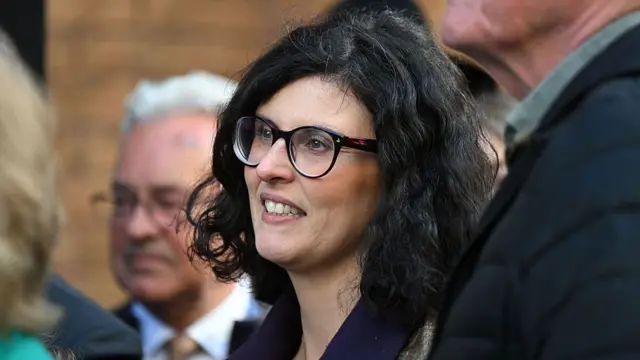
    Layla Moran among a crowd of peopleImage source, Getty Images

    Chair of the Health and Social Care Select Committee Layla Moran says she will sit on a taskforce that the government is setting up to look at maternity care, following the publication of the review.

    Moran tells BBC Radio Oxford she agrees with the review’s findings that maternity services need "proper government-level leadership", but believes the government has "underfunded" any necessary change.

    She also says she gave birth at the John Radcliffe Hospital in Oxford during a heatwave, and that the hospital had the heating on at the time.

    Oxford University Hospitals Foundation Trust told BBC Radio Oxford that it accepted failings in its care, apologised to staff for working in difficult and demanding circumstances, and will listen and be open about any progress it makes, and any still needed.

  4. Bereaved father says daughter, who would've been three soon, was failed by systempublished at 09:34 BST

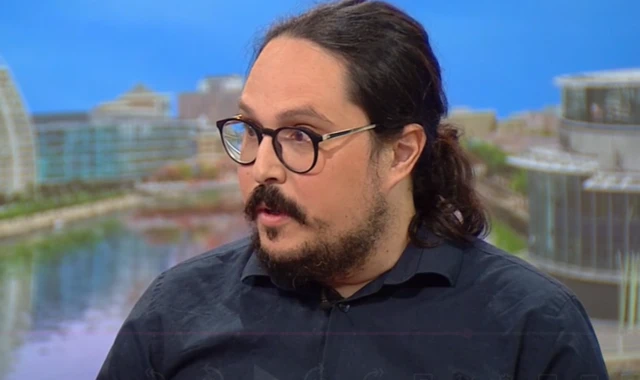
    Pedro Jacob

    Pedro Jacob - whose daughter was stillborn in 2023 - was asked earlier on BBC Breakfast what his views are on a full public inquiry into England's maternity services.

    It comes after Baroness Amos, who conducted the review, said there was no need for an inquiry at the moment.

    Pedro says: "That's not the reason not to bring accountability, and truth and justice to all our children that died. There are 800 babies dying every year."

    He says his daughter would have been three-years-old in September and instead she is "a box of ashes" because the system failed to listen when they asked for help.

    He continues saying healthcare regulators and professional bodies were not looked at and are part of the problem.

    "They are the people that are supposed to regulate and ensure patient safety, but they were deliberately, or not, kept away from this report."

    He adds that it is a "moral failure" that so many babies are dying.

  5. Families 'haven't been listened to', says bereaved motherpublished at 08:59 BST

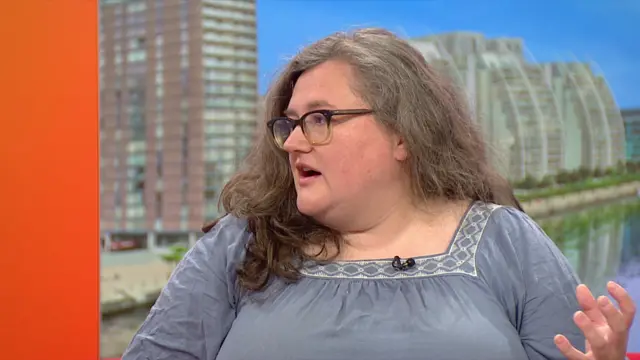
    Alice Topping in BBC Breakfast studio

    Speaking to BBC Breakfast, Alice Topping, who we heard from earlier, is asked whether she feels that the report is a step toward being heard.

    Topping says that bereaved families "haven't been listened to" despite having to become "experts" in their children's deaths.

    She says that the recommendations are "just a snapshot" and that without a full understanding it risks "embedding systemic failings".

    She adds that this is why she is calling for a full public inquiry to "look at the full system", because "everyone deserves basic, safe care".

  6. Bereaved mother says she is 'absolutely not' satisfied with reviewpublished at 08:56 BST

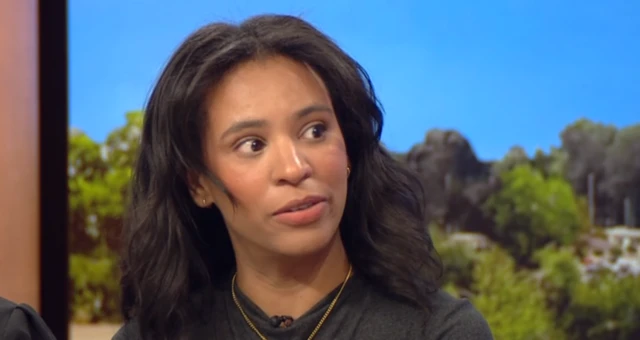
    Lauren Caulfield on BBC Breakfast

    Parents who gave evidence to the National Maternity and Neonatal Investigation, are speaking to BBC Breakfast this morning.

    Asked what brings her here today, Lauren Caulfield, whose daughter Grace died in the days before her birth, says she wants "children to stop dying".

    On the review published today, Lauren says she is "absolutely not" satisfied, arguing that it is "fundamentally dangerous" to implement a maternity commissioner that she believes would not be "meaningfully independent".

    Instead, like a number of others, she calls for a statutory public inquiry "to understand exactly what has gone wrong" and "who has been responsible".

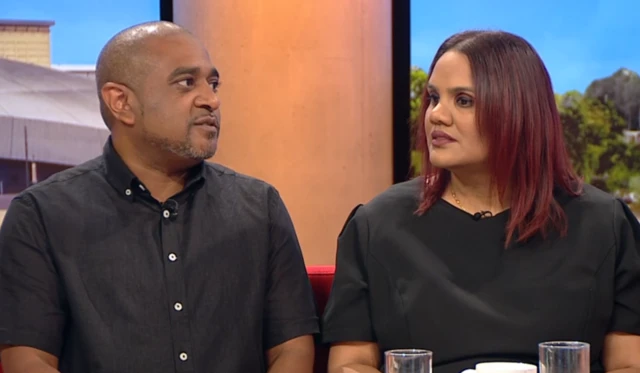
    Peter and Gina Reeves

    Also speaking to BBC Breakfast are Gina and Peter Reeves, who are asked about the review's finding of racism "embedded throughout the maternity and neonatal system".

    Gina explains that when she was giving birth to her son, who died, she "was told that I didn't look like I was in pain".

    "I didn't scream, I didn't shout, but my whole body went into shock mode and nobody listened to me."

    Peter says he is "not surprised" by the report's findings, but adds that "it's not just what, it's what we do next" - and urges politicians to come together in order to improve outcomes for families.

  7. Have you been affected by the maternity care system in England?published at 08:44 BST

     You can get in touch in the following ways:

    Please read ourterms & conditions andprivacy policy

    In some cases a selection of your comments and questions will be published, displaying your name and location as you provide it unless you state otherwise. Your contact details will never be published.

    Your Voice banner
  8. 'Victims have been failed over and over again', says bereaved motherpublished at 08:38 BST

    Eleanor Lawrie
    Social affairs reporter

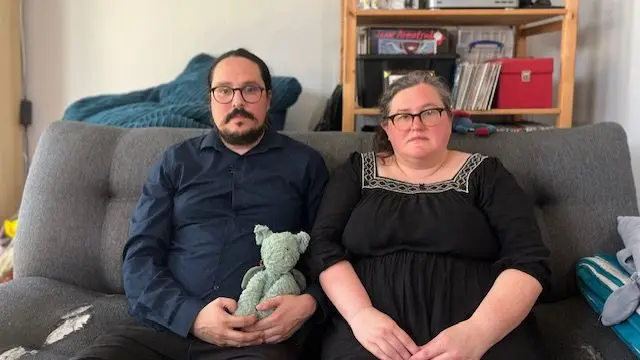
    A man and woman sat on a grey sofa, the man holds a child's cuddly toy

    Alice Topping gave evidence to the inquiry after her daughter Smokey was stillborn at Oxford’s John Radcliffe Hospital in 2023.

    Towards the end of her pregnancy, she called the hospital 44 times in one day begging for a scan after her height bump dropped, a known high-risk factor for stillbirth.

    An external investigation carried out by Maternity and Newborn Safety Investigations found parts of her care had not complied with national guidelines and that staff had failed to listen or act on her concerns.

    Alice - like some other bereaved mothers - wanted Amos to call for a public inquiry so that senior figures at under-fire hospital trusts would be compelled to speak.

    She says: “Victims have been failed over and over again by different regulators. We're talking about a complete normalisation of preventable harms and preventable deaths.

    "It's unacceptable, and we feel the only way to really get to the bottom of this is a statutory judge-led public inquiry.

    "Families have not got the answers they deserve. The truth has been hidden from them, and it cannot continue to be like this.”

    Oxford University Hospitals says it “apologised unreservedly to the women, babies and families who suffered in our care, or whose experience caused them grief or distress.”

  9. The latest of several high-profile maternity reviewspublished at 08:29 BST

    Catherine Burns
    Health correspondent

    Over the last ten years, we’ve seen several high-profile maternity safety reviews - and there are more to come.

    Just last week, we were reporting on an investigation into avoidable harm at Nottingham University Hospitals NHS Trust.

    Many of the themes we’re seeing today were highlighted in previous reports: not listening to women, a lack of accountability, toxic working cultures.

    Now, Amos’s report says the challenge is not understanding the problems with maternity. For her, the issue is "the large volume and complexity of different recommendations, standards and improvement efforts, which collectively has not translated into clear improvements".

    She argues that there’s been progress immediately after previous reports, but that improvements haven’t been maintained. The report also says previous investigations have affected staff morale and confidence.

  10. Racism 'embedded throughout the maternity and neonatal system' - reportpublished at 08:18 BST

    Catherine Burns
    Health correspondent

    Another all-too-familiar theme in this and other maternity reviews: racism.

    This report says it is "embedded throughout the maternity and neonatal system" - and that this has profound implications for the care mothers and babies get.

    The statistics back this up: black women in the UK are almost three times more likely to die in the year after pregnancy than white women. The risk is higher for Asian mums too.

    The report heard from ethnic minority families about being left to wait for longer, getting slower responses or less friendly attitudes from staff.

    Some felt staff thought they were exaggerating their pain levels.

    The report talks about antisemitism with one family member being told by staff that "Jewish people are sneaky".

    Staff said they were impacted by racism too, both from colleagues and patients.

  11. Review chair asked whether public inquiry neededpublished at 08:05 BST

    Asked about the calls for a statutory public inquiry, Baroness Valerie Amos says "it's not my decision to make", but that she "absolutely" understands and respects why some families are calling for one.

    She says her "personal view" is that statutory public inquiries take "such a long time", but that if her recommendations are implemented, "then in the future the kinds of justice that are being sought will be delivered".

    "This could have a transformational impact on the system and we would not need a statutory public inquiry but that is a personal view."

    That's the end of Amos's Today interview - we'll bring you more from the report shortly.

  12. Maternity system 'not fit for the now and not fit for the future' - Amospublished at 08:03 BST

    More now from Baroness Amos, who has also been speaking to BBC Radio 4's Today Programme.

    She says that it was important that the report came up with a set of recommendations that can deliver change, and that the experiences of women were at the "heart of thinking" about what can be done to improve care.

    Amos adds that the maternity commissioner role will report to families and Parliament, and that the position is about "oversight, accountability and driving the system".

    A complete overhaul of the system is required because "it is not fit for the now and it is not fit for the future".

    When asked about the experience of Emily Barley, whose baby died during labour, Amos says she is "extremely distressed and sorry" for what happened to her.

    She adds that the she hopes that after Emily has seen the recommendations, she will see that the role is “not about concentrating power in the hands of one person”.

  13. Murray not ruling out public inquiry - as Thompson says issues being 'kicked into long grass'published at 07:57 BST

    James Murray

    Murray is asked about calls from some affected parents for a statutory public inquiry into maternity care.

    He says they are "not wrong to call for that" and that he can understand where "that feeling comes from very strongly".

    He stresses that "some people favour a public inquiry, others have a different view", but says at this stage he is "not taking anything off the table".

    In order to "drive accountability", the health secretary also says he will use the duty of candour which would be created in the Hillsborough Law to ensure that witnesses in upcoming reviews of maternity service failures can be forced to provide evidence.

    In response to this interview, maternity advocate Louise Thompson says it feels like "the issues are consistently just kicked into long grass", and that without a firm date for when a commissioner would be appointed, "it just doesn't feel like the responsibility is there".

    Asked for her advice to anyone who is pregnant, she says the key is to speak to friends, educate yourself, advocate for yourself, and remember that "you know your body best, so listen to your instincts".

  14. Report findings 'shocking' but 'not surprising', says health secretarypublished at 07:45 BST

    Health Secretary James Murray is speaking to BBC Breakfast now, and he says the results of the report are "shocking but not actually surprising".

    He says that the report outlines failings that the government already knew about, adding that NHS maternity services are "just not fit" and are failing too many women and families.

    Louise Thompson then asks how long it will take to appoint the maternity commissioner role.

    Murray says that over the next two weeks he will meet with a national task force to set out the scope for the role before getting it into legislation "as quickly as possible".

    He does not set an exact date for appointing the position, he says, as he doesn't want to give a time frame he can't commit to.

  15. Louise Thompson: I was infantilised during traumatic birthpublished at 07:42 BST

    Louise Thompson

    Louise Thompson tells BBC Breakfast she felt "infantalised" and "wasn't listened to" when she gave birth four years ago, an experienced which she says left her traumatised.

    "I nearly lost my life over a number of occasions," the advocate for maternity safety and former Made in Chelsea star explains, adding that she went on to have six emergency surgeries.

    "I was meant to jump through so many hurdles... I was infantilised, I was patronised."

    Thompson says she thinks the review's recommendations are a "starting point" to tackle maternity safety, but that there is wider change needed, including "adequate funding and staffing levels" for maternity services.

  16. 'We have to change the culture' - review chairpublished at 07:38 BST

    Responding to a question about why women are not being listened to while being cared for, Baroness Amos says that "we have to change the culture".

    She adds that there needs to be more clinicians who look after women who understand how to deal with trauma, and a culture where patients feel able to "speak up" if something doesn't seem right.

    Amos says women should be able to visit maternity care services if they are not satisfied with support they receive over the phone, and adds that women shouldn't be waiting for "hours and hours" if they are experiencing issues.

    When asked a question about critics saying that doctors encourage natural births, she says the issue is "contested".

    She references the resignation of Dr Bill Kirkup, who investigated maternity services in Morecambe Bay and East Kent, who disagreed with her findings that a push for normal birth was not prevalent nationally.

    Amos says it is important women have the information to make "informed choices".

  17. Review shows inconsistency and variation in care, Amos sayspublished at 07:30 BST

    Baroness Amos

    Baroness Valerie Amos is first asked on BBC Breakfast about where things stand now and what needs to change following the publication of today's report.

    She agrees that the review's findings are "shocking" but stresses "it is about inconsistency and variation in care".

    She describes her inquiry as "comprehensive... in the time available" and cites some key findings including women not being listened to, trusts "not apologising" when things go wrong and a lack of clarity about who is in charge.

    "There are examples of good and bad practice everywhere," she says, adding that the system needs to be improved as a whole "so that families don't have to go through these distressing events time and time again".

    For those who are concerned, she advises talking to your clinical team or using "Martha's Rule", which gives patients the right to a second medical opinion if they request one.

  18. Watch live as Baroness Amos speaks to BBC Breakfastpublished at 07:19 BST

    Baroness Valerie Amos, who chaired the review, is now speaking to BBC Breakfast. You can watch her interview live at the top of the page.

    We will hear from her again on BBC Radio 4's Today programme at around 07:30.

    Health Secretary James Murray is scheduled to speak to BBC Breakfast around the same time, and then to the Today programme at 08:30.

    And at around that time, BBC Breakfast will speak to Gina and Peter Reeves, Alice Topping and Pedro Jacob, Lauren Caulfield, whose experiences with maternity care informed the review.

  19. Recommendations wouldn't have prevented my daughter's death, says bereaved motherpublished at 07:14 BST

    Emily Barley, whose daughter Beatrice daughter died during labour four years ago, says none of the things in Amos's report would have "prevented what happened to Beatrice".

    Barley, the co-founder of the Maternity Safety Alliance, tells BBC Radio 4's Today programme that the report is "shallow", and that Amos has "not gripped" the "cultural failings" underpinning maternity care.

    Victims have not been "heard in this report", she says.

    Barley disagrees with the recommendation for a new maternity commissioner to oversee change, which she calls "fundamentally dangerous" - arguing it concentrates "all the power and responsibility" in one person's hands.

    Instead, she argues for a statutory inquiry, saying bereaved parents "deserve... the truth" and an inquiry could compel witnesses to take part.

    Amos has previously acknowledged calls for a statutory public inquiry, but is not supportive of such a move, telling the BBC they take "a very, very long time".

    Emily Barley is sitting on a sofa in her lounge and she is holding a piece of paper which has two small handprints printed on it. Ms Barley has long blonde hair and is wearing glasses and a black top. There are framed photographs on the shelves to her right.
  20. Report hears of 'absolute lack of compassion' for womenpublished at 07:01 BST

    Catherine Burns
    Health correspondent

    There’s a theme running throughout this - and every other maternity safety investigation over the last decade: women not being listened to, heard or believed.

    Amos’s report talks about medical misogyny "leading to an embedded culture in which women’s voices are ignored".

    It says they are not consistently treated with kindness or compassion - and argued that changing this is "vital to safety and improving outcomes".

    In the report, women describe being made to feel like a nuisance or a burden. One woman was told she was being a wimp for not being able to cope with the pain of a C-section. Another describes "begging for care" in a waiting room.

    One woman who thought she was losing her baby talks about an "absolute lack of compassion… they really, really didn’t seem bothered…. It was like I was really inconveniencing them".